The Google Sketch Up Lab

This year, I’ve been working closely with another colleague to create, a project-based CAD course.  When I was presented with the challenge, I dove in head first.

This week I have been presenting various perspective/drawing challenges to my students in an effort to assess their current capabilities.  I’ve been enjoying a curriculum challenge, and after two days, I am pleased by the success and interest posed by my students.  The room has been split into three themed stations: a perspective/assessment area, a guided-step project area and a digital manipulative lab.

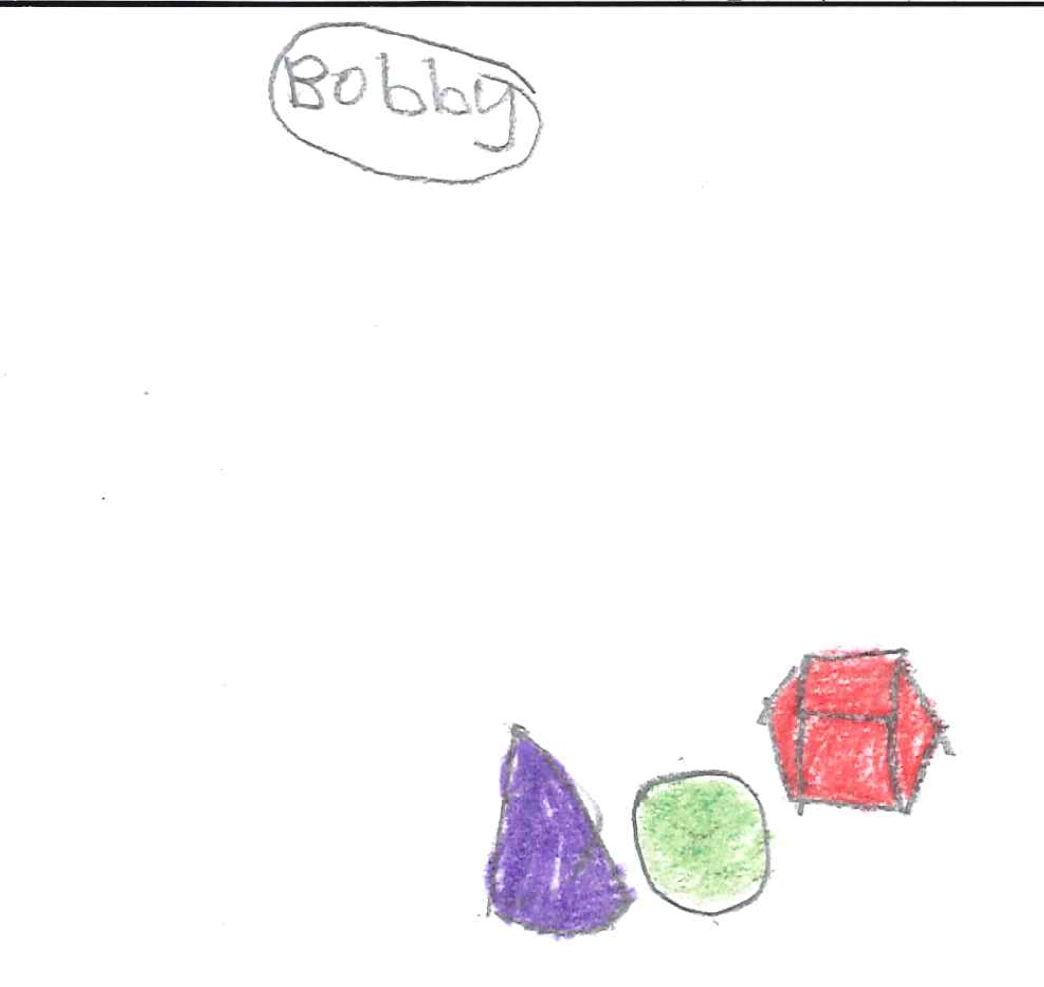
The assessment area has produced some fascinating results.  When confronted with three solids placed as so and asked to draw a different orientations –
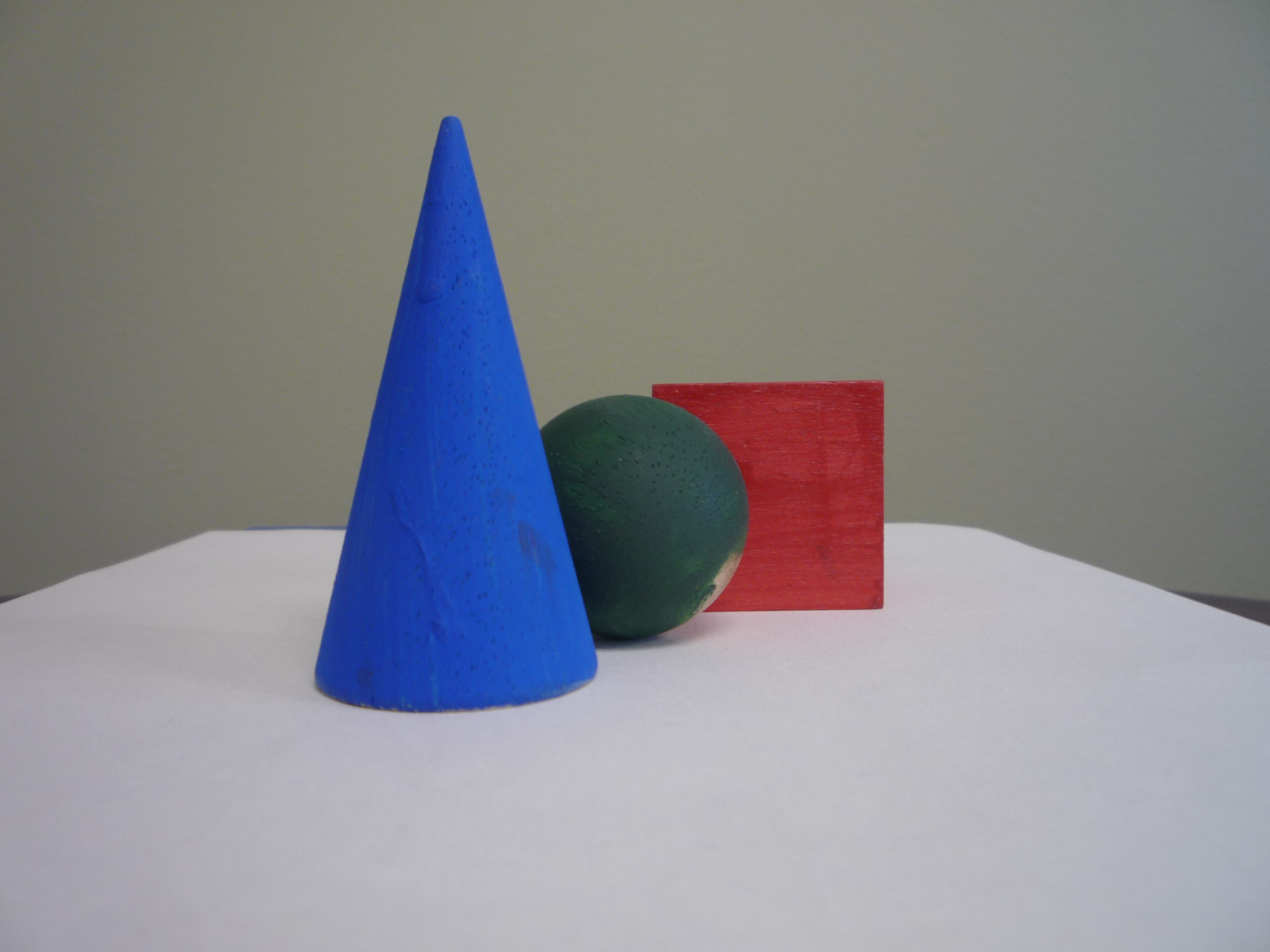
some students returned this,
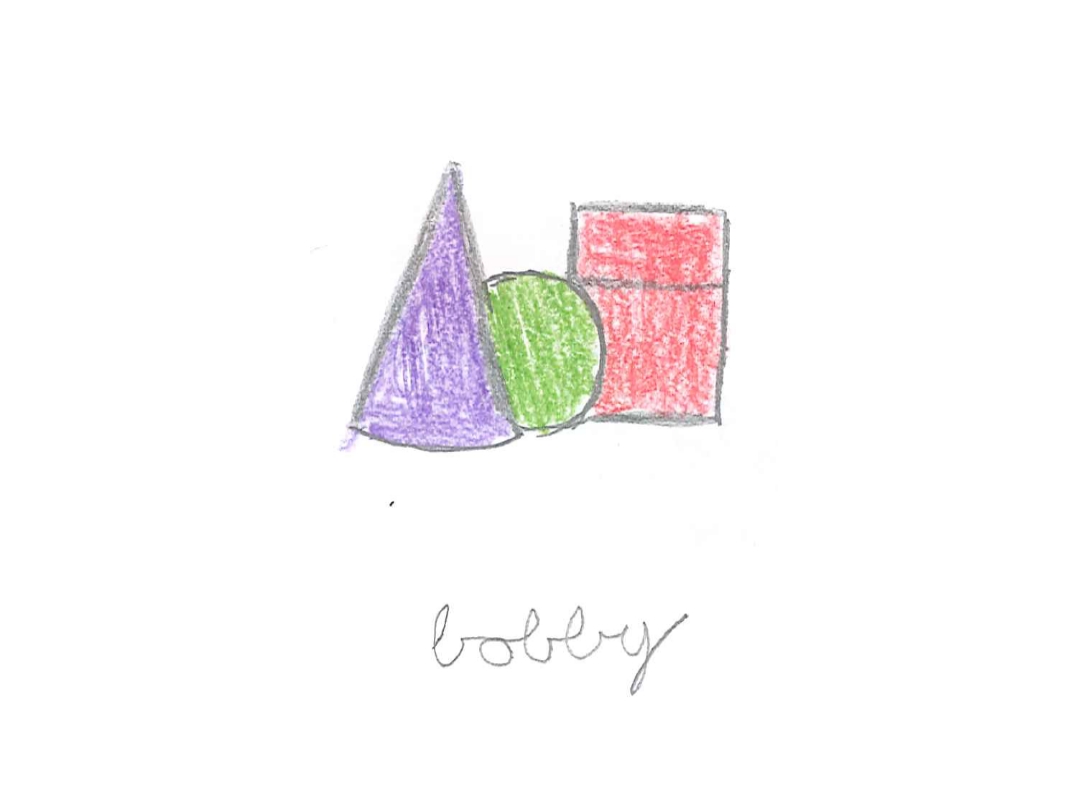
and others struggled to grasp this concept.
Students also built maps of the Math/Sci room.  I think I’ll use this one as an official planner.
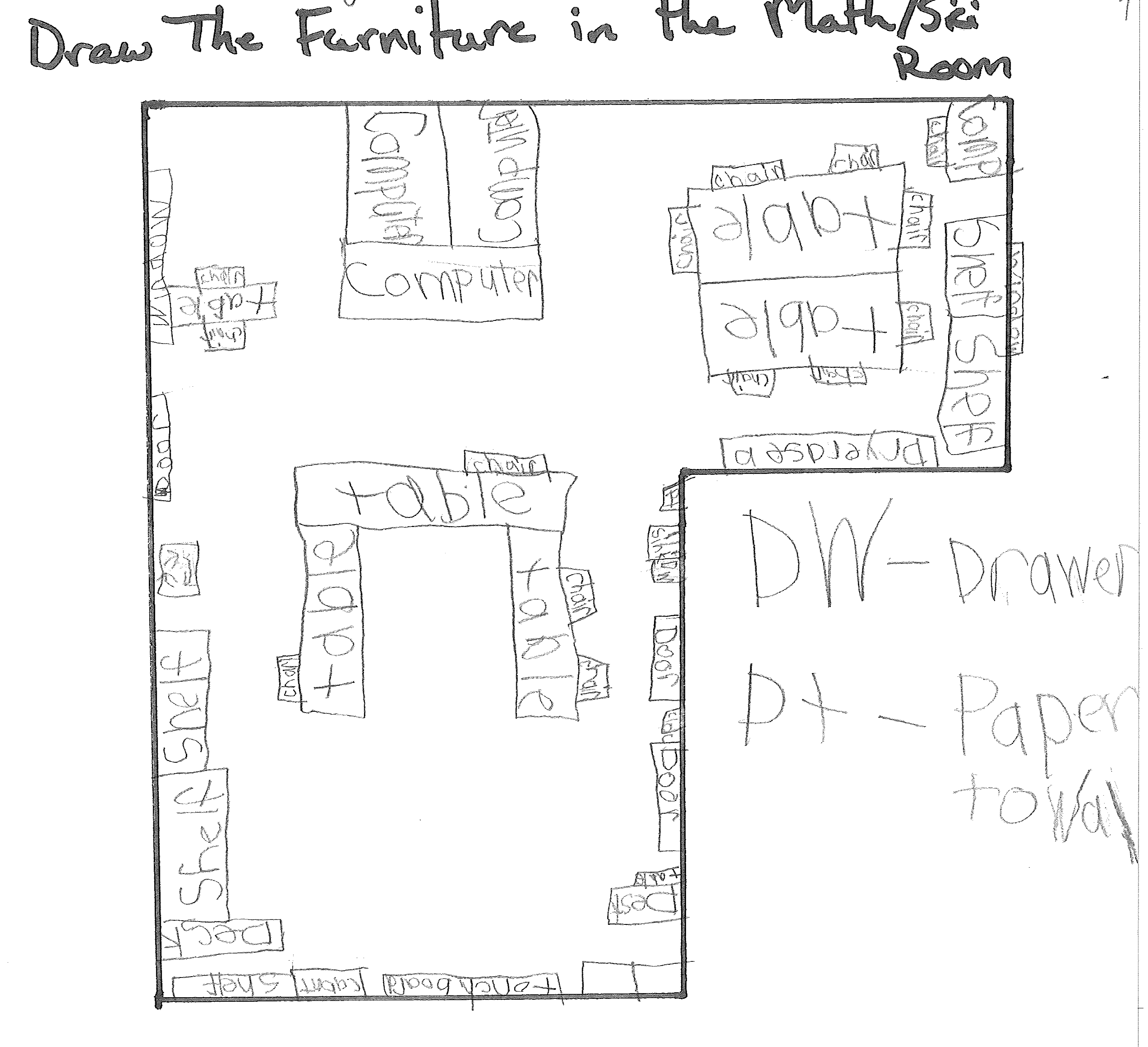
Next up, the students will measure the length of the sides and create a floor-plan in Google Sketch Up.  I will post some results when they happen!

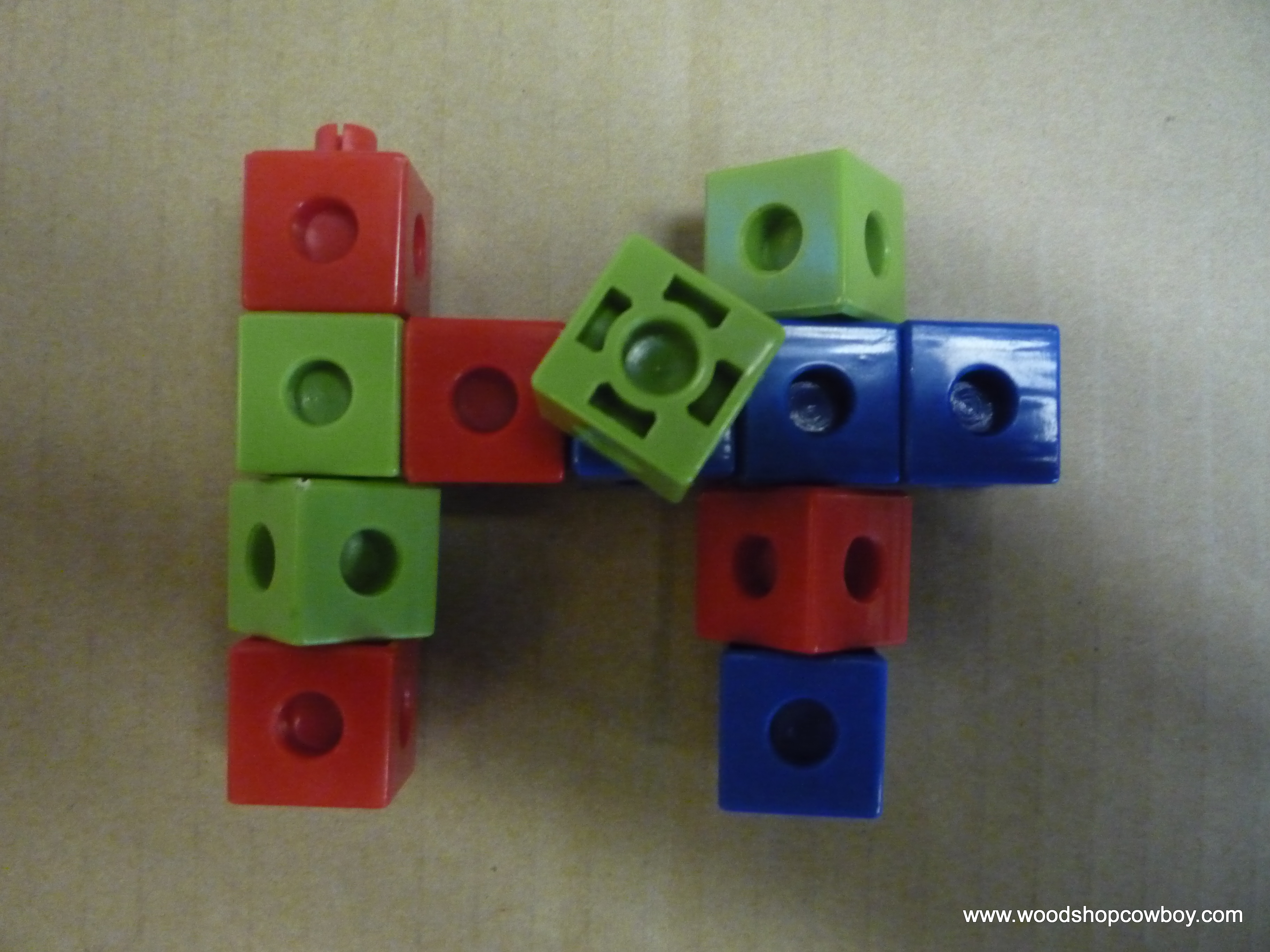
As for “digital manipulative”, I created a rudimentary block set in Google Sketch Up.  The students move the shapes to match a block sculpture. I’ve only created puzzles which explore the move and rotate function in Sketch Up, but I expect more labs (I’ll probably make these challenges once or twice a week) which explore other functions.  Here’s the Sketch Up file. Recreate this object with the blocks provided.  You should only use the Move and Rotate tools. My fastest student moved  from loading the file to instructions to completion in fifteen minutes. It took other students an hour and half.  How did you do?
New School Year: Boxes, Trays and Benches

This week, I’m proposing and planning projects for the 2011-2012 school year.    According to the Mayans, it should be a killer

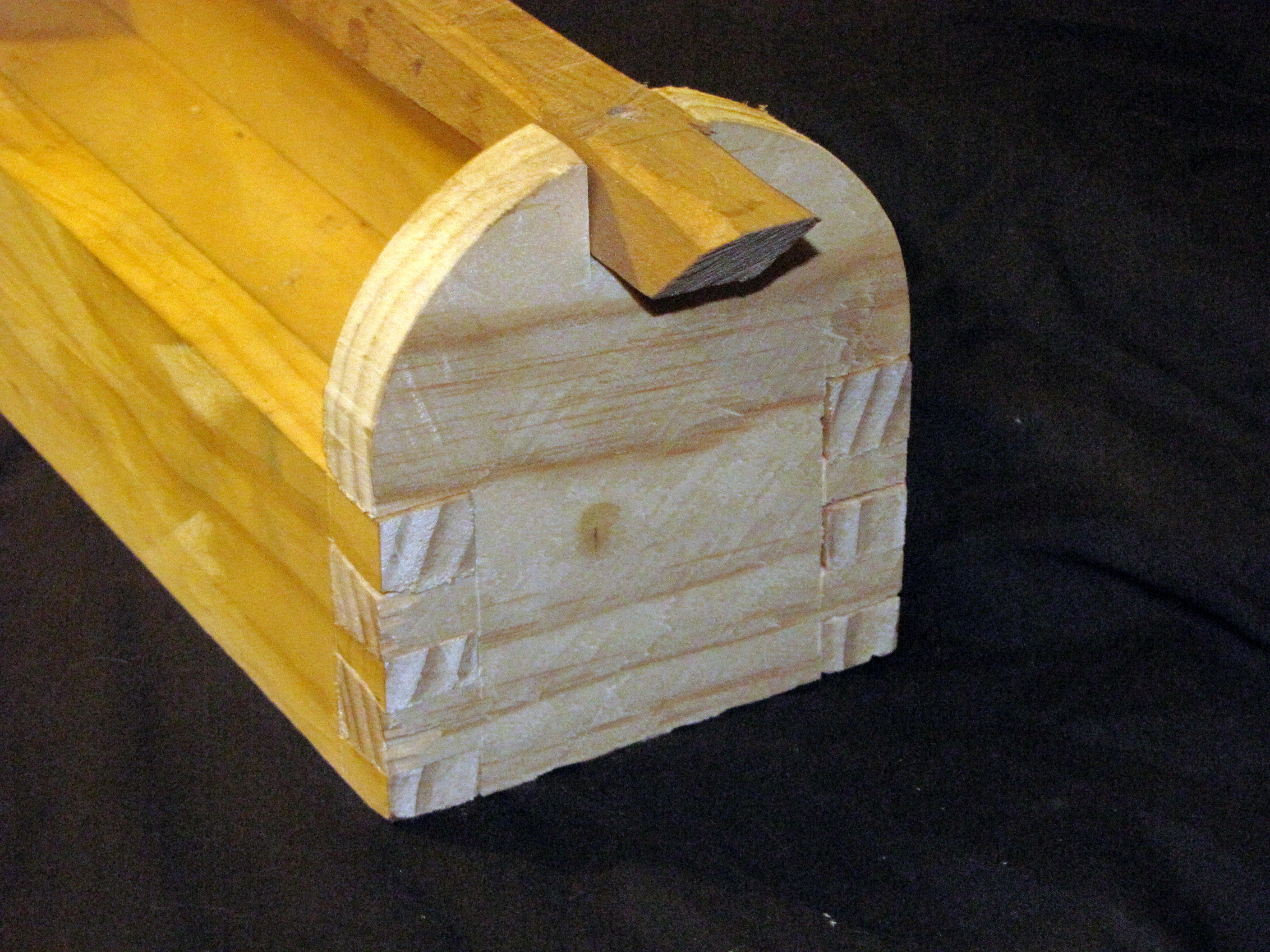
I’m attached to the Math/Sci crew as a “Technology Resource” – meaning I’m running a CAD workshop, an Electronics course and probably some sort of Lego Mindstorms-based course.  In my traditional role as a woodshop teacher, I’ve developed a 3-project pipeline.  Small butt joint boxes based on this tutorial

grow into larger tool trays

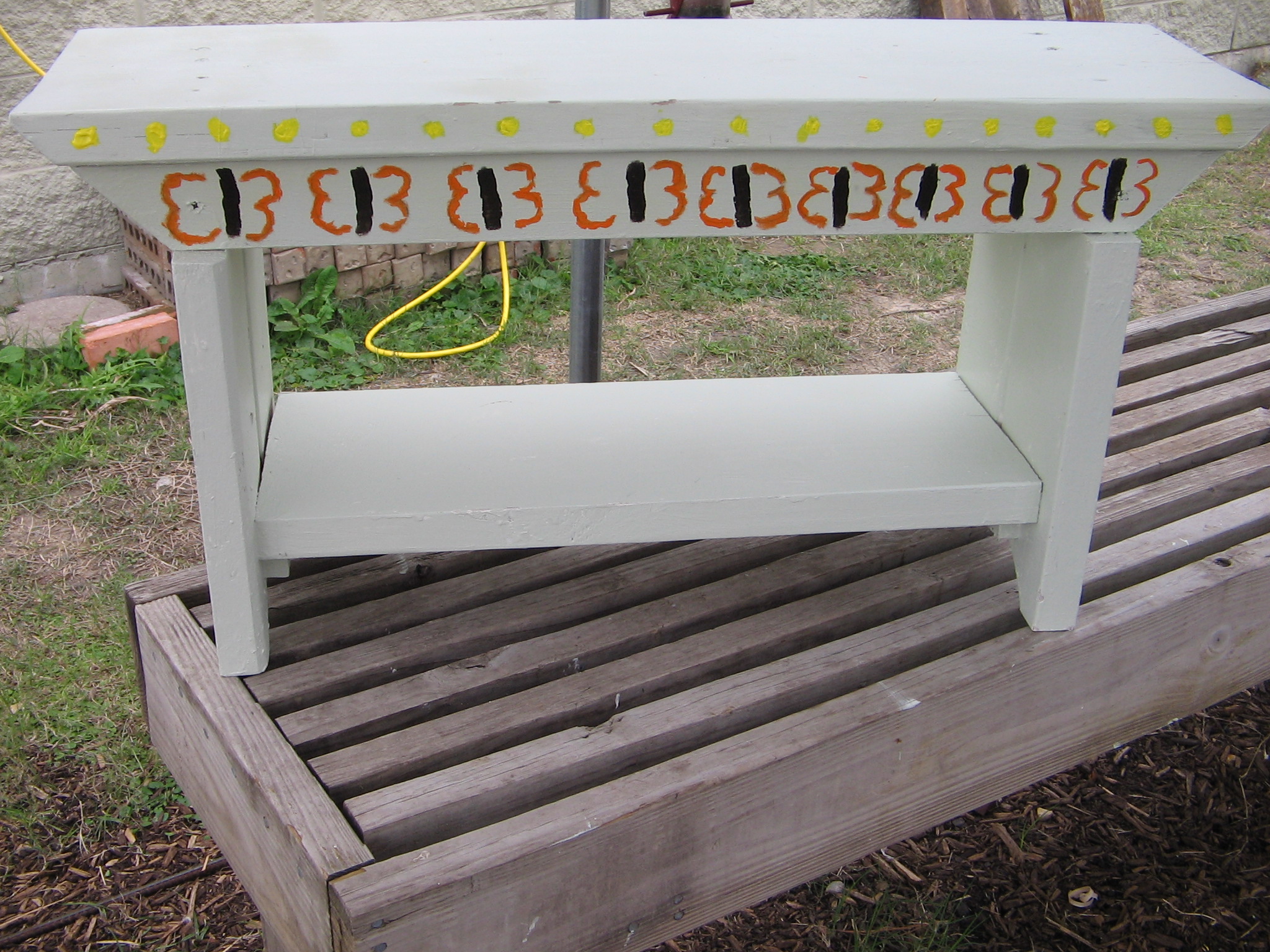
which eventually turn into the Butterfly Bench.  I am also proposing a Bike Mechanics service project – students build, curate & service a bike fleet for the school.  I’d also like a chance to have the kids offer those services to the school’s community at-large.  Can you imagine a bike repair day at your school?

Make it safe & keep the rubber side down this week.

The New Tools in the Shop

I’ve spent the last three weeks (since mid-July) avoiding the woodshop both at work and home.  At work, a series of major structural changes has kept me away from the wood – which will turn into a good thing.  Exciting times ahead my friends.

At home, I finished a refurbishing an old office chair.  The project awaits some photography and a blog post.  Otherwise, the last few weeks have been about re-organization some major tool acquisitions.  If you hang out around tools, sooner or later you’ve heard the story behind my new tools: they were my father’s tools. I don’t have use for them.

I do..  So let us see the tools after the jump!

Continue reading “The New Tools in the Shop”

This Week in the Shop: Don’t Touch My Blue Suede Chair

A quick sawdust update:

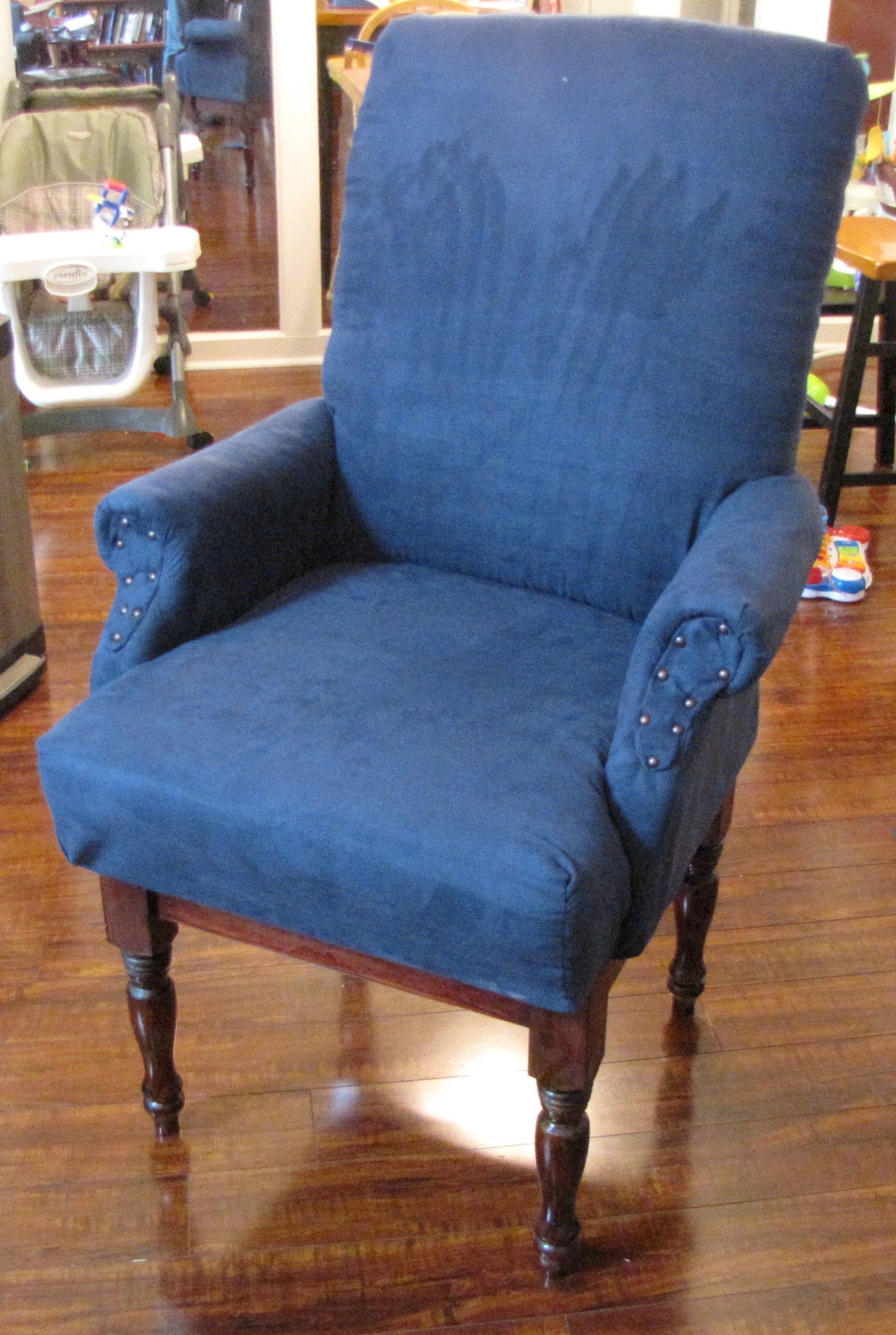
I’ve been working finishing up a personal project this week and doing a little legwork for my next piece.  In May, two friends of mine became married to each other.  I got to see them meet, watch them fall in love and stand up and give a hell yeah! at the wedding while wearing an uncomfortable rental tux.  I decided to celebrate with a chair.  The results so far:

Lowe’s provided the legs and various hardware pieces, while I scrounged up about five yards of blue suede from the local fabric shop.  I salvaged the stuffed chair base from an old, expensive office chair.  This project turned into an excellent learning opportunity.  I learned to iron, upholster, fit & cut patterns and most importantly, I learned my wife could sew.  She’s kept her talents hidden from me for six years!

I still have enough fabric for an ottoman, although this week’s heat wave has kept me out of the shop for two days.  More pictures & a dedicated project post when this clears my outbox.

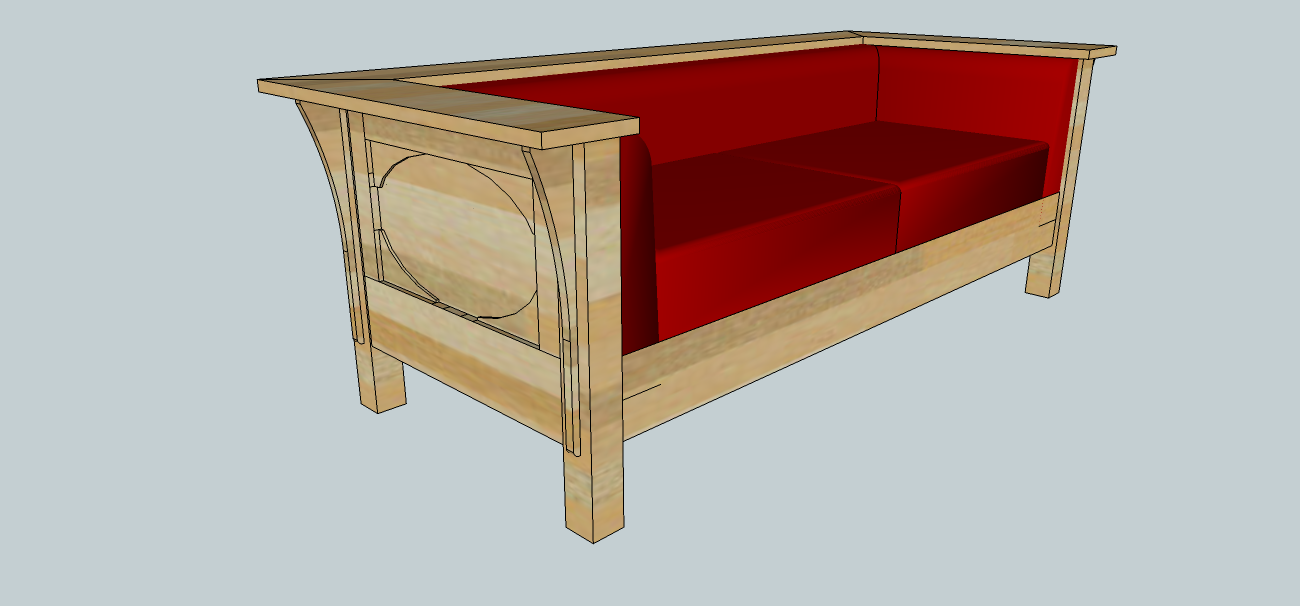
I also did a little designing.  My much better half has given me permission to build a Craftsman-style couch to match out armchair.  The CAD rendering looks like this:

It’s a modified version of Stickley’s No. 220 “Prairie” couch.  I downloaded the model from Highland Woodworking’s collection via the 3-D Warehouse and changed the panel into the ellipse motif.  The ellipse panel is repeated on the back.  All comments welcome.

Make it safe & keep the rubber side down.

This Week in the Shop: End of Summer Program

The summer program wraps up today.   Our summer program acts as an experimental zone, a transitional buffer and a slice of consistency for both teachers and students.  Personally, I love summer programs – no grades, no pressure, just the chance to provide as fun and therapeutic educational experience as possible.  Anyways, this summer saw the return of the butterfly bench.  Students took all four group projects home to their families.  Notice the recurring butterfly motif from last go-round.  I think I’ll be making some linoleum stamps with this design on them at some point  soon.


This summer has been a wild ride regarding student behavior.  I’ve some major challenges in the woodshop.  One challenge has been finding the one-on-one support and guidance necessary for a young student with limited communication skills within an eight-kid class. Shepherding a project to completion when a student demands perfection in himself (and everyone else) challenges a teacher too – because I have yet to design perfection into a lesson plan.

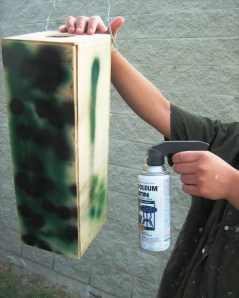
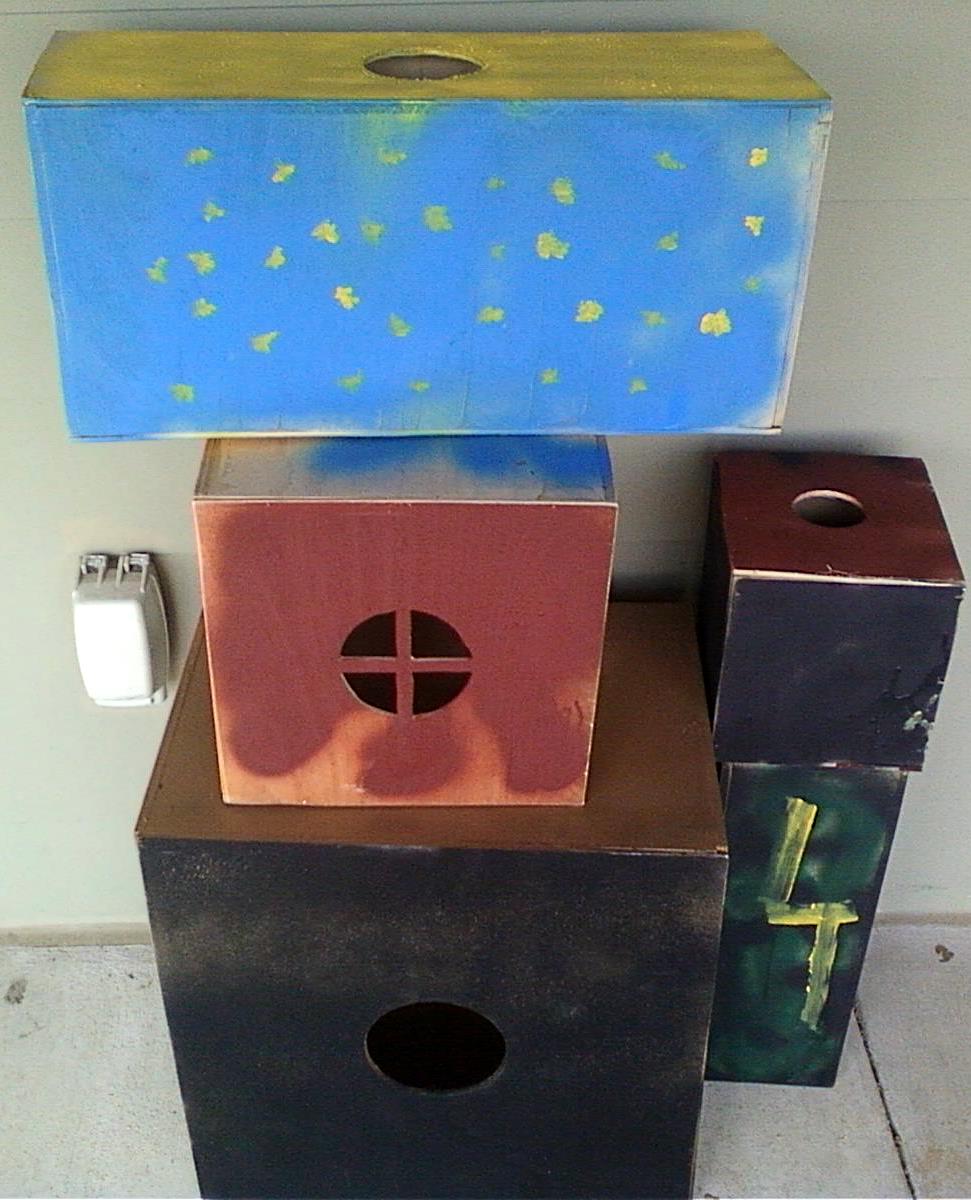
The drums have been finished – lovely group of students to work with.  I used a circ saw & guide to cut the 1/2″ drum cases (4 sides). We also discovered a neat way to spray paint our smaller objects.  I’ve been meaning to hang the smaller objects in the air to promote better spray technique.  I’m mixed on the results, but I’m willing to keep tweaking the set up.

If anyone has any advice on building spray-booths/finishing rooms, I’d love to hear.

My students completed two chairs – one an original composition and another a refurbishment.  The maker chair came out something exactly like this:

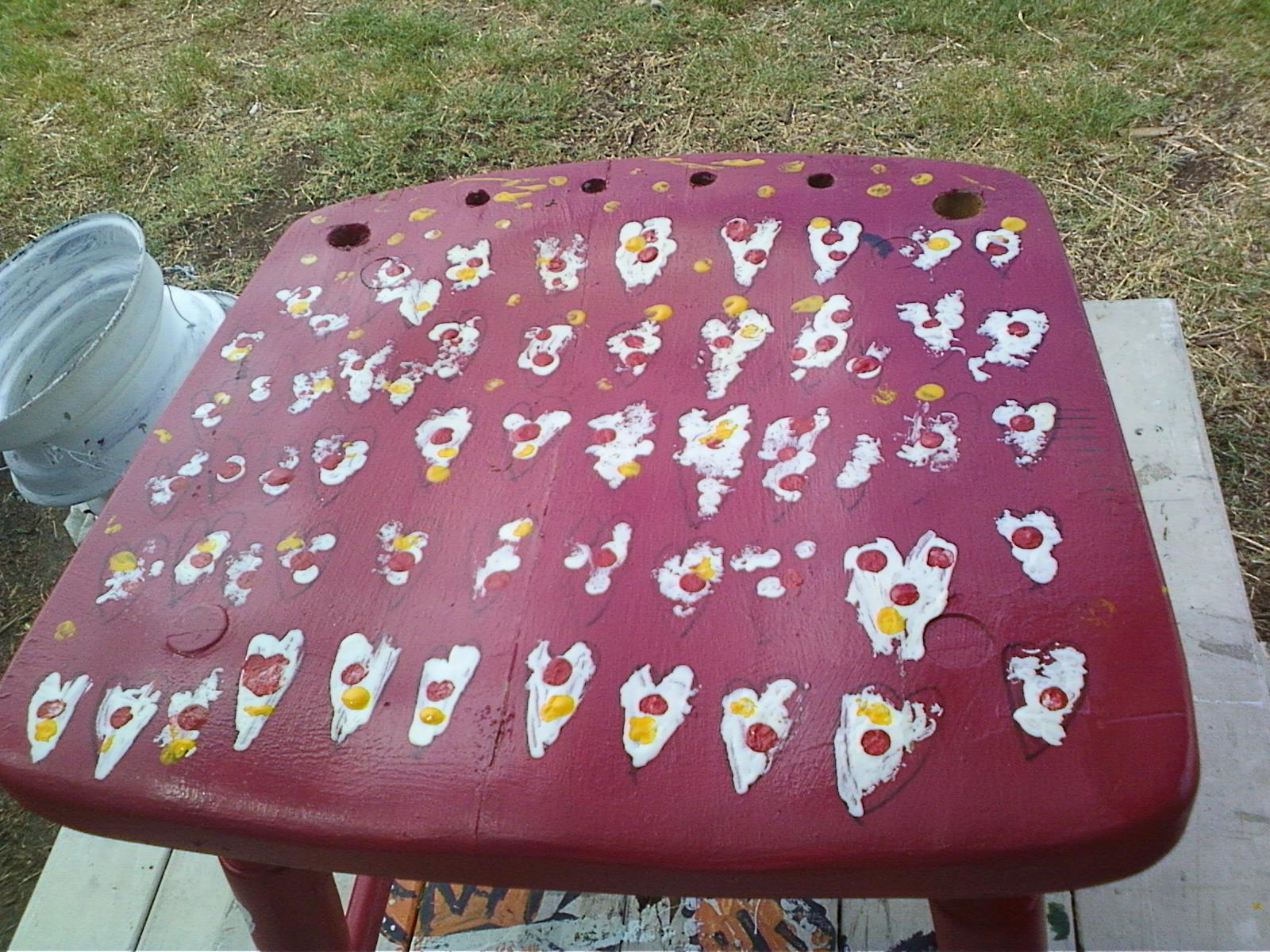
The “Mend” project came out as a stool.  Another experiment in repetitive decoration – an autistic student drew the heart designs, then dotted the shapes with paint.  I really enjoy this student’s artistic work.  I think he may become my go-to finish man for a painted work.

Until next time, make it safe & keep the rubber side down.

(Re-)Planting Salt Marsh Grass: Galveston Bay Foundation

In Feburary, fifteen of my students ripped up some two-hundred salt marsh grass stalks.  After a few months of careful husbandry, we re-planted the stalks in the middle of Trinity Bay.  I’ll let the Galveston Bay Foundation take it from here…

We got muddy and wet and smiles on our faces.

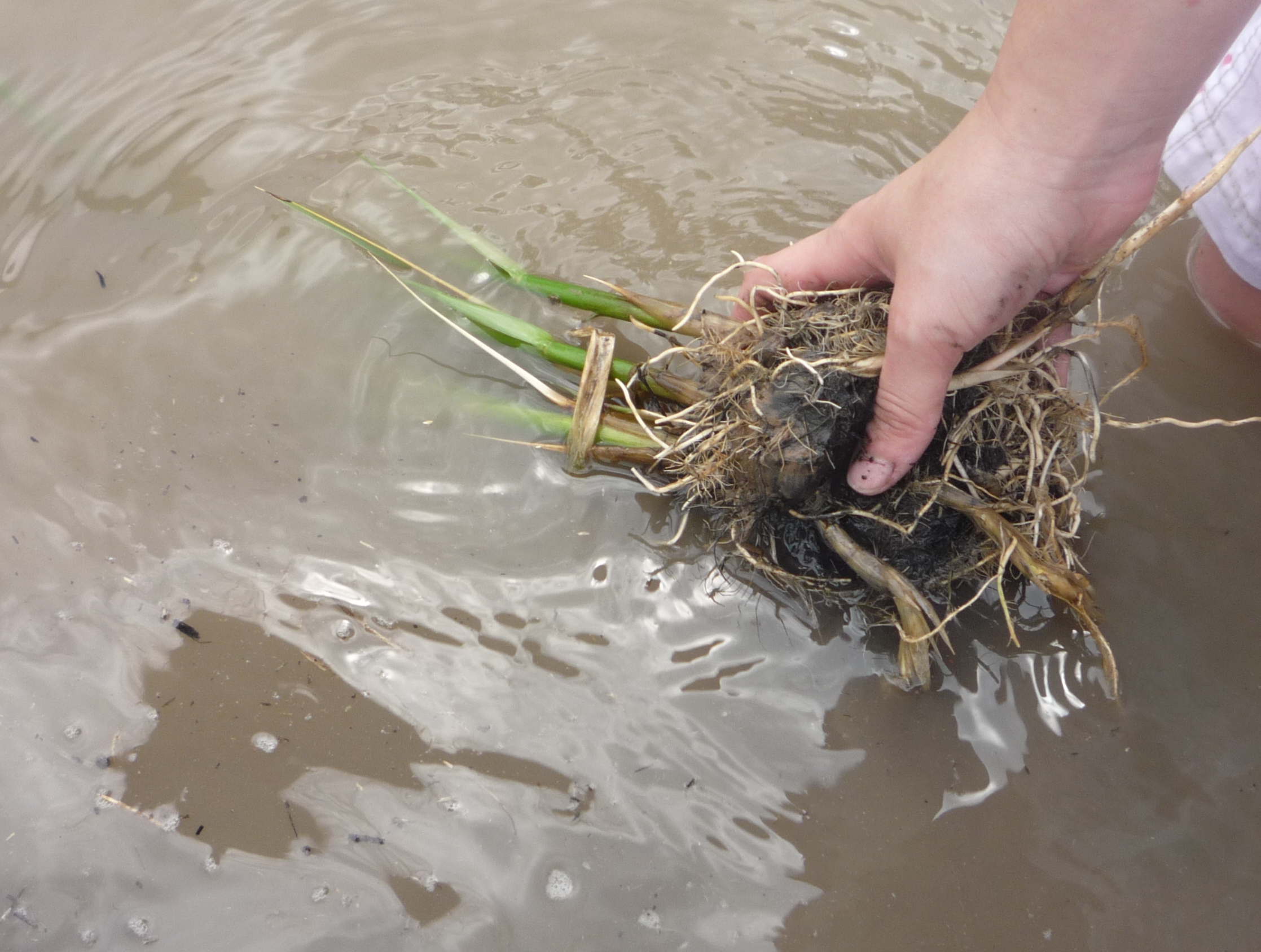
Replanting the salt grass is pretty easy.  Dig a hole with a dibbler (no really, that’s the tool’s name.)

Wash off excess soil in the water.

Make the plant and muddy hole meet in harmony.

Float on down to the next spot.

I hope you enjoyed this 4th of July.  Make it safe and keep the rubber side down.

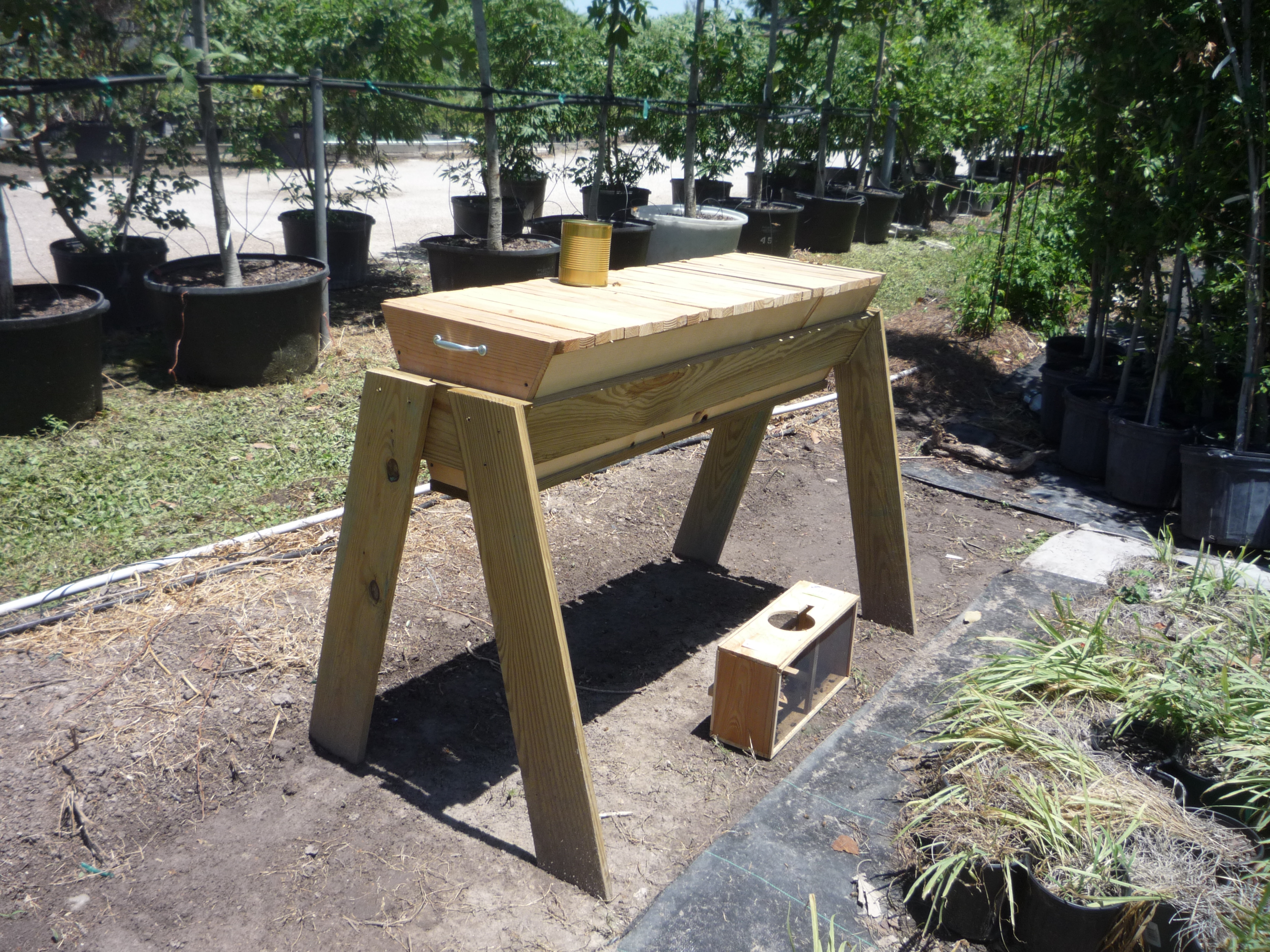
Community Watch: Top Down Beehives & Transistion Houston

Teachers can’t teach in a vacuum.  Students need their subjects, from math to reading to science to civics to history to art to woodshop, placed into context, so the subject matter becomes revelant and interesting.  In order to put my woodshop in context, I try to poke my head around the Houston community and find community organizations doing intersting work.

Two recent finds:

Based on Ancient Kenyan and Tansmanian Designs

Treesearch Farms recently held an open house and graciously included a seminar on raising bees.  They advocate organic growing techniques and organic bee raising.  The bees pollinate your garden, which promotes healthy fruit and vegetable growth.  In fact, one bee colony in one backyard can pollinate every garden in a five mile radius! (Don’t want bees in your yard?  Put them in your neighbor’s yard!)  To them, organic/natural/community & local-based beekeeping can be an antidote to the colony collapses of the last ten years, as natural and locally-raised honeybees do not undergo the amount of stress that commercial bees do.  They pointed their attendees to Mike’s Top Bar Hives, a simple, elegant and ancient bee hive design which mimics natural bee hive construction and helps prevent some of the major stressors involved in colony collapse.

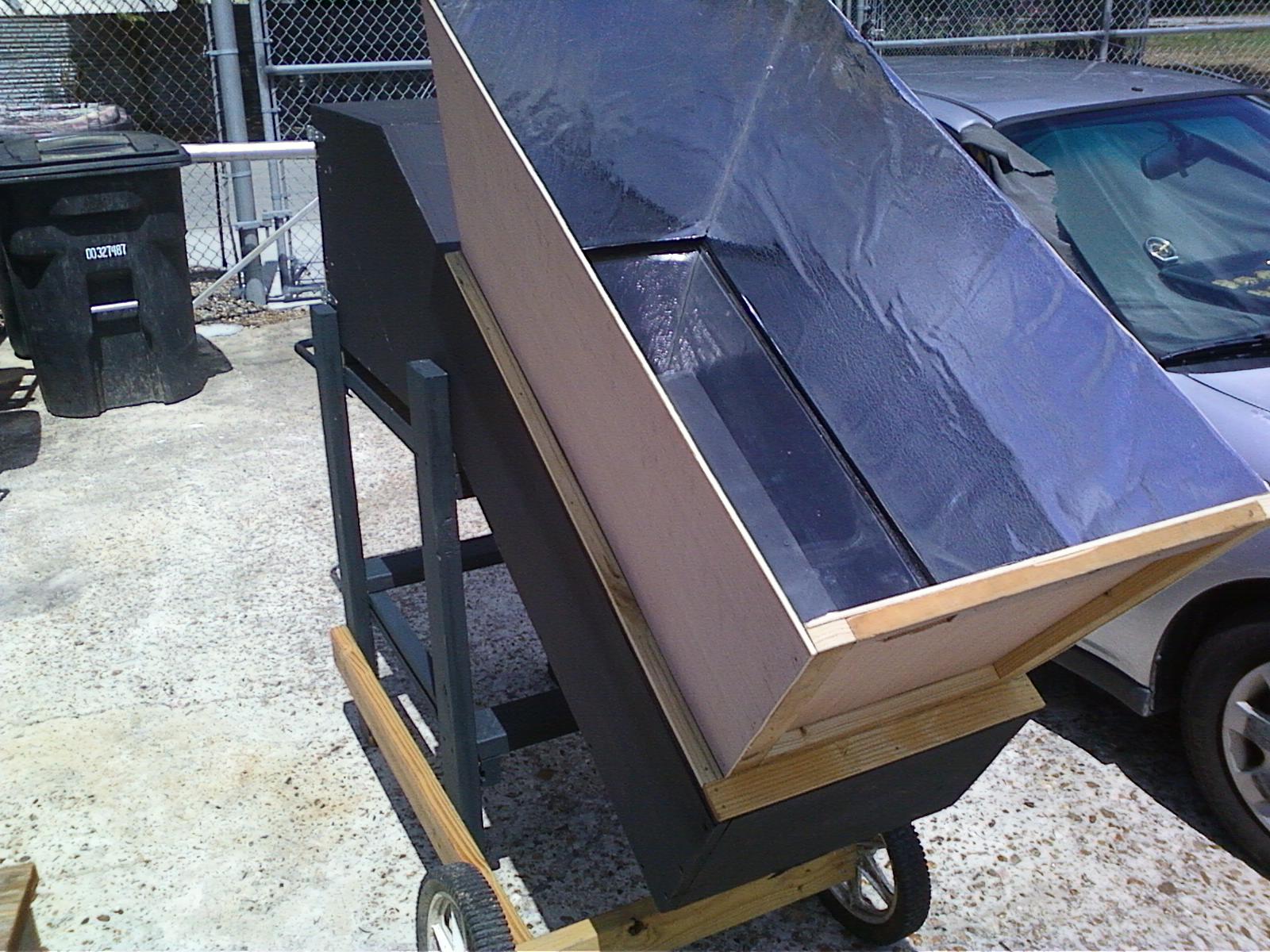
Last weekend, I got to check out a Transition Houston’s solar oven cook off, hosted by my good friends at ReUse Warehouse.  Some ovens were quite elaborate,

and others were simply awesome!

Transition Houston is a local organization which promotes localized sustainability – they are trying to bring back city life in the 1800’s, when Manhattan was docks, Wall Street and Mid-Town was dairy country.  (Hyperbole, yes, but when NYC was a young city, the middle of Manhattan Island really was dotted with small farms which sold their produce to city folk.)

If you are in the Houston area, keep and ear to the ground.  Plenty of interesting things out there.

Make it safe & keep the rubber side down this weekend.  I’ll catch you on the flip-side soon.

Current Projects: The Butterfly Chair

One of my woodshop classes have ended for the week, so I took the opportunity to document the progress:

David Marsh eat your heart out! I'll get a better picture when the piece is finished

And this is what happens when a student ticks me off! (ok, ok, I was pulling a big nail with a small hammer…)

Sete Peeger: The Pete Seeger Knock-Off or Why Children Wear Safety Glasses While Hammering