Top Five Maker Projects for the Beginning Maker Ed Teacher

Do you want to get into Making and Maker Ed? Don’t know where to start? Don’t have a makerspace? No problem! Here’s five ideas, classroom tested, which can be built using a minimum of tools for students in the K – 8 grade scale.

DSC04916

If you are wondering how to connect these projects back to standards, check out PBL Through a Maker’s Lens and a free webinar at www.woodshopcowboy.com.

Continue reading “Top Five Maker Projects for the Beginning Maker Ed Teacher”

Click to Watch a Free Webinar on Project Based Learning, Makerspaces and Maker Ed

Are you interested in Maker Ed, PBL and Makerspaces?  Check out my FREE webinar on PBL and Making and continue the conversation.  I discuss how to move from standards to projects to completed curriculum units.

<p><a href=”http://vimeo.com/111853425″>Project-Based Learning through a Maker&rsquo;s Lens</a> from <a href=”http://vimeo.com/nisce”>NISCE</a&gt; on <a href=”https://vimeo.com”>Vimeo</a&gt;.</p>


Continue reading “Click to Watch a Free Webinar on Project Based Learning, Makerspaces and Maker Ed”

This Week in the Shop: New Tools, New Projects

DSC_2612

It’s been an interesting road this year in my various shops.  At work, I’ve added a number of hand tools, drill presses, 3D printers, robotics and electronics gear.  TX/RX Labs expanded in January into a new woodworking space, adding 6 woodworking benches, jointers, planers, table saws, etc.

This slideshow requires JavaScript.

And in my own shop, I’ve upgraded and added to my capabilities and skills.  I bought two lathes, a full-sized 60’s era 10″ lathe and a small Carba-Tec pen lathe, along with the various tools, chucks and accessories that go with such a purchase.  I upgraded my sharpening gear with a set of waterstones and a grinder, purchased a cheap bench sander, and upgraded my bandsaw and drill press into full-sized versions.

Other than bragging, this means I can produce a variety of previously-impossible projects.

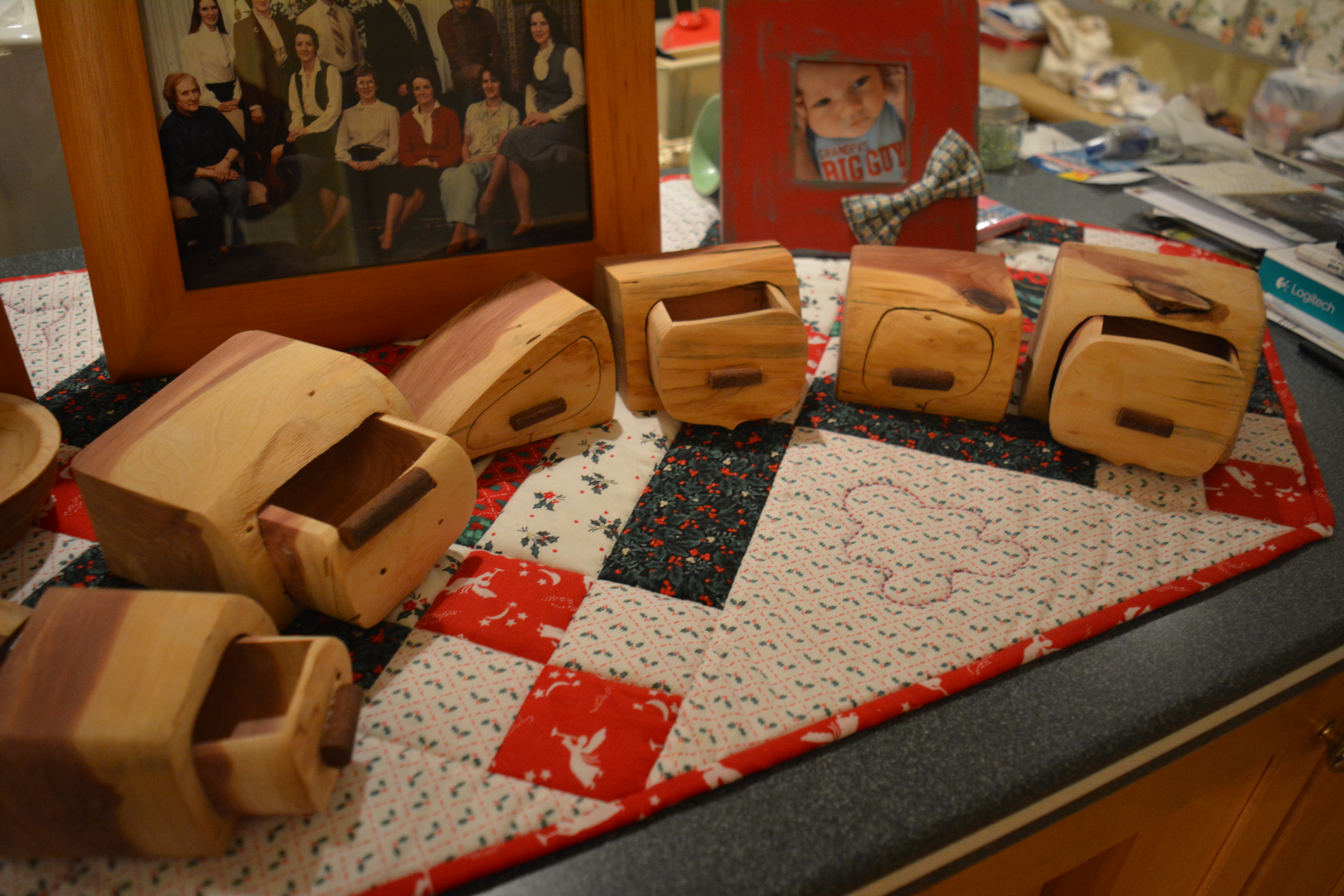
First – the bandsaw box.  This project uses only a bandsaw to cut and shape a box.  A quick image search brings up an incredible variety of box patterns.  I went for something with a story, not something with art.DSC_2607

I found these boxes inside a log from a tree felled in my parent’s backyard, in the house my brothers and I grew up in.  I’m now in my thirties and my youngest brother is closer to thirty than twenty-five.  We’ve grown up, moved out, moved back, gotten married, had kids, and brought our kids back.  This holiday season, we’ll be together for a few days and hours.  Then, like many families, we scatter to the wind.  A few years ago, I stuffed my suitcase with a log instead of presents.  This year, I made matching boxes for every person in my immediate family – mom, dad and four sons.

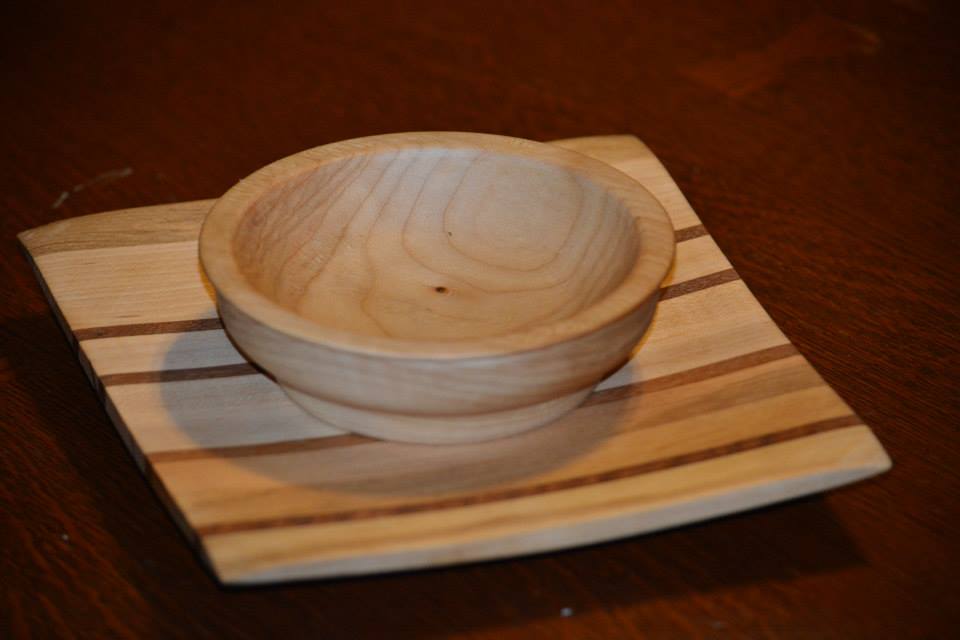
Next – plates, bowls and pens.  The lathe allows me the opportunity to make square things round and put together a number of cool projects.  I took a bowl-turning class at the local Woodcraft (this was before Matt N from TX/RX Labs started co-teaching woodworking classes with me) and got to work.  Some of my most recent results:

10848043_10103039395843223_389102773127204862_n

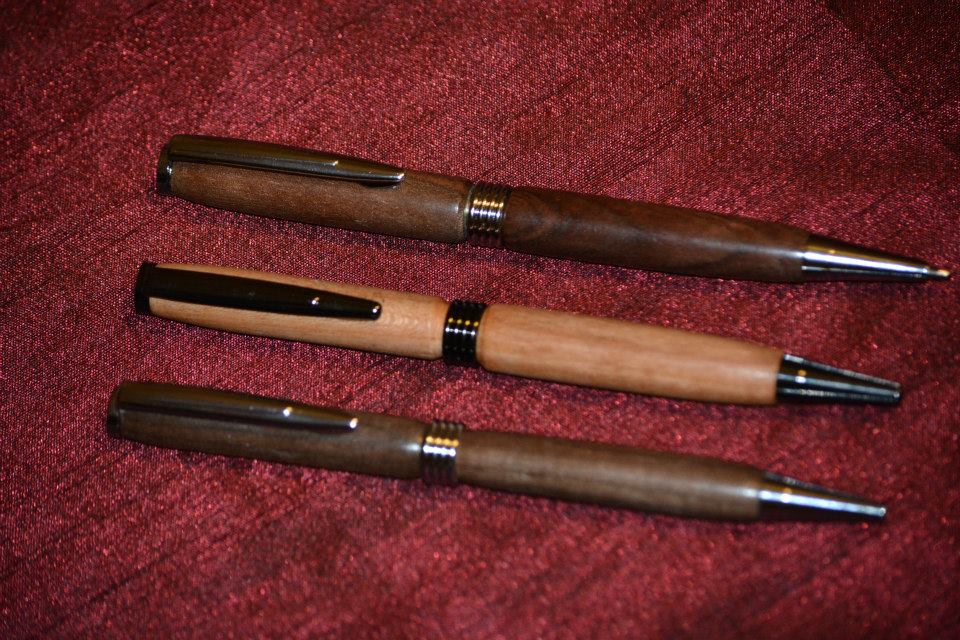
Penn State Industries and Craft Supplies USA specialize in delivering small project kits (and the very expensive accessories necessary to build such kits) which can be turned and assembled by the woodworker at home.  I built 17 pens this holiday season.  They have been a big hit this year. I will put together a couple longer posts on pens in the future – I’m hoping to bring pen-making into the classroom.

10347546_10103039395588733_1680901721626918672_n

Thank you for visiting my practice zone and project showcase.  If you wish to lend your support for this site, please like WoodshopCowboy on Facebook or follow me on Twitter.  If you are interested in making and education, why not check out Work Notes, a curated set of articles from the web, published every week?

Make it safe & keep the rubberside down.
Interested in Project Based Learning, Makerspaces and Maker Ed? Free Webinar on Nov. 12th

Continue the conversation with me, Mr. Patrick, on Nov. 12th.   I will be delivering a free live webinar based on my Edutopia article, PBL through a Maker’s Lens.  I’ll discuss the various ways we can integrate standards, choose appropriate projects, build student engagement and choice and generally have a great time.  You can sign up here.

Boom, Boom, Boom. Essential Question:  Can I make a catapult shoot a ping pong ball thirty feet?  And use it in zombie self defense?
Boom, Boom, Boom.
Essential Question: Can I make a catapult shoot a ping pong ball thirty feet? And use it in zombie self defense?

This webinar is hosted by the National Institute for Student-Centered Education.  The NISCE’s mission statement:

Our mission is to help schools realize the goal of being communities that both inspire and support students to be passionate about their learning while preparing them to play active and productive roles in their world. It is our belief that this is best accomplished within the framework of a student-centered approach to education.

NISCE provides opportunities and platforms for education professionals to share ideas about trends in education and for students, parents and teachers to share their observations, thoughts and feelings on how those trends are playing out at the school level. NISCE will advocate for public policies and funding that promote a more student centered approach to education and will offer training in the critical elements of this approach to schools and parents.

So let’s continue the conversation on PBL and Making!

Thank you for visiting my practice zone and project showcase.  If you wish to lend your support for this site, please like WoodshopCowboy on Facebook or follow me on Twitter.  If you are interested in making and education, why not check out Work Notes, a curated set of articles from the web, published every week?

Make it safe & keep the rubberside down.

This Week In the Classroom: How to Build Electromagnets!

DSC04527

Hans Christan Orsted’s discovery that electricity generates a magnetic field led to the development of electromagnets.  Electromagnets are bundles of wires wrapped around a ferrous core.  When electricity flows through the core, the iron magnetizes.  When the electric flow ceases, so does the strength of the magnet.  Electromagnets are integral parts of trash-lifters, alarms, cars, planes and trains.

Last year, I worked on transitioning my science curriculum from reflecting the McREL standards to NGSS standards.  The NGSS standard MS-PS2-3, namely the student can ask questions about data to determine the factors that affect the strength of electric and magnetic forces, lends itself to the exploration of electromagnets and electric motors and generators.

For this mini-unit, I looked for three objectives:

1. Students observe that electricity causes a magnetic field.

2. Students raise questions about electromagnetic forces (what makes it stronger?  what makes it weaker?)

3. Use the scientific method to set up experiments which may answer raised questions.

4. Students isolate and analyze the factors which change the strength of an electromagnet: number of coils, size of ferrous core, and thickness of copper wire.

This slideshow requires JavaScript.

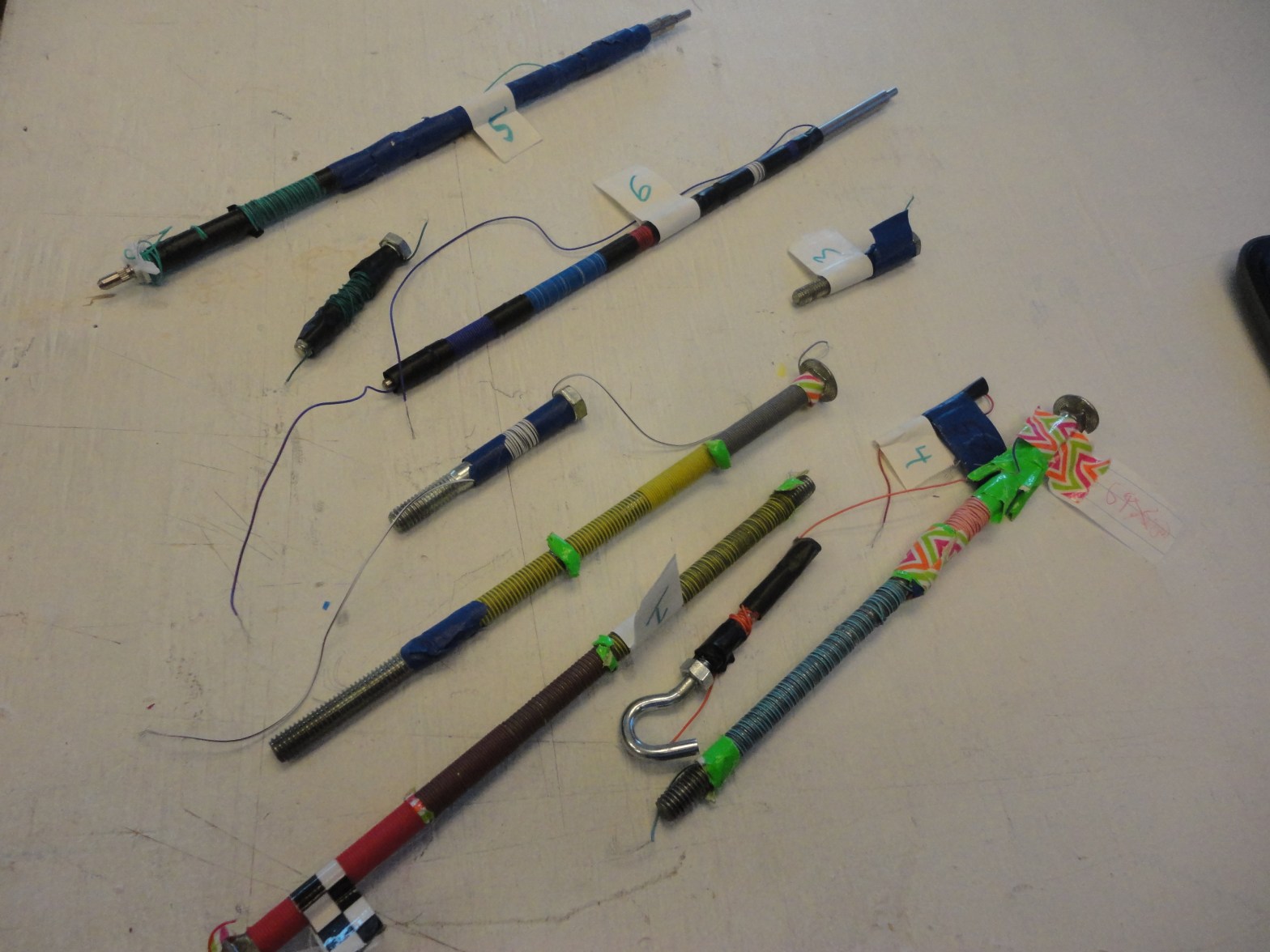
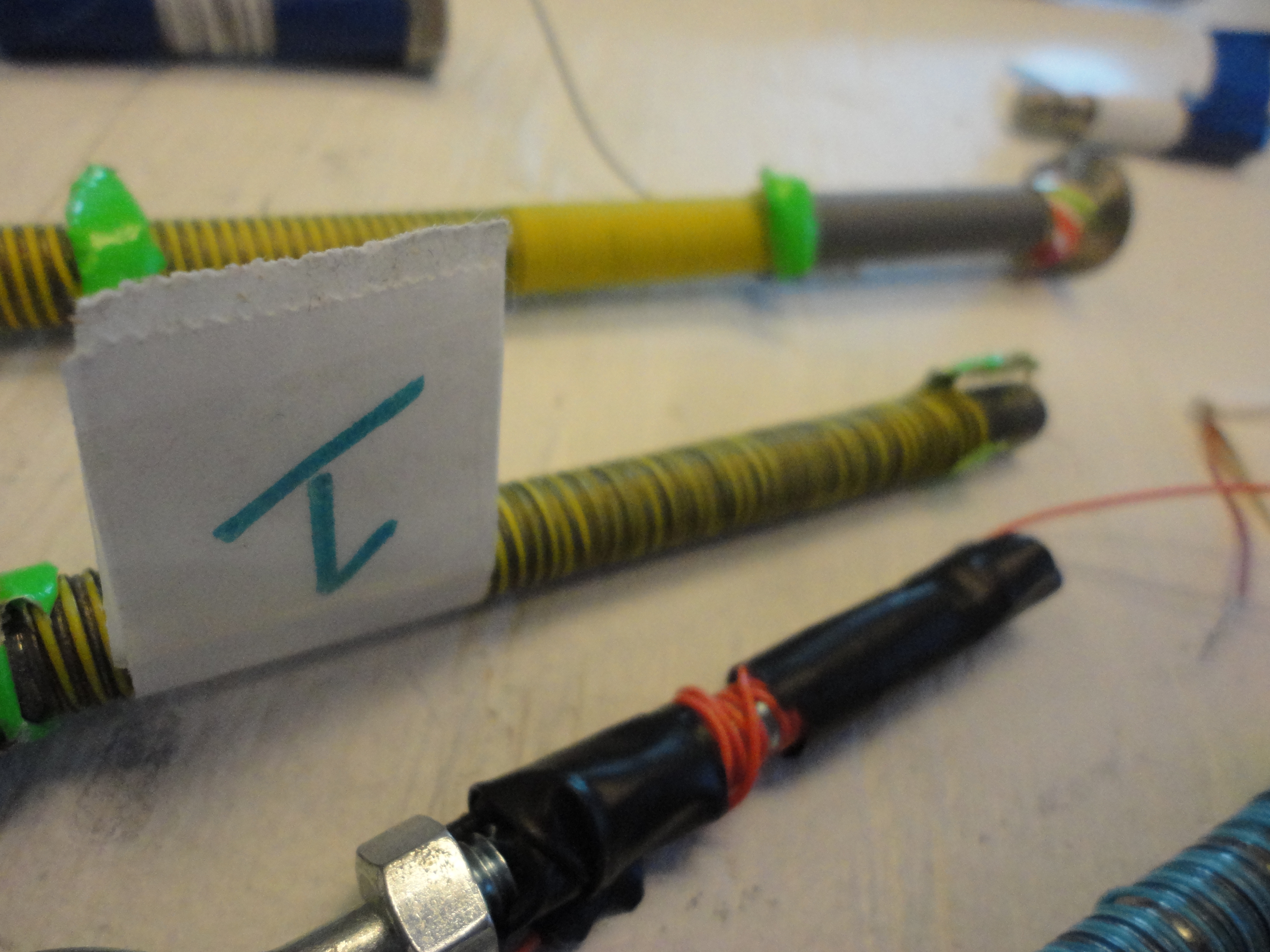
With my standard and objective out of the way, I went straight for materials:  copper wire, batteries and bolts.  I had all of this laying around the makerspace, but you can pick up enough for a class of 20 for under $30.  A better way would be to ask your families to donate old wires from computers, printers, etc (most of ours came from an old printer wire) and bolts from their junk drawers.

Next the students and I engaged in a series of small experiments and projects.  Each experiment asked a pretty specific essential question, scaffolded so each question built upon the last conclusion.

So here were my questions, in order:

What is an electromagnet?

How can I make my electromagnet stronger?

Which parts of the electromagnet make it the strongest?

Can I make a weak electromagnet?

How would I use this to create a machine?

Some of these questions were answered with experiments, while others were answered with maker projects.  For example, the electromagnet discovery was a maker lab – we simple made various electromagnets and tinkered with the final result.  On the other hand, we used the scientific method to discover how the number of coils, size of wire and core, etc, affect the strength of the magnetic field and measures those effects.

Formative assessments are mostly informal check-ins on project quality, whereas my summative assessment was a rubric-graded exercise at the end of the unit.  My students had many different levels of success, but all showed positive learning growth.

Curt Gabrielson’s book, Tinkering, is an invaluable resource for electromagnet based projects.  Can you create a mouse trap catapult with an electromagnet trigger?  How about using the electromagnet to make a dangling paper clip dance?  There’s endless project possibilities.

Thank you for visiting my practice zone and project showcase.  If you wish to lend your support for this site, please like WoodshopCowboy on Facebook or follow me on Twitter.  If you are interested in making and education, why not check out Work Notes, a curated set of articles from the web, published every week?

Make it safe & keep the rubberside down.

WoodshopCowboy.com in the Media this Summer

In an incredible blitzkrieg of media attention, I’m found all over the web this summer.

First, Edutopia, a educational non-profit,  published PBL Through a Maker’s Lens this July.  The piece is a shortened, generalized article based on a previous WoodshopCowboy blog post.  So far, it’s brought in 15,000 views and over 1k tweets.  And counting.

It also won the SmartBlog Editor’s Choice Award for July.  SmartBlog is an industry news journal which curates the best articles from the most reputable sources around the web of various industries for its readers.

badge

In August, I spoke on Edutalk.org’s Live Education Podcast, going into more depth about MakerEd and what its incorporation means for education

Listen To Education Internet Radio Stations with EduTalk on BlogTalkRadio

Also in August, I spoke at the local Woodworker’s Club of Houston.   I spoke about my woodworking experience, local makerspaces and how today’s educators incorporate woodworking into their classrooms.  I even showed off a few new projects!

L1050217

Thank you for visiting my practice zone and project showcase.  If you wish to lend your support for this site, please like WoodshopCowboy on Facebook or follow me on Twitter.  If you are interested in making and education, why not check out Work Notes, a curated set of articles from the web, published every week?

Make it safe & keep the rubberside down.
Why I Do This: A Bowl, or a Metaphor

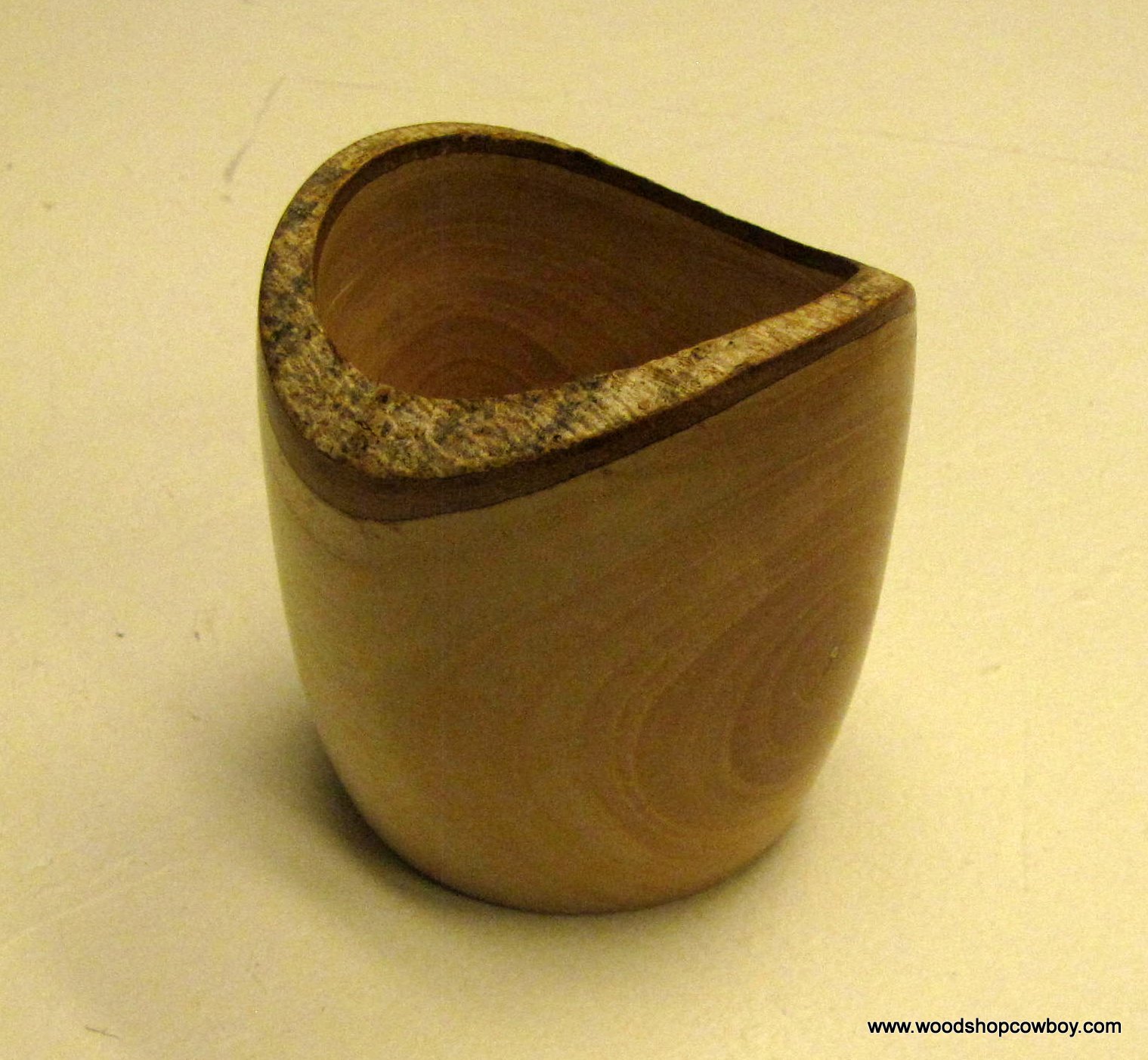
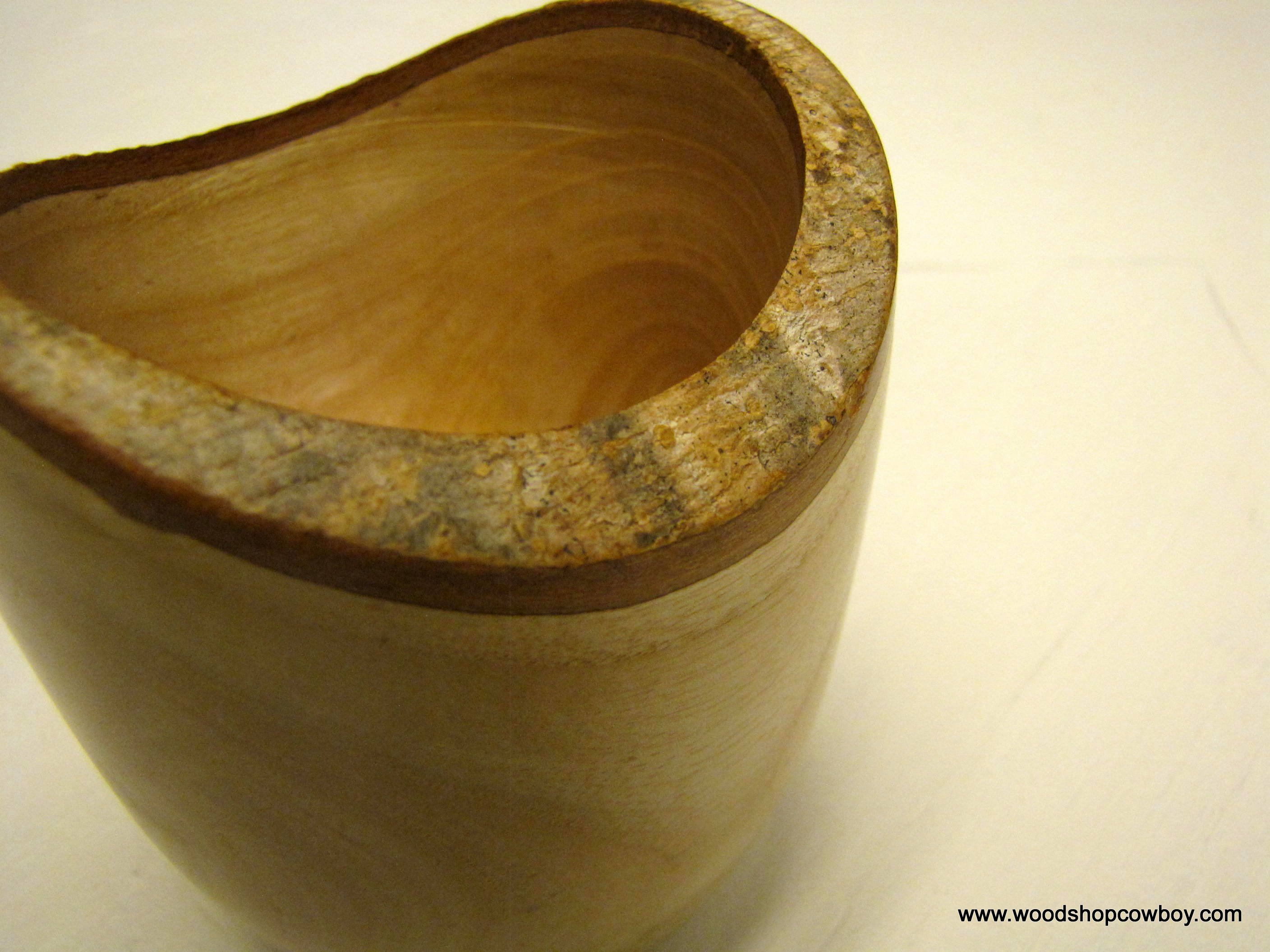
1-IMG_0003He said, “This bowl was made from Australian Ash that was blown down in Hurricane Ike.  Most of us would call it trash wood, but I cut a few pieces, waited a few years and turned it for you. I thought it an apt metaphor for what you do:  you take in children that others discard and find the beauty hidden underneath.”

This is what I do.  Before I watch a child discover algebra, or develop an understanding of electricity, or build a catapult, or program a computer, write a blog post, help them with homework, or just teach, I find the beauty in a child.  There’s two types of people out there, I guess.  Those that look at a piece of wood, a life, a child or a moment and only notice flaws.  And some can look past the flaws, find beauty and carve back the layers for everyone else until only the beauty remains.

That’s why I do this:  I search for the beauty for those of us who have yet to see it in themselves.  2-IMG_0005

Because once, not so long ago,  I was that kid.  And every moment I nearly lost myself in the darkness, someone helped carve me into man.

Make it safe & keep the rubber side down this week.  Thank you for visiting my practice zone and project showcase.  If you wish to lend your support for this site, please like WoodshopCowboy on Facebook or follow me on Twitter.  If you are interested in making and education, why not check out Work Notes, a curated set of articles from the web, published every week?

This Week in the Workshop: The Pot Rack

A quick plan and showcase of the latest project to come out of my personal workshop.  This is a pot rack for my wife’s very expensive set of cooking pans.  It keeps them up and out of the way when I’m working with her hand-me-downs while I’m learning to cook….

DSC_0927

Continue reading “This Week in the Workshop: The Pot Rack”

Community Watch: Woodworking in Houston

Every Intro to Woodworking class, I try to take a little time to share some local resources for woodworking and budding woodworkers.


Where to buy woodworking specific tools:

Woodcraft & Rockler are competing small-business franchises specializing in woodworking equipment for the dedicated hobbyist.  If you want it, it’s there.

Circle Saw & Empire Tools are emporiums of tools.  Great places to go for power tools, saw blade sharpening, and funky tools from different trades.  Locally owned and operated also.

Harbor Freight, Northern Tool, and Lee Tools on Harwin sell cheap tools at cheap prices.  A quick way to build a tool collection, but be careful of tools which may break when you sneeze wrong.  Great places to stock up on supplies such as gloves, rags, masks, etc.

Home Depot, Lowe’s, Sear’s Hardware and Ace Hardware are all “big box” stores with their own brand of house tools.  I really enjoy a well run Ace Hardware, but Lowe’s is closer to where I live.  Mid-priced tools for mid-level prices geared to the weekend warrior.


Where to Buy Lumber:

Canyon Mesquite generally sells flooring and such wholesale.  They are the only game in town (that I know of) for “slabs”.  Randy, the owner, is a great guy and supports a number of projects around town.  He deserves our support too.

Houston Hardwoods has a great selection of woods and seems geared to the woodworker/construction crowd.  Great service, great prices.

Hardwood Products Company carries a limited number of woods, but all of it is S4S, so it saves you time.  They carry mostly domestic species at reasonable prices.  I’ve had great service there.

Clark’s is the big dog in Houston.  Huge selection, including antique stuff, in the rough, unique stuff, etc.  The service is top notch.  Check out their website for this week’s specials.

Where to Learn More Woodworking:

TX/RX Labs of course!  Not only am I a member, I’ve taken tons of classes there.  We are constantly upgrading the facilities, bringing in new classes, etc.  Open houses on Friday nights, 7:30 to 9ish.  Our classes are taught by a mix of professional artists/engineers/creatives, dedicated hobbyists, and all-around great people. (I think…)

Houston Makerspace holds a variety of classes taught mainly by professional craftspeople.  While I haven’t been there for a class, the space seems well thought out and put together.

Woodcraft holds day-long classes every weekend with a revolving set of classes and teachers.

Leisure Learning often has woodworking, though at the moment, they only offer one class.


People/Organizations to Talk To:

The Woodworkers Club of Houston meets on the 2nd Saturday of the month at Baylend Community Center from 9am on.  While the crowd skews older, they are absolute wizards with the woods.  Any question can be answered by talented people.

As I become aware of more places and sources, I will continue to update this page.Make it safe & keep the rubber side down this week.


Thank you for visiting my practice zone and project showcase.  If you wish to lend your support for this site, please like WoodshopCowboy on Facebook or follow me on Twitter.  If you are interested in making and education, why not check out Work Notes, a curated set of articles from the web, published every week?