I apologize for the lack of “this week in the shop” updates. I am currently working out my to-finish list for the end of the year. I’ve got a grades to enter this week, preferably before mid-quarter progress reports go out. It seems I have my hands full. Pictures and list after the jump-
Gear Review: Groz Planes
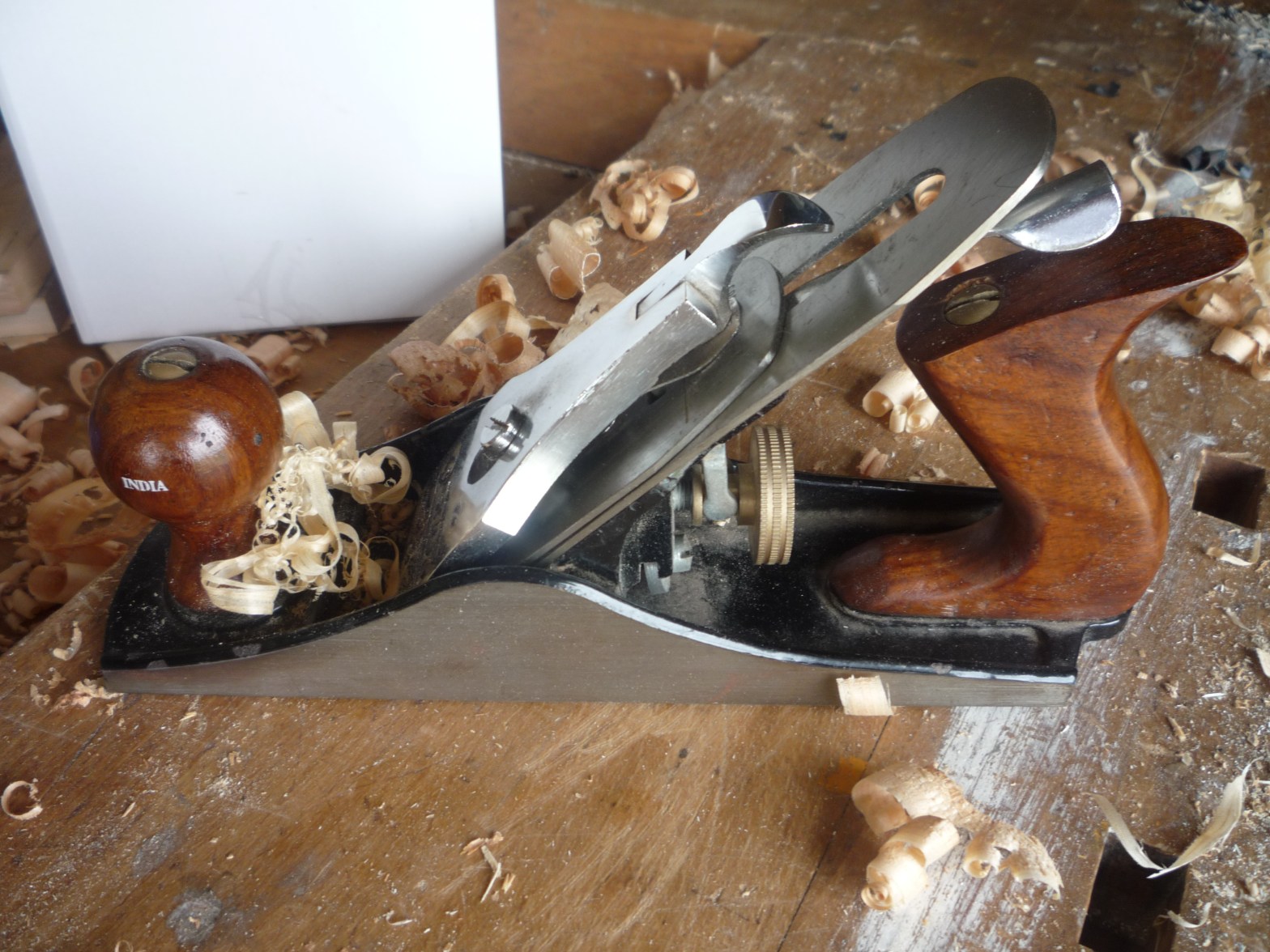
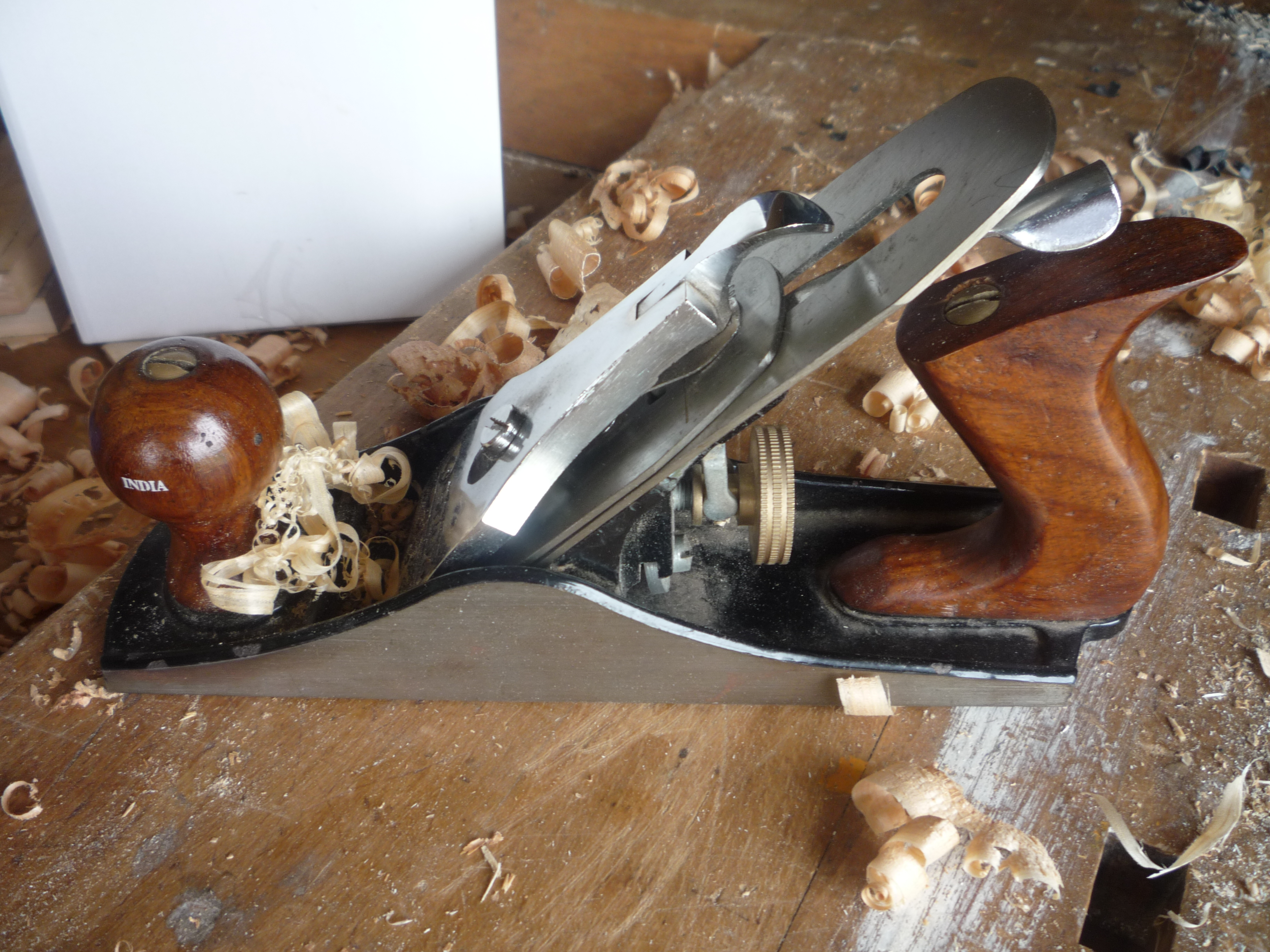
In the woodshop today, I spent some quality time with a set of 3 Groz planes. The block plane (unsure what the Stanley No would be), the Jack Plane and their Jointer. I’ve been pleased with the results throughout this year. I sharpen the blades about once a quarter or during long breaks, and when they see an enormous amount of use.
Here’s a shot of the block plane at work today:
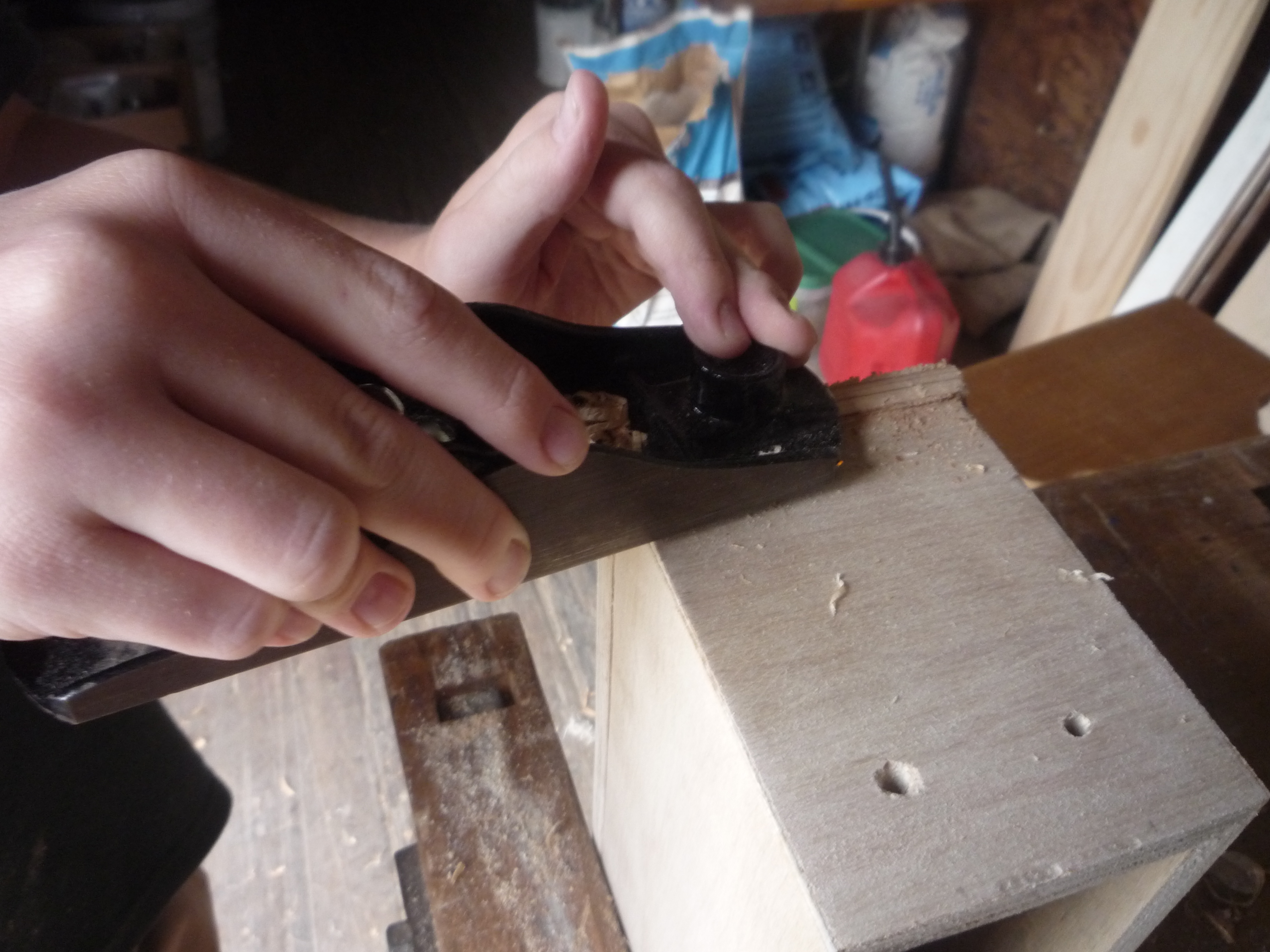
Groz planes are manufactured in India and you can pick them up at “Woodcraft”:www.woodcraft.com or other retailers. The planes take some setting up to get dead right. You have to flatten the sole and sharpen the blade to get them working correctly. I did not have to fix the machining of the frog, screws and such. I spent three to five hours in August getting these three set up. I followed this method to set the planes up. Since then, I have only sharpened the blade.
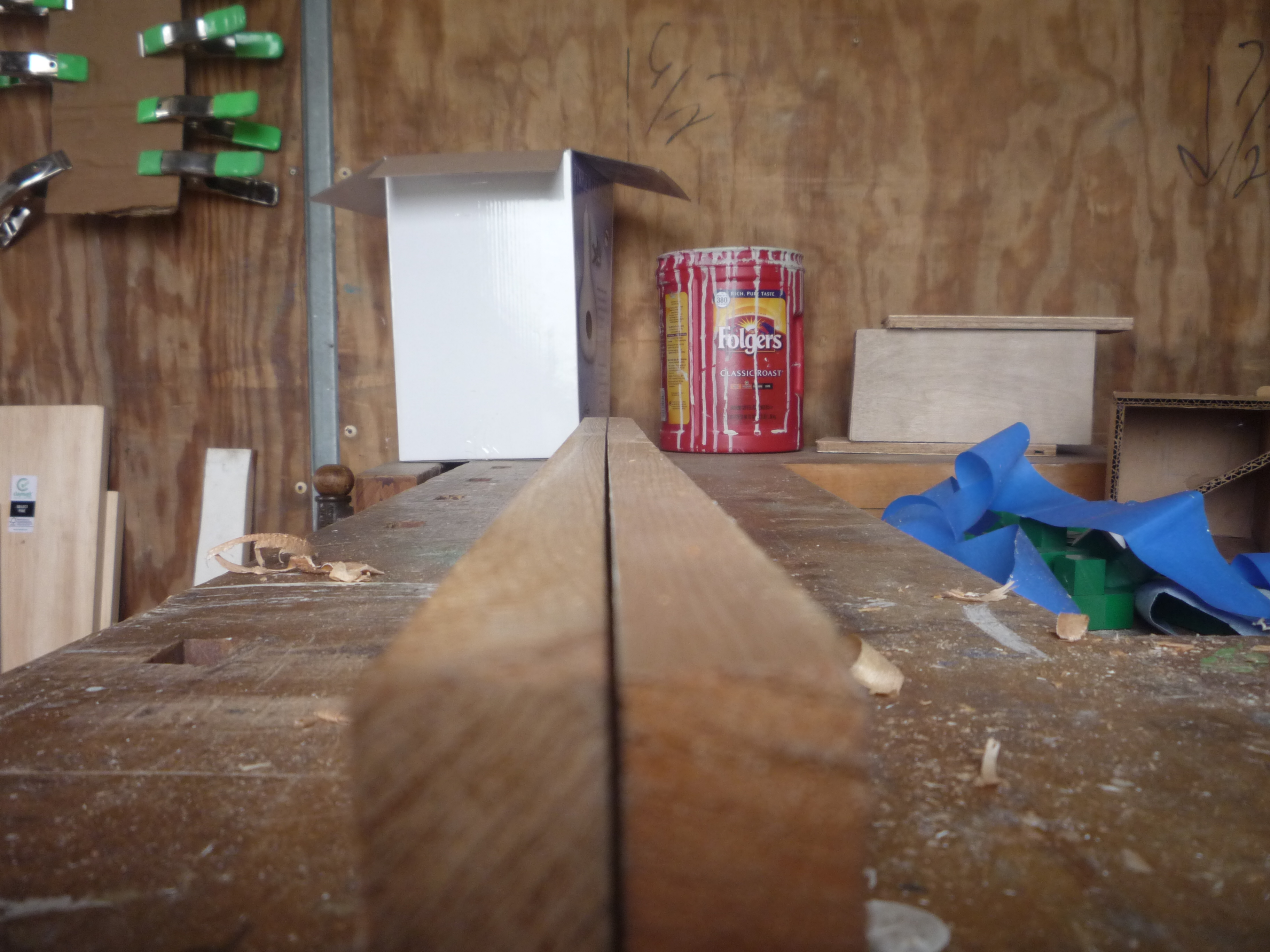
You’ve seen most of the results – the Clock project was milled with the Jack plane. Here’s a good shot of two matched boards for a bookcase I’ve been guiding along:
 I think these planes are nearly perfect as student planes – they are real tools that really work at a decent price. The set-up time is substantial, but once properly set up, the planes take abuse well. If a student drops or otherwise mangles one, the cost means they are replaceable under a minimalist budget. The build quality means the tool should last. The results speak for themselves.
In my home shop I’m replacing most of my India/China planes with L-N and Veritas stuff. Their equipment just sings in a way this Groz probably never will.
If someone out there uses a different brand/type of hand plane for their woodworking students, I’d love to hear…I just put together next years “tool wish list” and while ”The Works” was on the list, I don’t necessarily think we’ll receive it. So tell me what my options are!
How To Re-Plant Galveston Bay Saltgrass (Wetland Project)
My students and I took a little trip down to Baytown to participate in the harvesting of saltgrass for replanting in the Galveston Bay. The students learned a little about the destruction/erosion of coastal wetlands, such as bays and estuaries. They learned about the wildlife which depends on coastal wetlands to survive and grow. We learned how to replant saltgrass into containment pools. We will husband theses plants to health for another two months, then plant’m come May.
Salt grass is grown in muddy, brakish water – in our case, these ponds in a power plant. We ripped them from the roots (no damage, it is only mud, right?) and put them in buckets. Once back on campus the fun begins.

Starting with the growing pools – fill a baby pool with water,

and check the salinity with a spectrometer (I think that’s what it’s called. I’m unsure exactly how it works. Salt should change the way light bends in water, but I don’t know how the instrument measures that). and check the salinity with a refractometer (I’ve since been contacted by the Galveston Bay Foundation who very nicely corrected me. I still have no idea the physics behind the instrument)

A quick ph check,
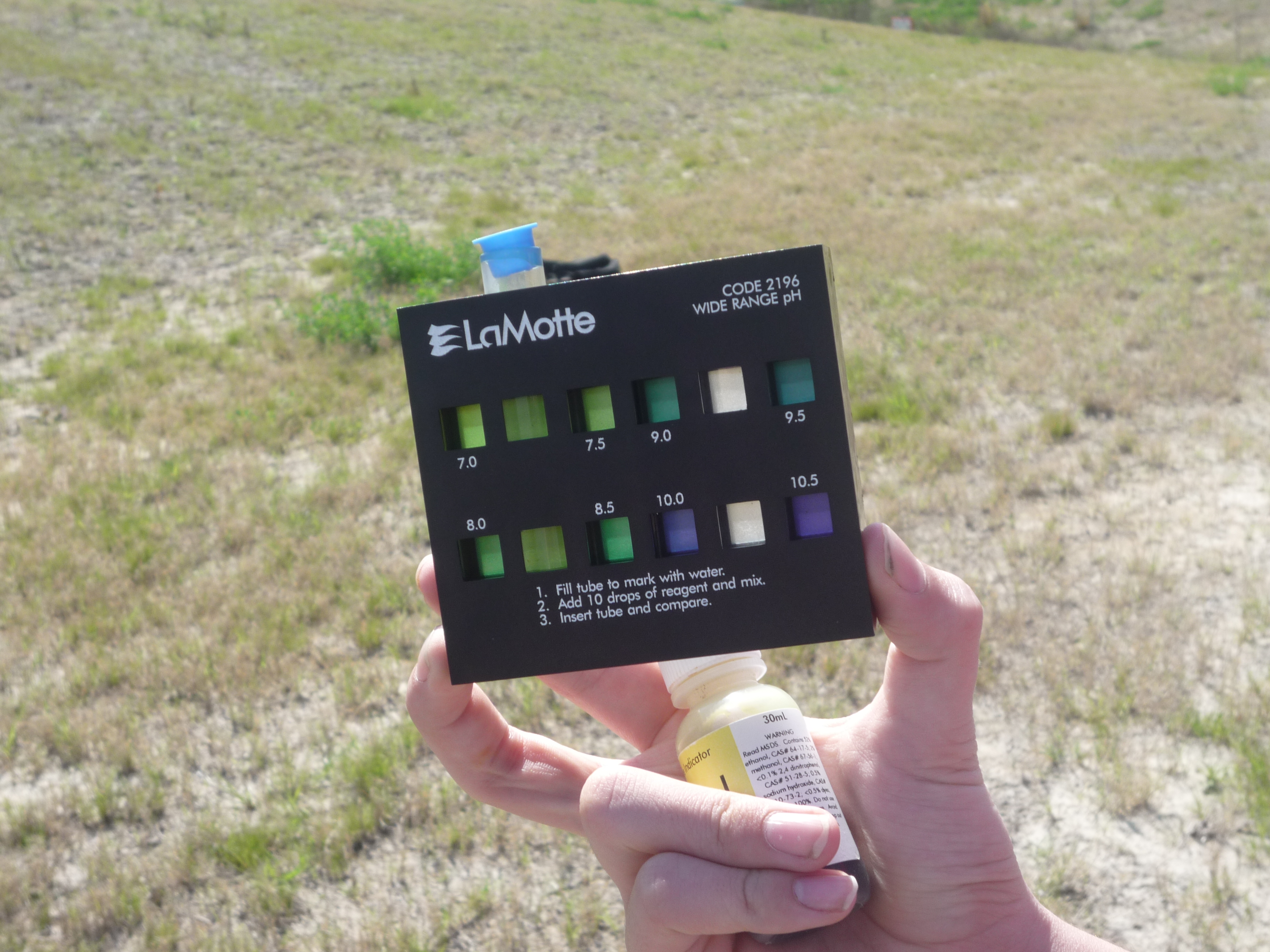
with a wide-spectrum kit. Adjust the salinity and pH levels with the addition of rock salt.

The grass is about as simple. Using trays, fill the tray half full of red clay soil and fill with a fertilizer pellet.

Add some more soil, one plant and tightly pack both down into the tray. Unlike planting a rose bush, or any land-born plant, where the addition of oxygen means the plant will grow faster, loosely packed soil kills salt grass through instability. The plant tips over, bends and cracks its stem and then….dies. That stinks. Literally. Like dead plant.
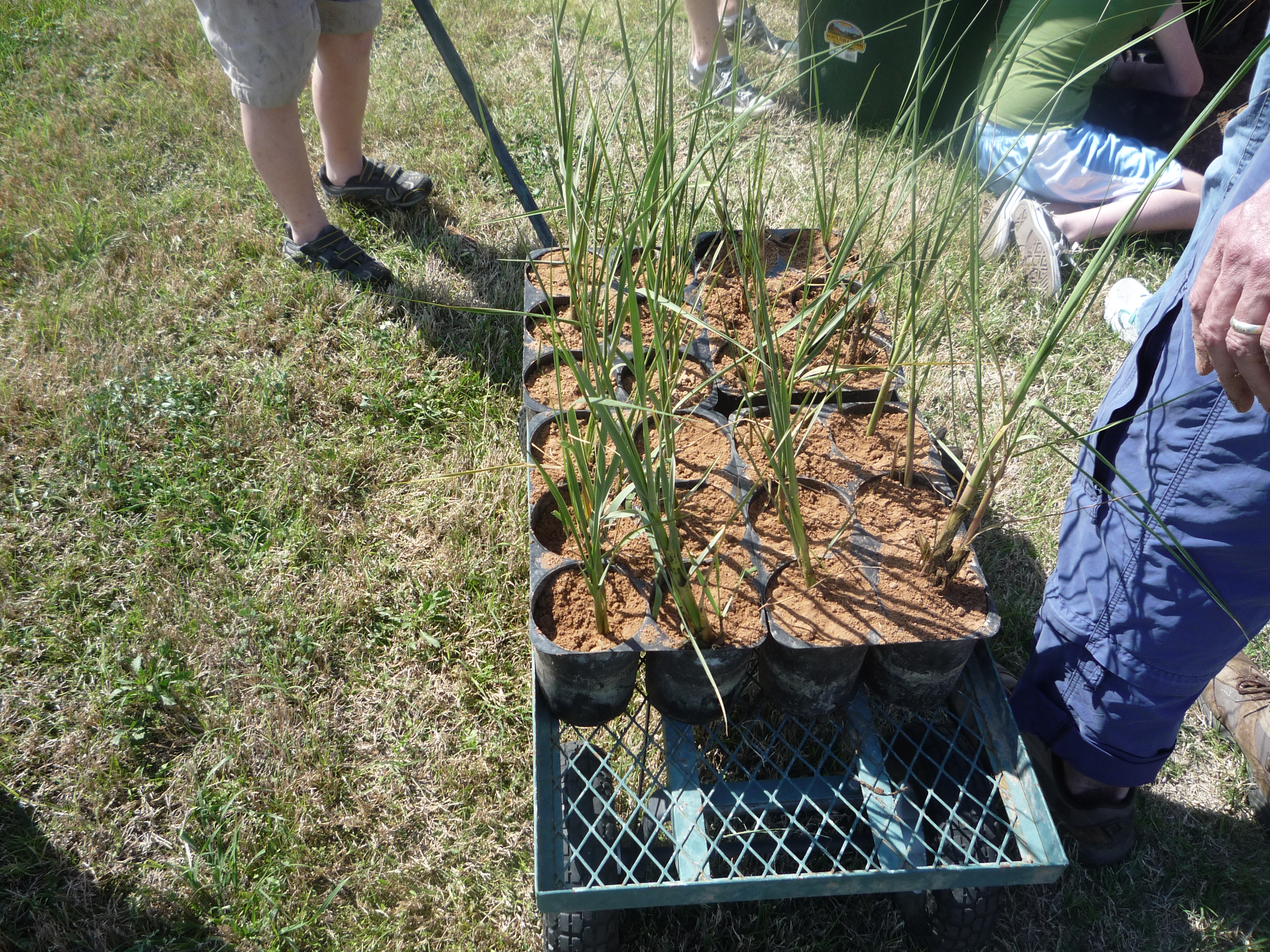
Trundle those trays off to the baby pools filled with salt water and you now have a nursery for wetland plants!

What to do now? A project like this provides a ton of fodder for a teacher. Daily husbandry tasks reinforce several state and federal standards via data logging. In science, students learn to measure various parts of the plant, as well as salinity and pH. Students actually perform basic titration through measuring pH. Student plot plant growth, then note plant color. A stats class can find the average height, and look for a regression line which indicates the growth pattern.
Science and math don’t have a monopoly either. Arts classes can use individual plants as still lifes, or get a microscope and draw sketches of the small squiggley creatures which hitch rides in the roots. English classes produce wildlife guides in a breezy, professional style. Social studies (especially in the Texas Gulf/Gulf States region) can use wetlands as a jumping off point for the effect of natrual disasters in local and world politics. Or maybe they can discover the strange beauty of the Gulf of Mexico through a real marshy book, something like Zora Neale Hurston’s Their Eyes Are Watching God or the Galveston ‘Cane of turn-of-the-century non-fiction piece, Issac’s Storm. It’s all good stuff.
I’m just going to build a rose garden. I can’t actually do all that cool stuff, can I? I beg your pardon, but I did promise myself that rose garden!
This Week in the Classroom: Setting Up the Classroom in Stations

Success in the classroom begins before the students even set foot in the workshop. Yesterday saw the re-opening of school after a long Spring Break. My “classroom” looked like this:

Let’s take a closer look. First, a young man has been building and designing a bookshelf over the past quarter. He’s just getting started sizing stock. Here’s his station.
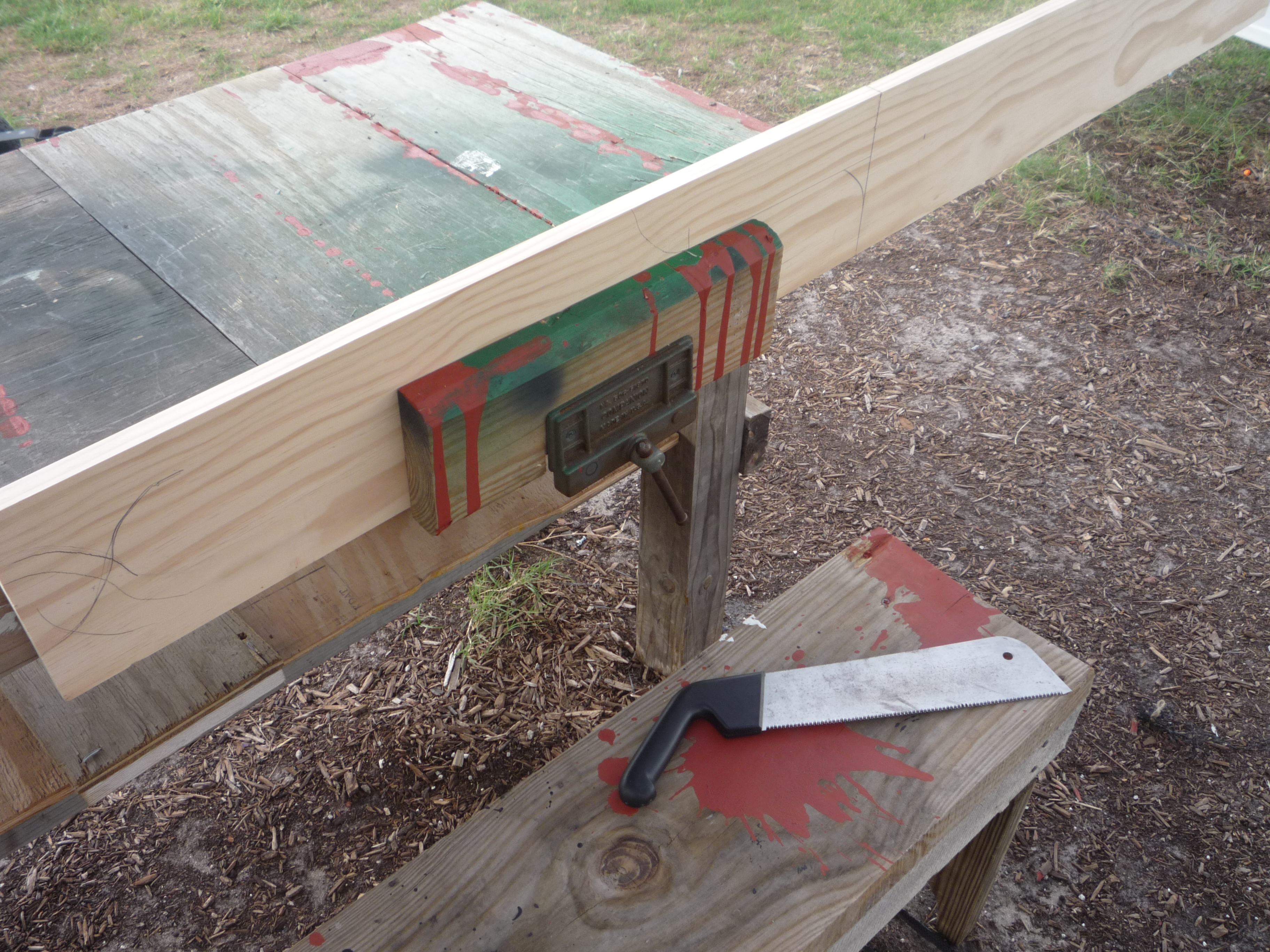
His saw is close by, the wood’s chucked in the vise. I don’t have any other tools near him. The simplicity of the set-up lowers my student’s distractability, boosts productivity and allows me to watch and correct his technique.
Another version of the same situation, yet with a more complicated task (building drawer sides for a jewelry box).

That pink polka-dotted box holds the box-making project supplies. Anything you need: wood, measuring tools, specialized instructions, etc. The just just grabs the “box project box” and the miter saw.
One more time: simplified supply, “station” work to promote independant producation and problem-solving, and a project box.

By using the project boxes, seperating the classroom into “work stations” and simplifing the evironment and tools to the absolute minimum, I was able to guide three students through three different projects. I’ve done similar things in larger sized classes and would like to hear what works for teachers in different subjects and teaching environments.
Make it safe, keep the rubber side down.
This Week in the Shop: A Bed Frame
UPDATE: You can pick up PDF plans for this project at www.woodshopcowboy.com. More plans coming soon!
A little over five weeks ago, a plumbing issue at my residence caused a rather large flood. Since then, my family and I have been staying with relatives. The workshop has been closed for personal projects until further notice.
This weekend, though, I collected enough tools to make this bed frame for my relatives as a I’ve-been-here-five-weeks-and-will-be-for-another-two gift.
The rails are 1x6s with a 1x4s used as the rails on which the bed/box spring sits against. I mounted the legs, from IKEA, using wood screws. All in all, this bed frame cost about $150 in materials versus the $170 for an IKEA boxspring & legs. Not enough savings to make it worthwhile, especially as I’m “factory-fit” challenged.
The bed frame does make a great argument for the use of power tools. I used a miter saw, air nailer & power drill to get this beast together. It took one and a half hours, start to finish (I know, I was racing the sunset). My eldest son watched me from a child-container. The power tools gave me the confidence & ability to finish the project quickly. Just wish they were a guarantee for tight joints.

Remember to like WoodshopCowboy on Facebook and be entered for a prize drawing.
Make it safe & keep the rubberside down this week.
This Week in the Classroom: What Do Plants Eat? And How Does It Grow Leaves? And Other Teaching Errors
What exactly, is a plant’s food? And where do the raw elements that make up a tree trunk come from? Take a moment and think up two answers.
I had a student ask these questions on a recent field trip. The answer given by the speaking biologist to the second question was wrong. In fact, I’m willing to bet your second answer was wrong too. Plants convert sunlight into energy, which is analogous to an animal eating sugar. Then where do the raw elements for cellulose (the stuff in a plant’s cell wall) come from? Not the soil, as you probably answered. A plant breaks down carbon dioxide (the air) to create the cellulose in the cell walls (its formula is C6H10O5….nothing there about silica or iron or calcium or what-have-you). That oak in your front yard? It’s air and water chopped up in a blender and squished out like sausage.
A teacher faces an enormous pressure in the classroom to “get it right”, whether they teach math, science or woodshop. English teachers are expected to write good. That pressure comes from an expectation on ourselves, our students, the culture of teaching and from our parents – but sometimes, in the give and take of class discussions, we get the answer wrong. Usually we know better, sometimes the correct answer (for example, is there gravity in space? Or, can an object be in motion without a force acting upon it?) isn’t always the “common sense” answer. And sometimes, the subject we teach happens to be a political minefield, and the “right” answer becomes a little less obvious.
We don’t always have to get it “exactly” right. A teacher can admit mistakes. Nor does a teacher need to believe in being infallible – there can always be room for another interpretation of a poem, or the squishiness of real-life measurements versus theoretical computations or a different technique for sawing a board. But if nothing is truly correct, then why even study a subject or care about getting the answer right?
This can happen in a scientific setting too. My high school biology teacher didn’t begin his course with cell walls and cellulose, he began with an explanation on how scientific thought & terminology worked. He launched into evolution with a statement similar to this: “Regardless of your, or my, personal views on creation, this is a scientific course. I will explain biology to the best of my ability using best the tools and framework science currently has – and that is Darwin’s theory of evolution through natural selection. I don’t intend to change your hearts and minds and I won’t engage in a debate out it. This is a biology course and the answers, for the purpose of our time here, can be found in within current accepted scientific thought. I ask you to respect that.”
I appreciated that statement as a student. I appreciate it a lot more as a teacher. He allowed my own opinions to be validated, if necessary. He then asked me to respect his position as a teacher, which I did to the best of my ability. He neatly side-stepped a minefield by phrasing his knowledge as part of a larger continuum. He asked his students not to change their minds, but be open to a different way of thinking and engaging the world. It’s a similar frame-shift necessary to see the value of Freudian psychology or analyze literature through the lens of a different culture. I think many of the “culture-wars” which happen in the classroom occur in part because teachers forget to explicitly state what we are actually doing: asking the student to think critically about the subject with an open-mind and to approach it with a sense of belief in the subject. The student doesn’t need to ask “why even read poetry?” to try to answer “what can I learn from this poem?”
Back to mistaken knowledge in the classroom – my point here has little to do with the evolution-creationism debate, but more to do with how a teacher can allow for factual error or differing opinions about controversial subjects. My biology teacher allowed for differing opinions while still engaging his subject matter. As I wrote about in this post, I had to re-teach a basic skill I thought my students had mastered. Or an English teacher can simply admit “I have no clue what Shakespeare is talking about in this monologue, what do you think?”
As a teacher I don’t try to avoid factual errors and controversy, because I don’t think I ever really will, but to avoid those things becoming roadblocks in my students learning and my teaching. Students, especially students which exhibit very rigid-thinking, tend to see the classroom as a black-and-white world. You get the answer right or not. The bubble is filled or it isn’t. Errors and controversy become roadblocks for some students. By recognizing mistakes and controversy, I ease those students into a different frame of mind. By allowing the concept of error a place in my classroom, I believe I create a richer, more nuanced environment for my students – I hope you do to.
Make it safe and keep the rubber side down.
This Week in the Classroom: The 2×4 Shaving Horse
In preparation for a walkin’ cane project, I built a dirty looking 2×4 shaving horse. It ain’t named Trigger, though I might name it Jimmy Stewart. Whenever I think of the description “long face”, I think of Jimmy Stewart.
 I’ll walk you through my build after the jump…
Continue reading “This Week in the Classroom: The 2×4 Shaving Horse”
Teacher Resources: TEDTalks on Education
The TED Talks started in the 1980’s as a Silicon-Valley conference focused on software, technology and design. Now, it’s the destination for smart hipsters and brilliant researchers, visionaries and experimenters to express their passions and become the circus attraction. I’ve been watching a few of these talks on and off for a year or so. I don’t have a TV, and these guys are the closest I get to PBS. While I’ll send you over to their site, www.ted.com, know they are on hulu too.
On the off-chance the conference is still around when I become a famous and confident master-teacher…I’d like the opportunity to get 15 min and express my views on education. Until then, there’s a great number of talks to see:
First up, Dave Eggers. The guy edits/owns/somehow is responsible for McSweeney’s, a comedy magazine, yet his best work may be with students. He has sent the last few years volunteering to – rather, finding himself under the imperative t0 – tutoring young San Franciscans in English every day. And he got his company to go along with it. And to sell pirate supplies in order to make it happen. My former employers, Citizen Schools, leverages the same sort of volunteer work for kids. I’ve found it works. We need volunteers to teach, whether in a school or pirate store. The more caring adults, the better chance a student has.
My school is green. The greenest in TX. This guy beats us by a mile.
No consideration of TED Talks would be complete without Sir Ken Robison discussing creativity. I live off creativity. Recently I stepped into a classroom discussing addictions such as drugs, tobacco and alcohol. I neglected to tell the kids of my most obvious vice, but I did claim addiction to creating. I build all day at work, I write here on this blog, I bang on guitars and create noise, I paint, I raise kids. I love to create and I’ve been lucky in finding an education path that has let me do that. Robison has spent considerable time thinking about how education can hurt creativity and has a persuasive argument for change.
For a classroom perspective, I enjoyed these two talks: Diana Laufenberg & Dan Meyer
Laufenbuerg’s talk describes a teaching philosophy, while Meyer breaks down his teaching technique. Notice the focus – Laufenbuerg asks “when and how do children learn best?”, while Meyer seems to ask “what tools make students learn most?” In my woodshop, this seems to play out in by my choices in projects (a stool) and tools & joinery (chisels & dovetails). I’ve spent the last three weeks (six hours!) watching a student work towards creating a curve for a bookshelf. Not the bookshelf design – just an upper curve. My philosophy tells me practice, time and mistakes will become learning. My technique is to move from published plans to copied sketches to CAD work to drawing the curves on a template. Which will, sometime in the next two weeks, be transferred to the final product. All those steps aren’t necessary for the student to create the skill (in Meyer’s classroom, this would be algebraic computation) but they are necessary to create what Meyer wants and Laufenbuerg articulates: true project-based learning.
On a final note. I have a dream of retiring and making a place like The Tinkering School…but there’s one just up the road. Maybe they need a Houston summer camp.
This Week in the Shop: Refurbish A Children’s Bike

The 16″ childrens’ bike project has cleared my outbox. I’m busy in reflection mode with the students, examining all the different parts of our work for ways to improve the product, teaching and quality next time. I thought the bike itself came out well:

If you’ve followed the blog over the past two months, then you’ve seen some of the progress. If you haven’t, or are interested in doing this yourself, the I’ll recap the project after the jump.
Continue reading “This Week in the Shop: Refurbish A Children’s Bike”
This Week In the Classroom: Quadracycle In Progress & DIY Wood Bongo Drums

It’s that time of week again – I’ve had some personal living arrangements wetness and have been living out of a dufflebag and a smile. Reminds me of college, but at that time I didn’t have two in diapers…
At the home workshop, I’ve been banging away.
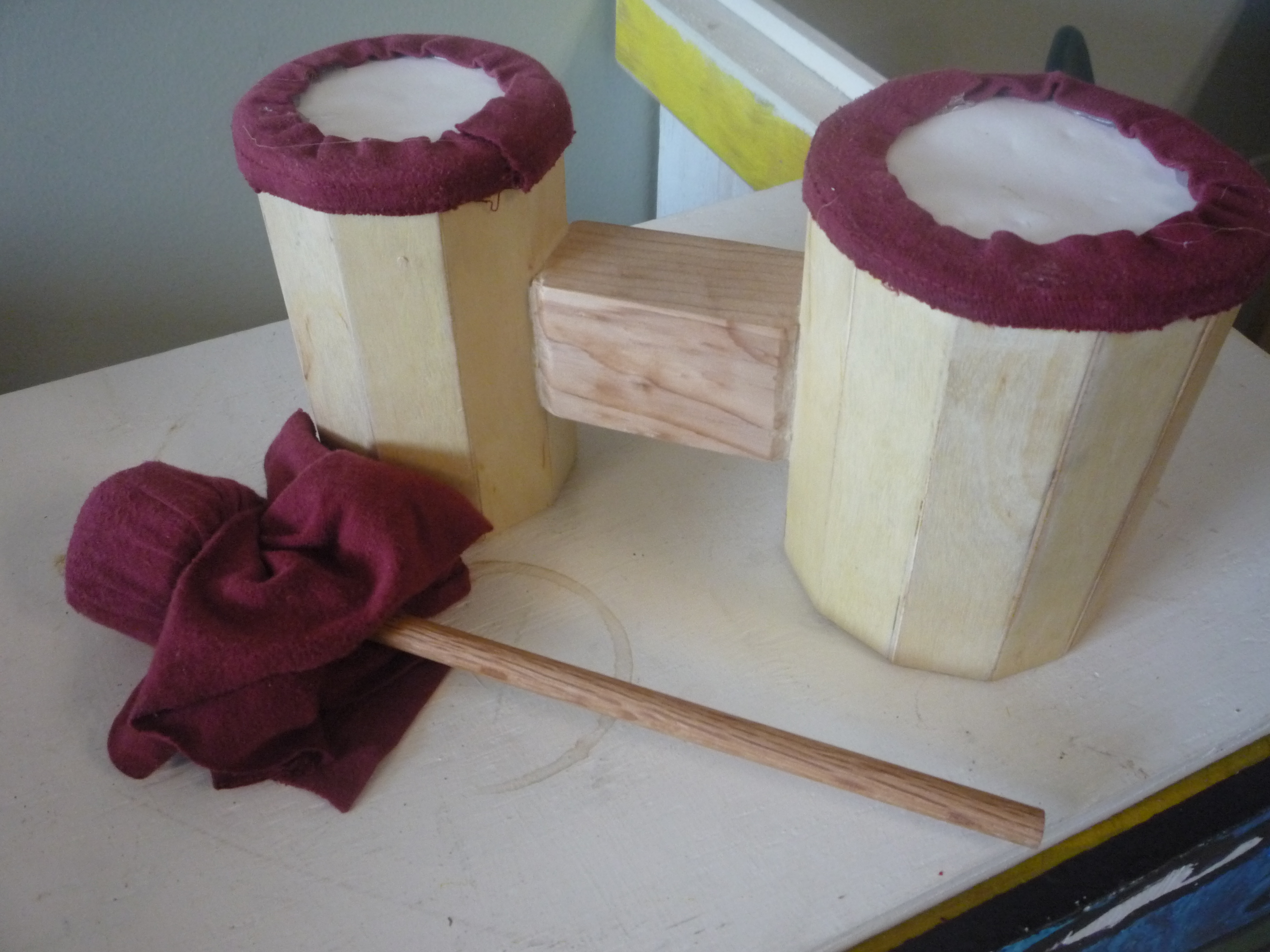
So, in one project, my segmented tube experiments paid off. I glued the old-bruce-springsteen-poster-paper drumhead, slapped on some cut-off t-shirt trim, rubbed on a little butcher-block wax and called her done. The little tyke likes it. I’m going to build a bigger one, only this time I’ll down two tall cans of Lonestar and use those as drumheads. After the week I’ve had, I’m really looking forward to that project!
Work, as always, has been rewarding. The stakes worked out well and the Rose Garden’s about done.

That’s rich, organic soil on top of a four-inch leaf layer. If that don’t make me grow into a prince with a narcissitic streak, I don’t know what will.
Part and parcel to the Rose Garden is the coffee grounds/chaff composting center which was built, painted and placed by a fellow teacher this weekend/early this week.
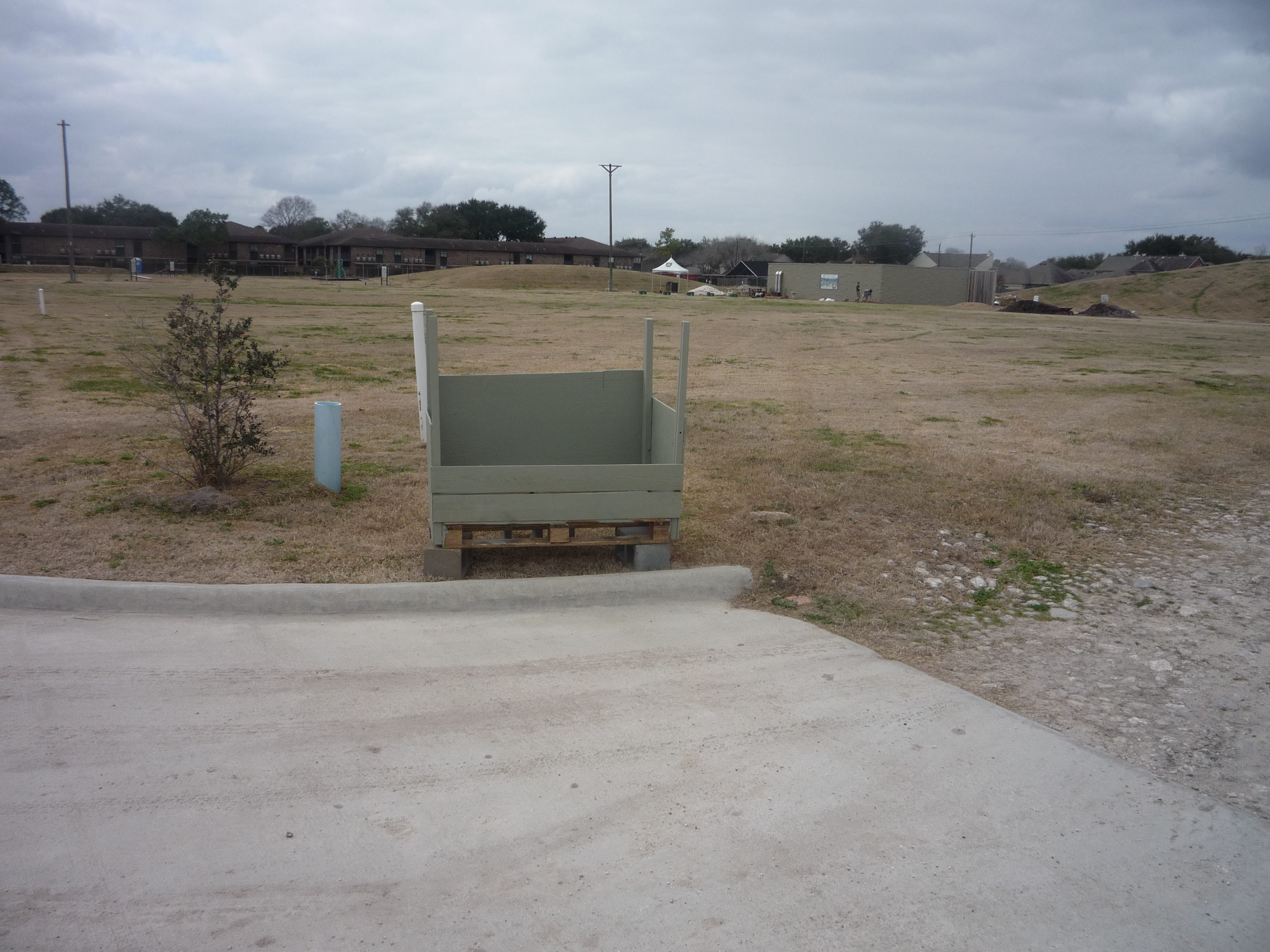
I have to write a news article on this. I might just tell everyone that he actually can get a project done on time and ruin his good reputation.
My ramblin’ men put together more of their Quadracycle. I’ve blogged about them before – we had CAD drawing class a few weeks ago. She’s got two rods placed on it and the Quadracycle works after a fashion. I’m expecting they’ll finish it up sometime in the next two weeks.
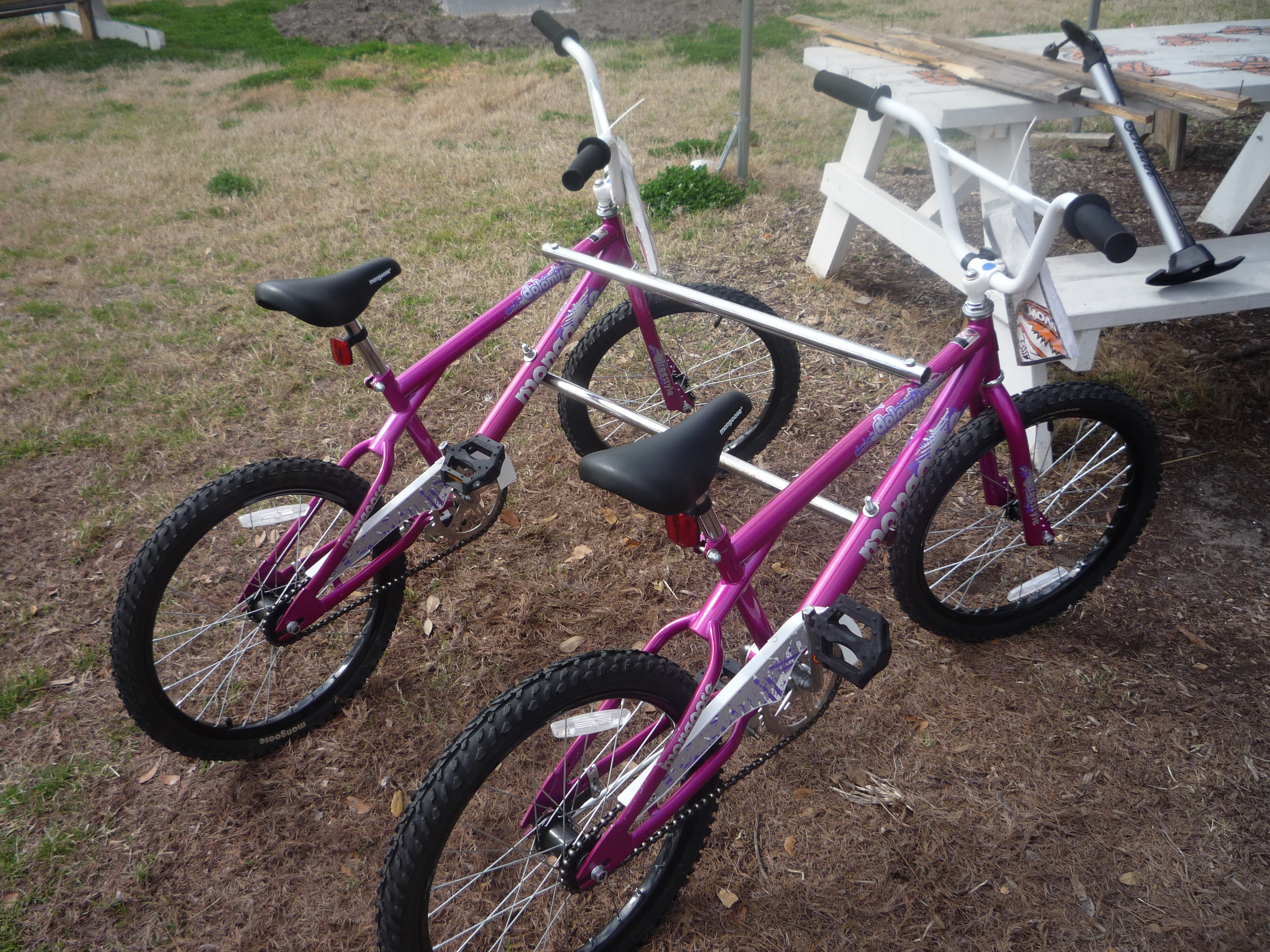
We got to drill through metal \../–\../

And used some wrenches (with a nice interior shot on how those get bolted down)

After placing the last rods and testing it out, one of my guys turns to me and asks if they are done with the project. I say, “No, we have a few more parts to place. Then I think we might paint it.”
“Good,” he says. “It’s pink.”
Make it safe and keep the rubber side down.
 WSC Designs