This Week In the Classroom: Curriculum Plan for Spring of 2011

Good week for struggles and not-quite-there-yets in the woodshop this week.  Three projects left the floor complete.  The first, chalkboard that has been wind-blown, vandalized and otherwise destroyed three times.  We’ll see if it sticks this time.

The other two projects I failed to take a picture of.  On Mon or Tues, I’ll put up a picture of those two projects.


I spent a majority of my time this week networking with the community-at-large and negotiating class objectives with other teachers.  I have a few interesting classes being put together:

Two Art Car themed classes. One focuses on building a parade float, the other will design bicycle-based alternative transportation (think trikes, scooters and quad-cycles).

Working on the Homies.  A home-improvement themed class for adults with neurological differences to gain skills and confidence in home-care.  I hope film some work done by the students to use as a home-improvement show assignment.

Environmental Maintainability. The academic objectives for this class is to learn about and how to maintain the man-sculpted environment of the school.  We have thirty trees to plant over the next few weeks, and about twice that number to water.  I won’t have enough time to do it all, but we’ll try.

A woodshop production class & a woodshop master class.  The main difference between these two classes will be the driving force of the projects.  Masterclass students choose their work within skill level, production students produce what the student business classes need them to.

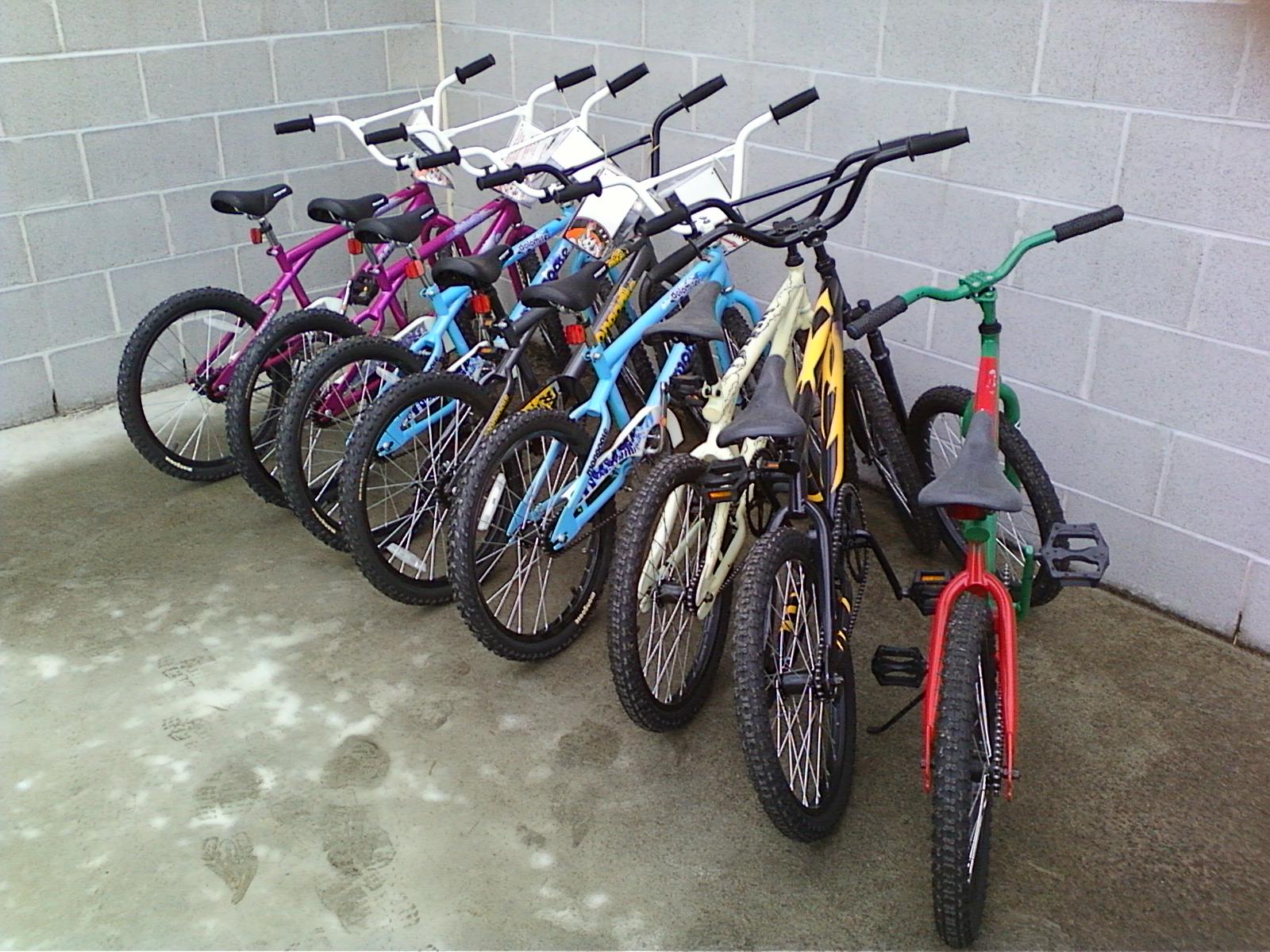
A pair of great photos from the Art Car classes – this is a bike we’ve stripped down and will repaint as preparation for the real thing in the spring:
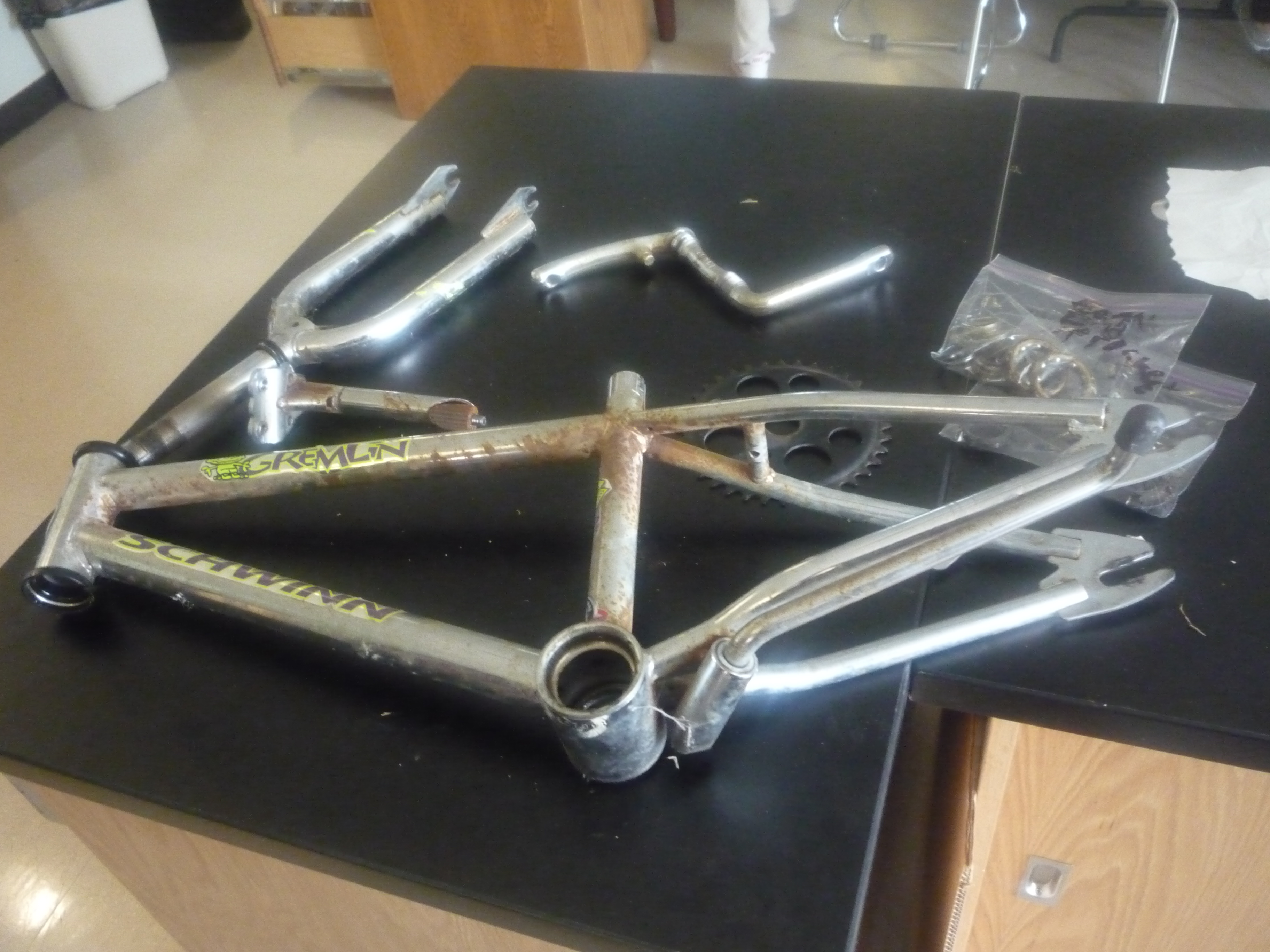
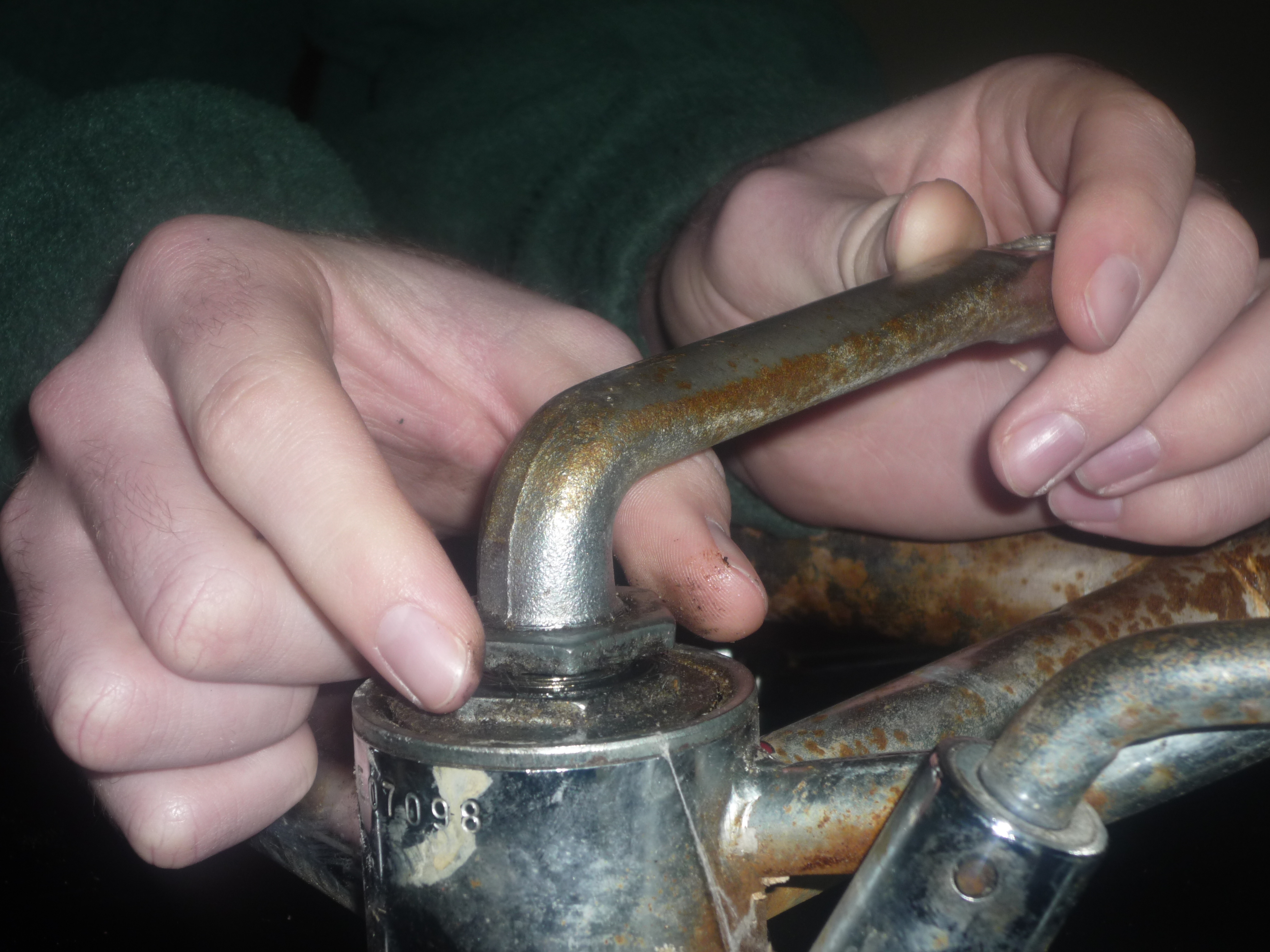
And this photo which reminds me of Doug Stowe’s blog, Wisdom of the Hands.  He was quoted in a recent Globe article. Stowe’s  hand-centric teaching/creative-arts view fascinates me.  I look at the same arguments and studies and come away with lack of a problem-solving skills.  For example, he recently highlighted a study showing that concert pianists use less brain cells to play as their playing ability improves.  As Stowe puts it, “In other words, when we develop hand skills, not only are we able to perform those skills with less attention, more processing power is made available for the advancement of further skills.”  I see it differently – the ability to use less neurons in the action means more neurons are involved in the problem-solving.  A concert pianist has an audience because they engage a piece of music at a level unknown to amateur pianists.  A craftsman deals less and less with the mechanics of construction and more with the problems inherent in construction  – once a painter masters the physical motions to create shades, brides and smudges, only then can they engage in art.  My work tends to highlight the problem-solving opportunities rather than focus on the skills in the hands

Check out Stowe’s site – I find it a great read and have learned a ton.

This Week In the Classroom: What Am I Supposed to Make of This?

What exactly am I to make of this?

It sits in the outdoor storage area at work.  What should I turn it into?  My co-workers grabbed it on a supply run I wasn’t invited on.

Oh, and the bikes have been delivered, well some anyways, for the chop class.  Eventually we will get them in shape to participate in this parade in May.

This Week in the Classroom: The Butterfly Bench & Butterfly Growers

I missed Monday and Tuesday this week – my wife was in the hospital with a parasite.  Luckily, the parasite left on his own and we’ve named him Jack.  Jack is our second son, born on Sun 13 at 5:30am.  A whopping 8 lbs.  A beautiful boy.

But this blog is about woodshop & teaching.  Looking over the 3 and a half days this week, the students accomplished many things.

First, they braved the cold – it’s 40 deg here in Houston and while it didn’t put me out much, my student’s had a difficult time with the weather.  Especially because the refuse and/or cannot plan for the weather.  We pulled through.

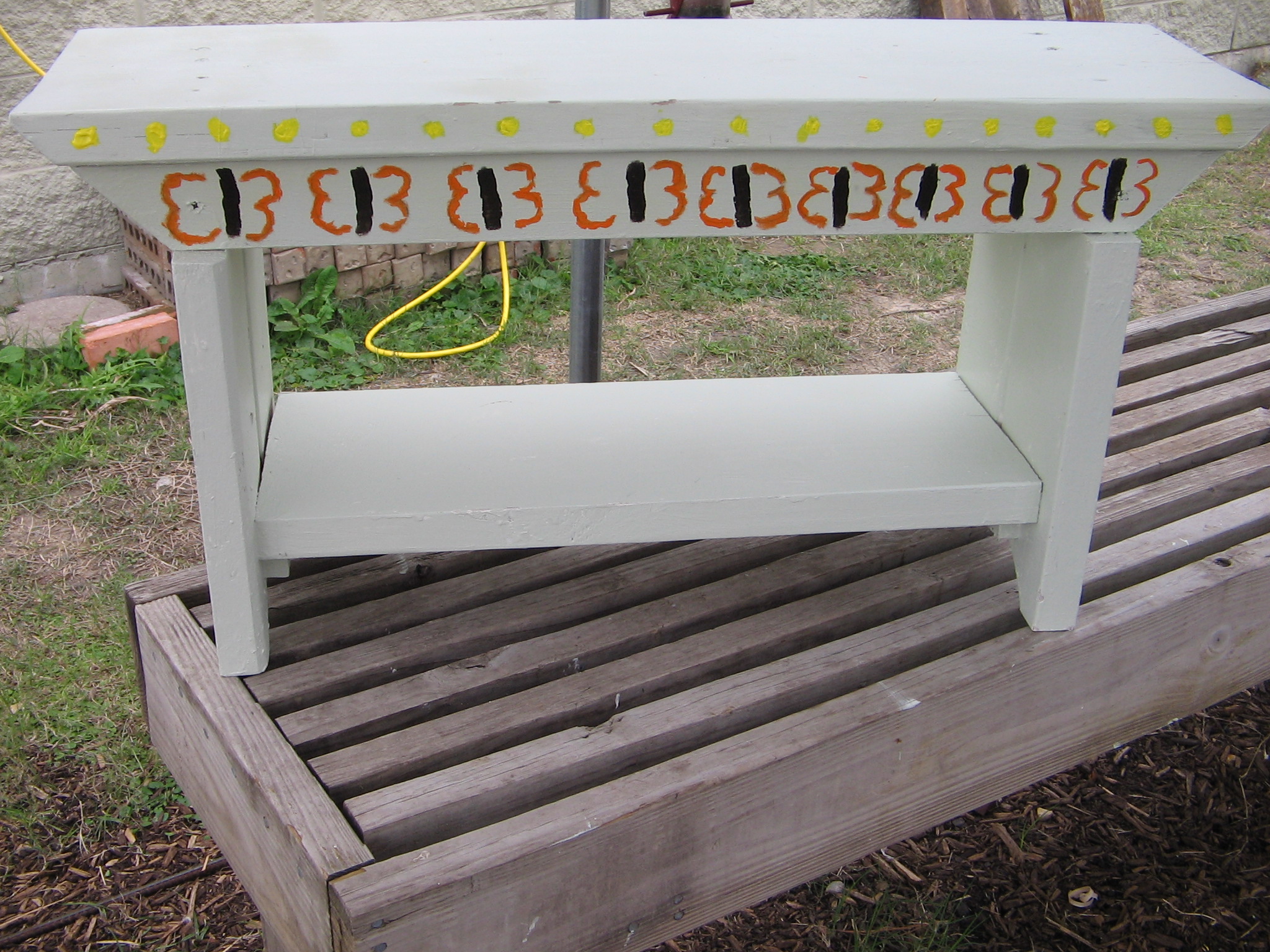
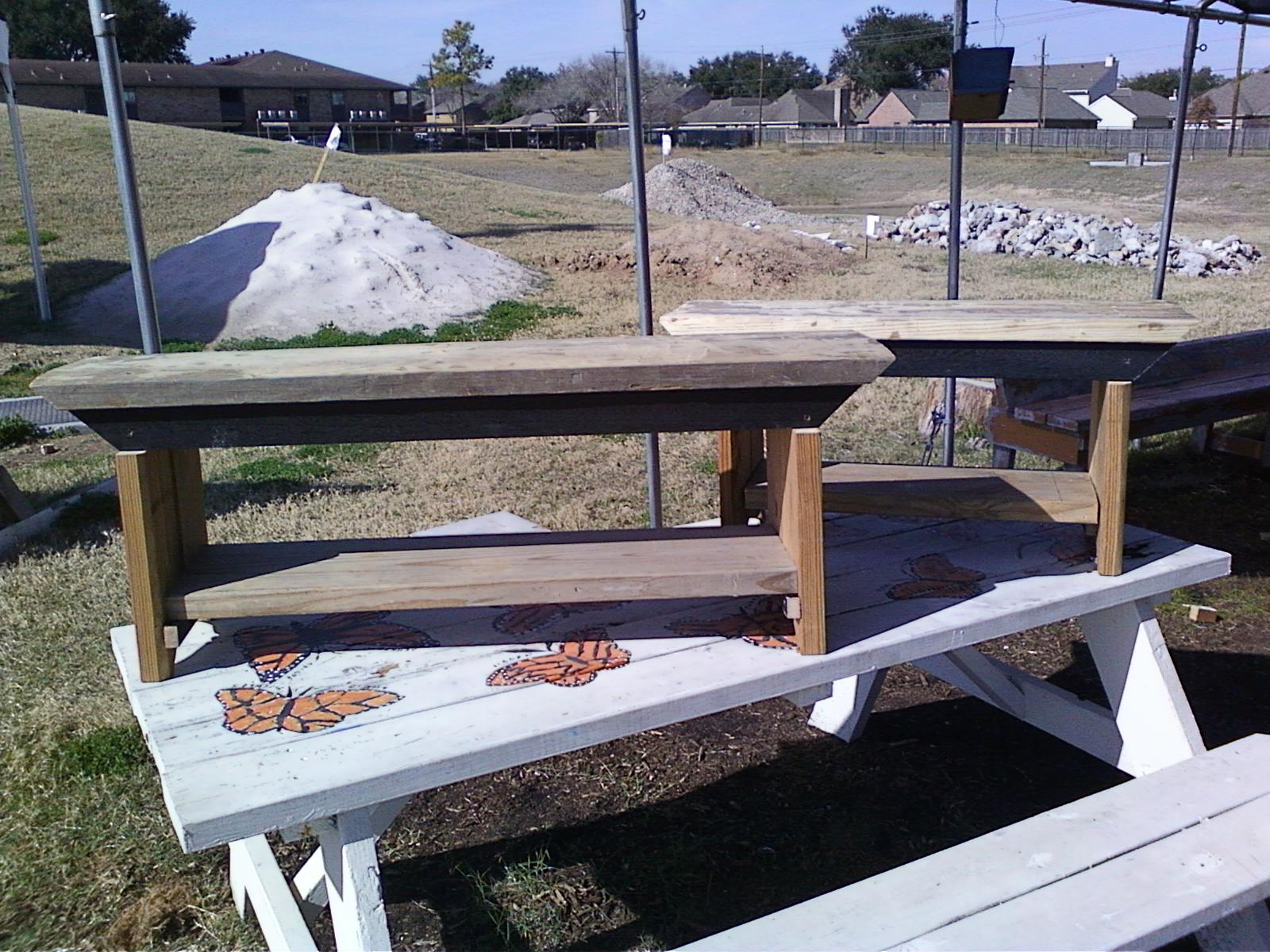
We finished these:

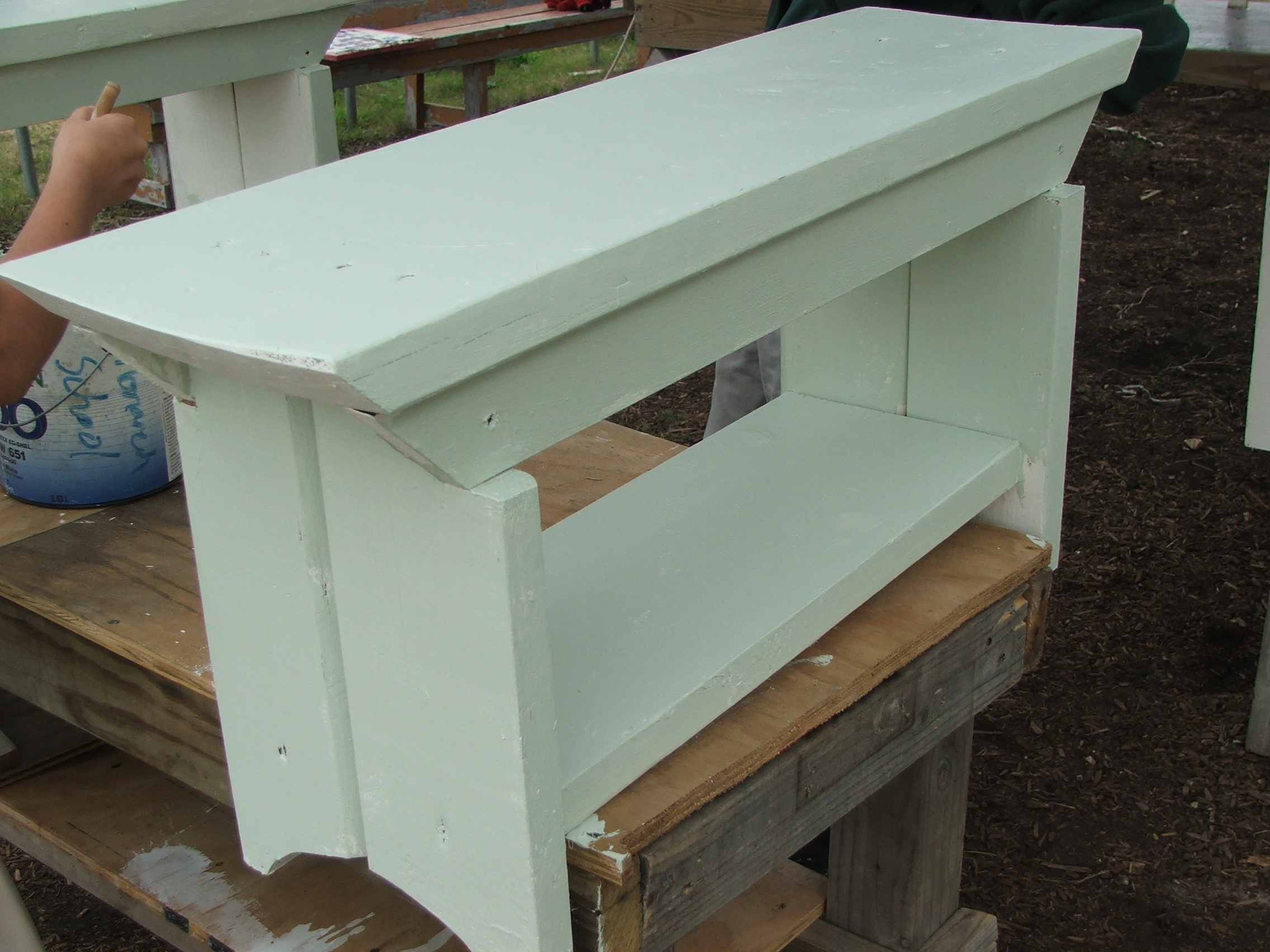
An in progress shot:

These benches are made of majority recycled materials – my program paid for fasteners & the acrylic paints (orange, black, yellow).

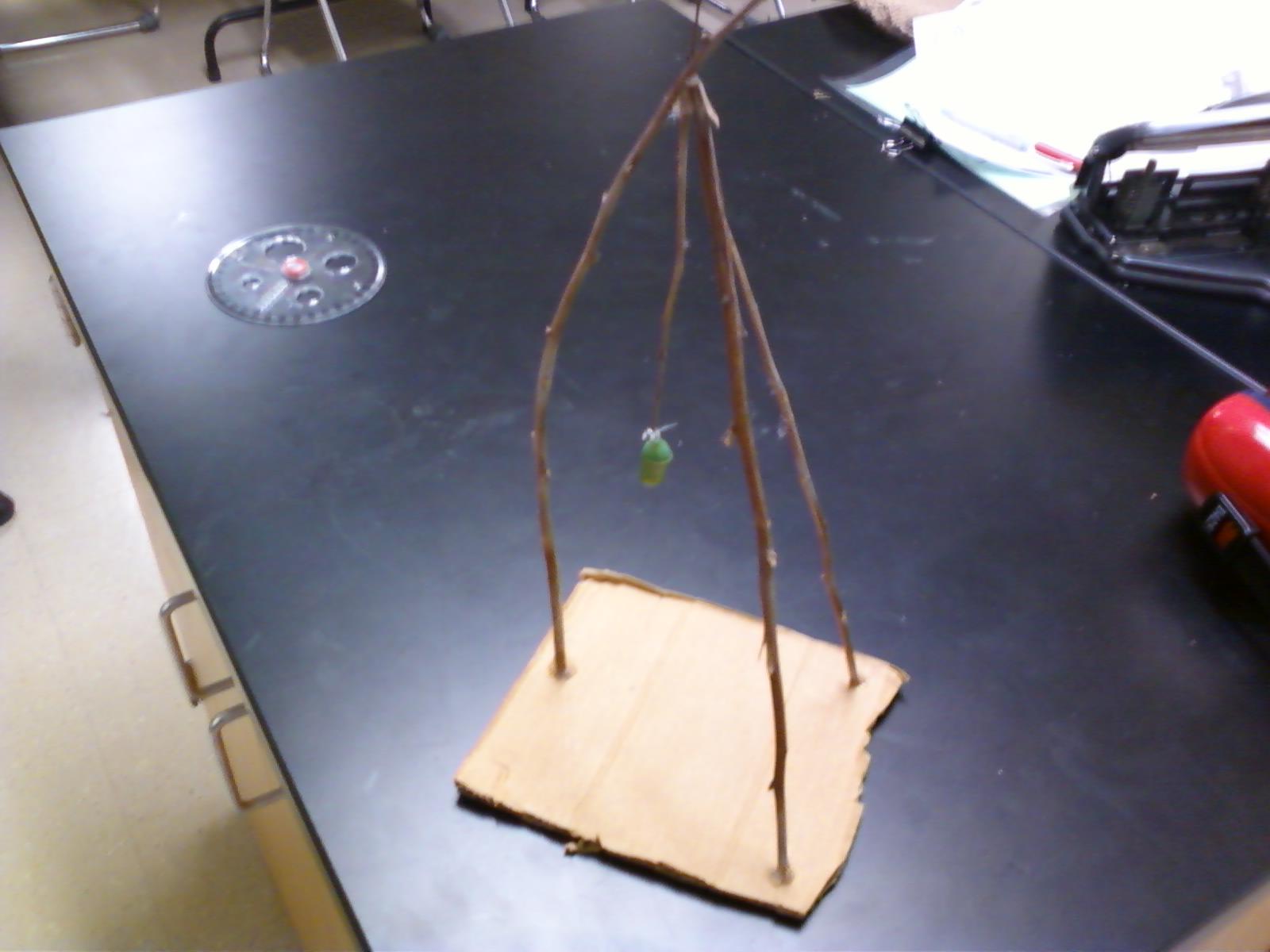
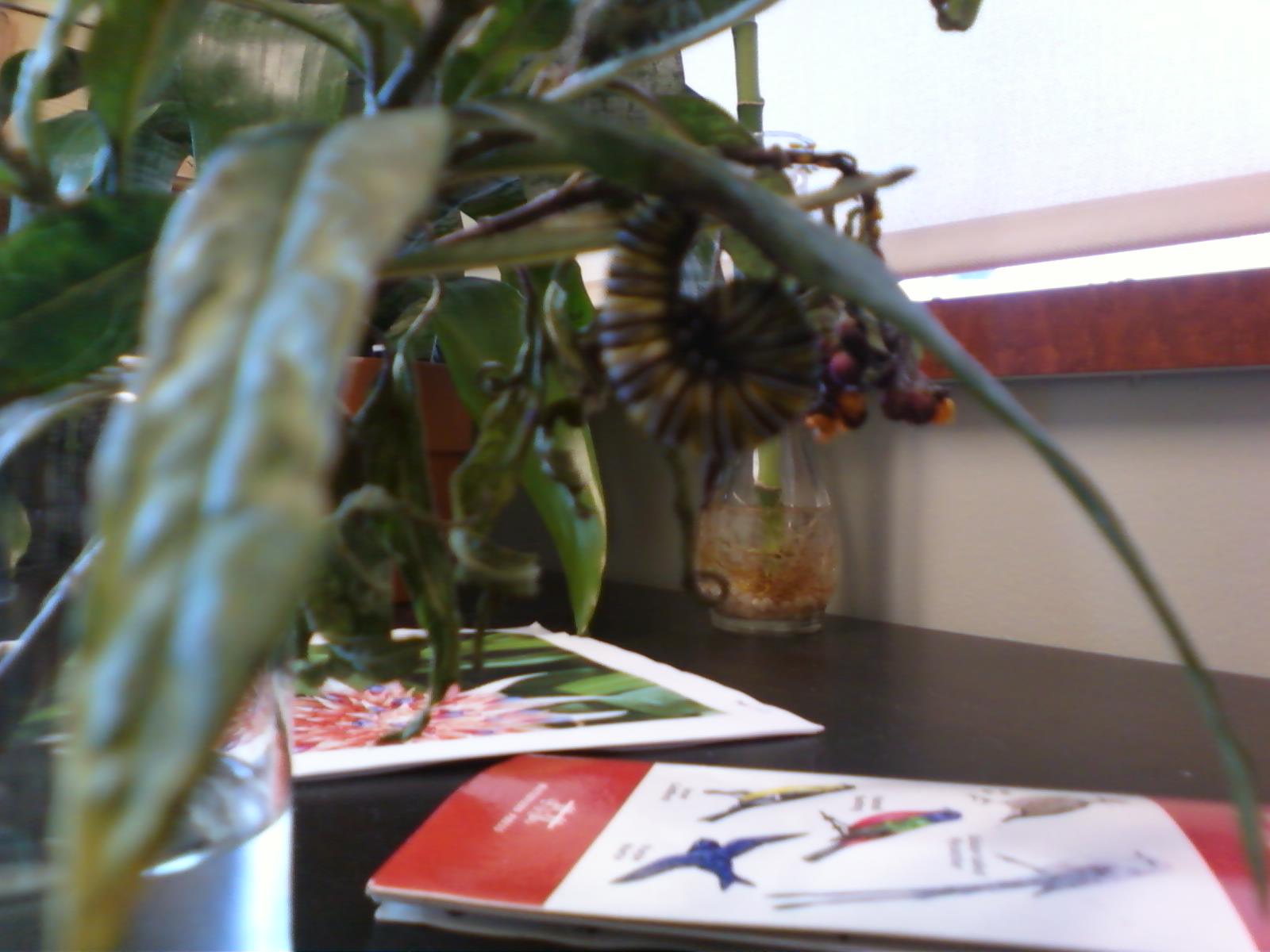
My colleague rescued these from the hard freeze on Tues –

Which are hanging structures for two monarch chrysalises.  The butterflies will emerge and climb onto the triangle stand, dry off and fly away.  Right now, they make incredibly pretty office decorations.  One stays in the science room and I am sure will become a month-long science observation.  This little guy was also rescued, and he’s ready to metamorphasize.

Heck of a time!

Community Watch: Pine Wood Derby Clinics

Saw this during half-time in last week’s Jets-Colts game over at www.coptool.com.

It seems Lowe’s and Dremel will be sponsoring clinics on how to make Pinewood Derby cars. I may have to take a spin by and see if I can snag a few kits. Might have a week-long science lab project there.  I should at least get two sets.  If only to make one for each son  (they are nineteen months and five days old, don’t gimme the “they need to be involved speech”)…

This Week In the Classroom: Gettin’ Jiggy Wit It

In the spirit of my saw guide, I had the opportunity this weekend to build a few jigs for future use.   In about twenty min, here they are:

From front to back:

A bench hook, which I consider a necessity for students to learn to saw by themselves.

A wooden speed square – just a 45 deg. right triangle with a hook on the end.

A shooting board – which I have to learn to use.  It’s used to cut 45 degree angles in a piece of wood or for a block plane to smooth end-grain in mitered cuts.  I don’t know if this design is the best, but it’s a start.

If I would choose one of these for students to build, the best answer is the bench hook.  A bench hook is a large, flat board with a strip of wood attached to each end.  Seen from the side, the jig forms an S shape.  Place the hook against the workbench so one end catches the side of the bench.  Then place your piece against the strip facing up.  Begin cutting.  Like this:

The bench hook gives a nice, solid surface for a student to cut on.  It’s easy for them to build on their own with minimal adult intervention and maximum self-discovery.  I love the fact a student can lean into the hook and steady the stock to be cut.  It doesn’t have to be square to work, but it has to be square to work perfectly – my students can decide on the level of accuracy they believe they need.

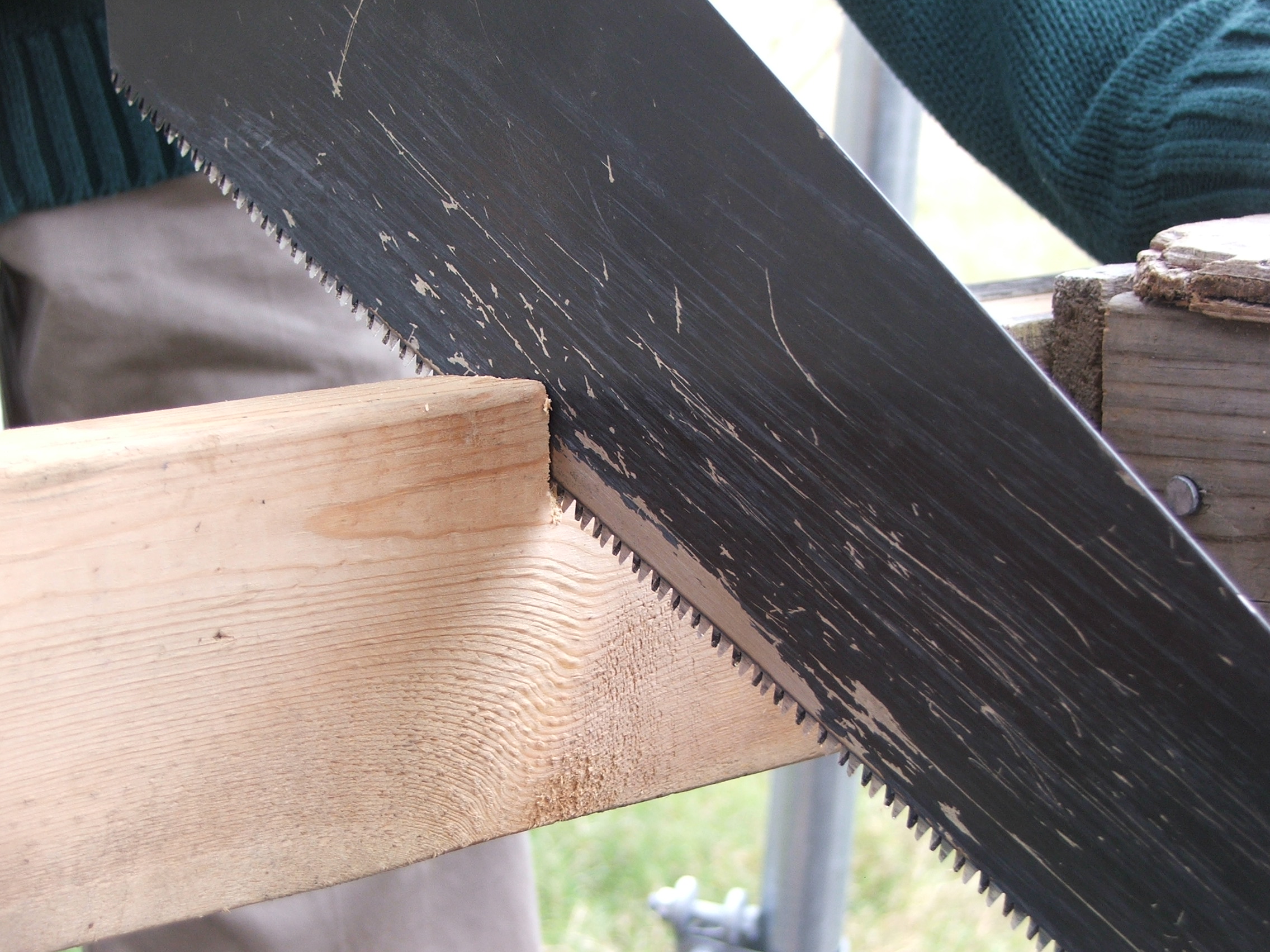
The only other way I like to teach sawing is with an end vise – like this (look just behind the blade and you will see the vise):

I love how that picture came out.  It’s my new desktop background at work.

This Week In the Classroom: To Sand or Not to Sand…

Returned to school last week with so much to do and catch up on (I did make it to Boston and missed a long day full of meetings and schedule-making).  I had several gorgeous “woodworking-as-the-way” moments, only one of which I’ll share.  One of my neurologically different students asked to meet the teacher he was making a clock-face for. A huge step for a young man that struggles to hold simple conversations for longer than 5 minutes and finds connecting to others very, very stressful.  Anyways, finished the construction/assembly of these two benches this week:

These are made from recycled lumber, including a black-painted, red oak-esque, plastic deck material (I think!).  Over winter break I created a pattern for the legs (two 2×6’s stacked next to each other) involving a scoop at the bottom and a notch for the apron piece of 1x you can barely see.

Teacher-to-Teacher question:  How important is sanding in this building process?  Sanding is an interesting step in woodworking.  Often necessary, fraught with peril, boring as a smooth-actioned brace.  I find my students lose interest in the zen-like back-and-forth of hand sanding, I burn-out a child’s ears with the power tools and I create pack-a-day-smokers out of eleven year-olds with the dust.  Of course, all this can be mitigated with strong safety practices (which we use) and waiting for a good windy day.

But is all that worth it?  Will the student learn a skill, a philosophical lesson, a metaphor, a connection with the world by engaging in the act of sanding?

I try to engage in as little sanding as possible, to be honest.  I have access to several working hand planes.  We use those to prep stock for finishing (most stuff then needs a quick rub-down at like 220 or 320 grit for me to consider it ready to be finished).  I find the process quicker, more interactive (whole body movement rather than fingers or hands) and finally, safer and cleaner on dust. I have yet to see a student truly gain an appreciation for beauty, or practice their relationship skills or do anything other than make dust while sanding.  So I try to avoid it as much as possible.

But sometimes the project demands a touch of the sandpaper, like these benches.  Then I ask myself: should I do the benches (20-40 min of my weekend) or should the students sand (2-3 days to complete if I’m lucky).  They will be painted, not stained or poly-ed, so I will sand to a rough (80-grit or 100-grit) texture and paint with left-over paint.

Am I on the wrong tack here?  Should I let the students sand?

This Week in the Classroom: Squiggle ‘Bots

Here’s a line on what pre-school should be – I actually thought I invented this project a few years ago when I worked with primary school-age kids in VA.  Obviously, I did not – it’s just rumblin’ around out there in the knowledge sphere.

Teacher Tom goes into some of the skills those little guys learn, but I love building these things out of paper cups, markers and hot glue.  Even though the hot glue can get dangerous, I find this project is simple enough that the kids learn to use and respect the tool without having a tricky joint to make which will get them burned.

I can’t say enough good things about Teacher Tom’s blog either.

This Week In the Shop: A Little Me Time

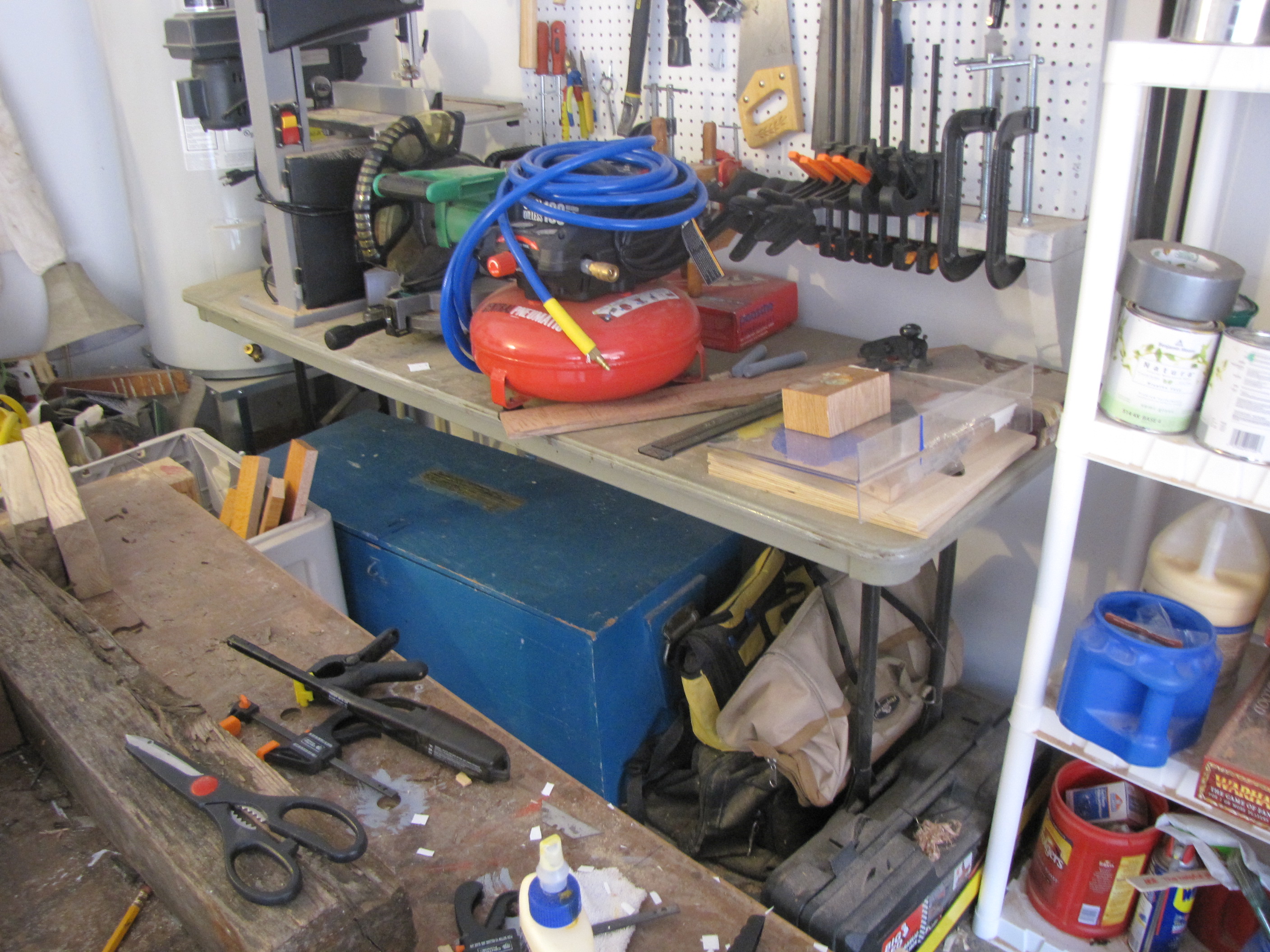
Just missed my flight to Boston, but on the upside, I get a little me time.  I’ve been working pretty steady this weekend.  I re-organizedthe workspace.  Before:

And then – a new storage bench and some rearranging:

That new bench is a salvaged office door, ripped in half and cut to needed lengths.  It weighs some 200+ lbs.  I have three more planks to use, so I’m thinking a new version of my bench that you see, but this one will have the mass not to shake during hand planing or lathe work.

I still had some time left over in my day.  Quickly whipped together a jig I’ve been dreaming about for a while: a saw guide.

Which’ll set up like this on the bench.

Pretty good for less than two hours of shop time.


Happy new year everyone!