In late March, I received a donation – a ’90’s era Ford Explorer. Over the last month (April of 2011) and into May of 2011, I blogged about it’s progress. I will be re-building this page in the Spring 2012 as I take a run at the Art Car Parade 2012.

Maker Projects & Education
In late March, I received a donation – a ’90’s era Ford Explorer. Over the last month (April of 2011) and into May of 2011, I blogged about it’s progress. I will be re-building this page in the Spring 2012 as I take a run at the Art Car Parade 2012.
One of my MasterClass students finished a jewelry box just in time for Mother’s Day. He’s been working for close to three months on it.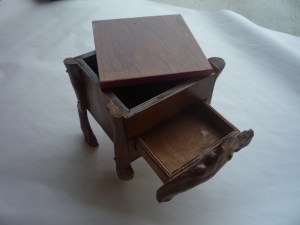
We began with a design consultation, in which we researched various box designs on the web. I want to give a big thank-you to Andy, an extremely talented and generous woodworker who provided some valuable feedback for my young student. I greatly appreciate your help Andy.
A walk-through & gallery after the jump..Continue reading “This Week In The Shop: Jewelry Box”
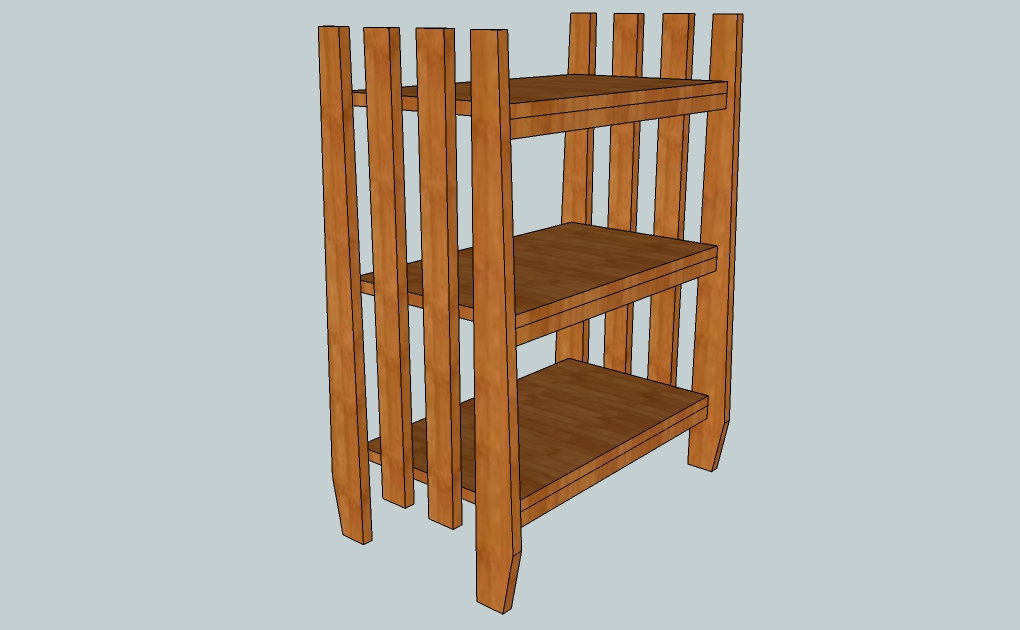
This bookshelf recently left the workshop at school. The bookshelf started life as an illustration in The Project Gutenberg EBook of Mission Furniture, by H. H. Windsor, otherwise known as the good fellows at Popular Mechanics.

Which the student modified to suit the schools current needs. The CAD mock-up looked like this:
In the end, the piece had to be painted. Paint hides all flaws when it comes to salvaged wood.
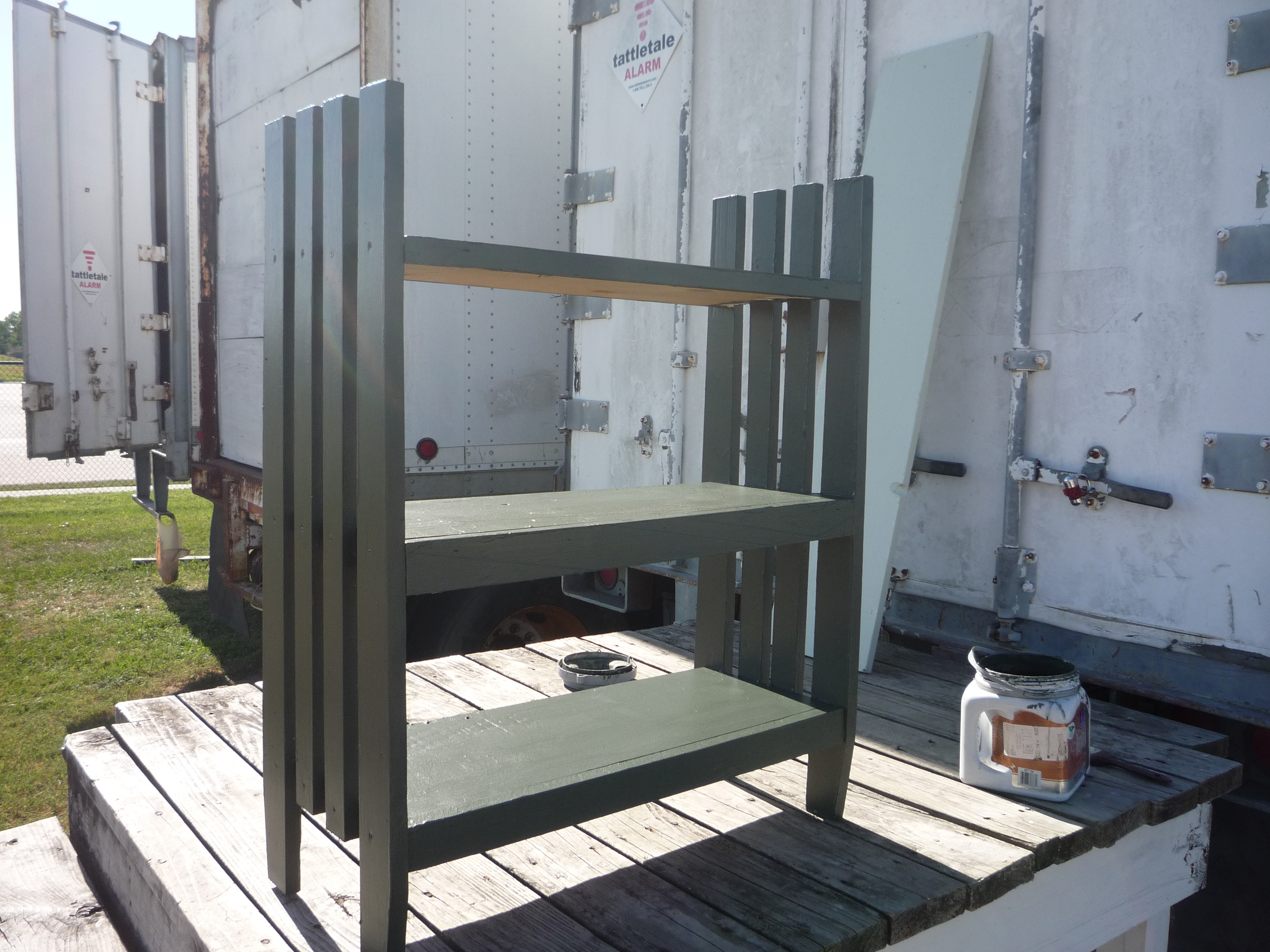
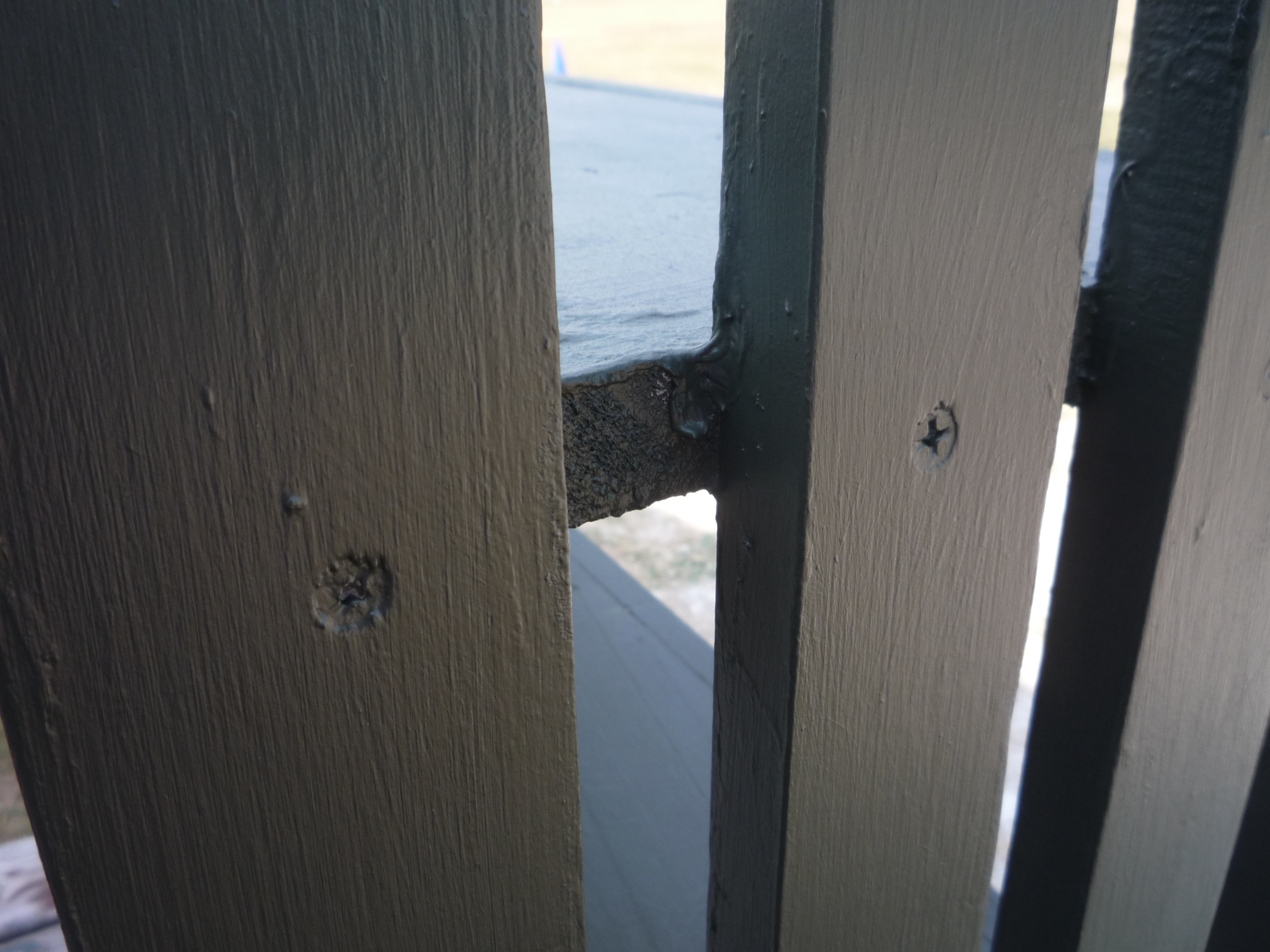
Pretty excited about the finished product. Here’s a close up of the butt joints used on the shelving, as well as a shot which showcases the inch-thick reclaimed mahogony shelves.
Salvaged wood furniture in Mission/Arts & Crafts style with a painted finish may become the “house” style. We’ll see how it goes.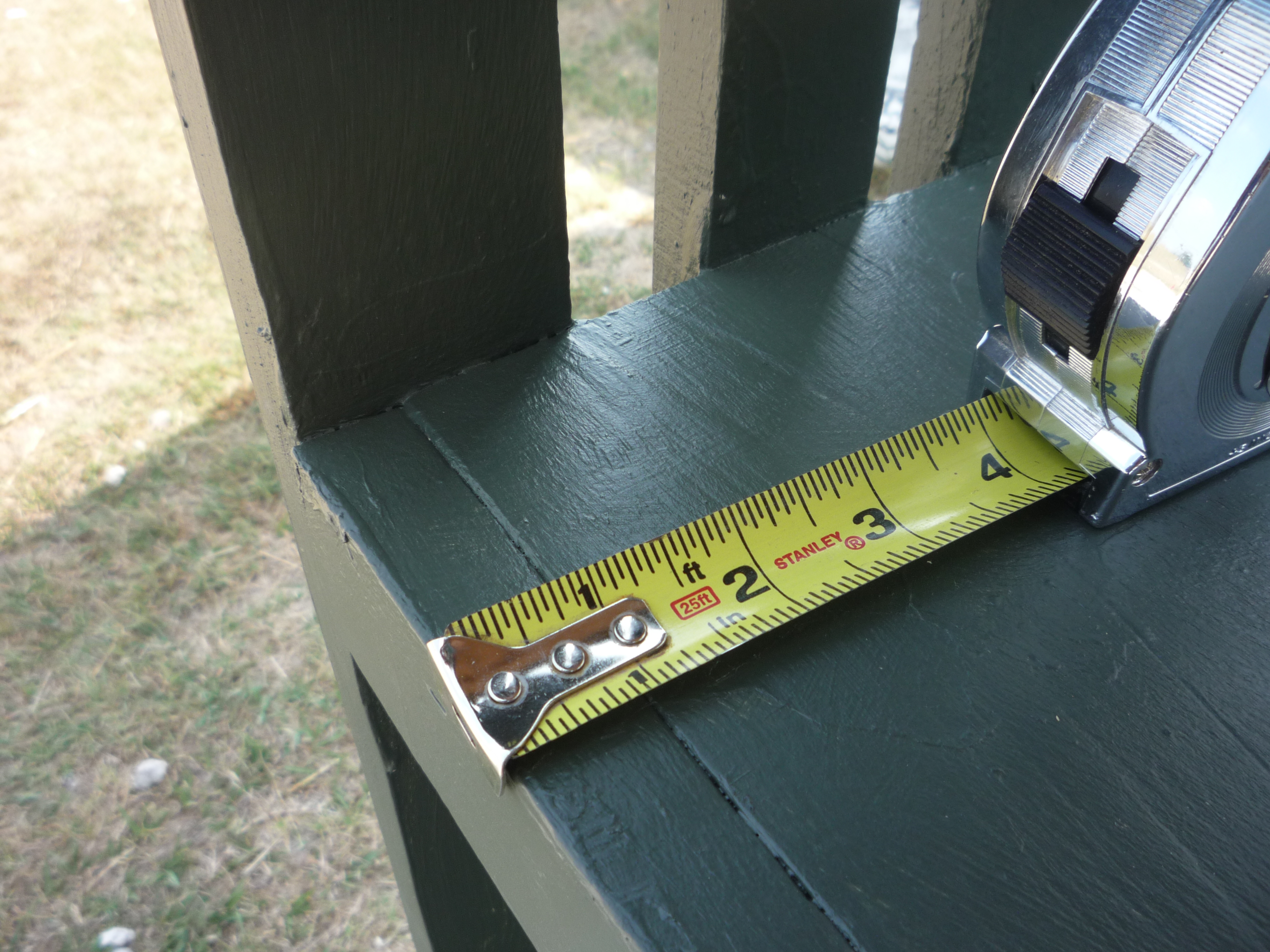
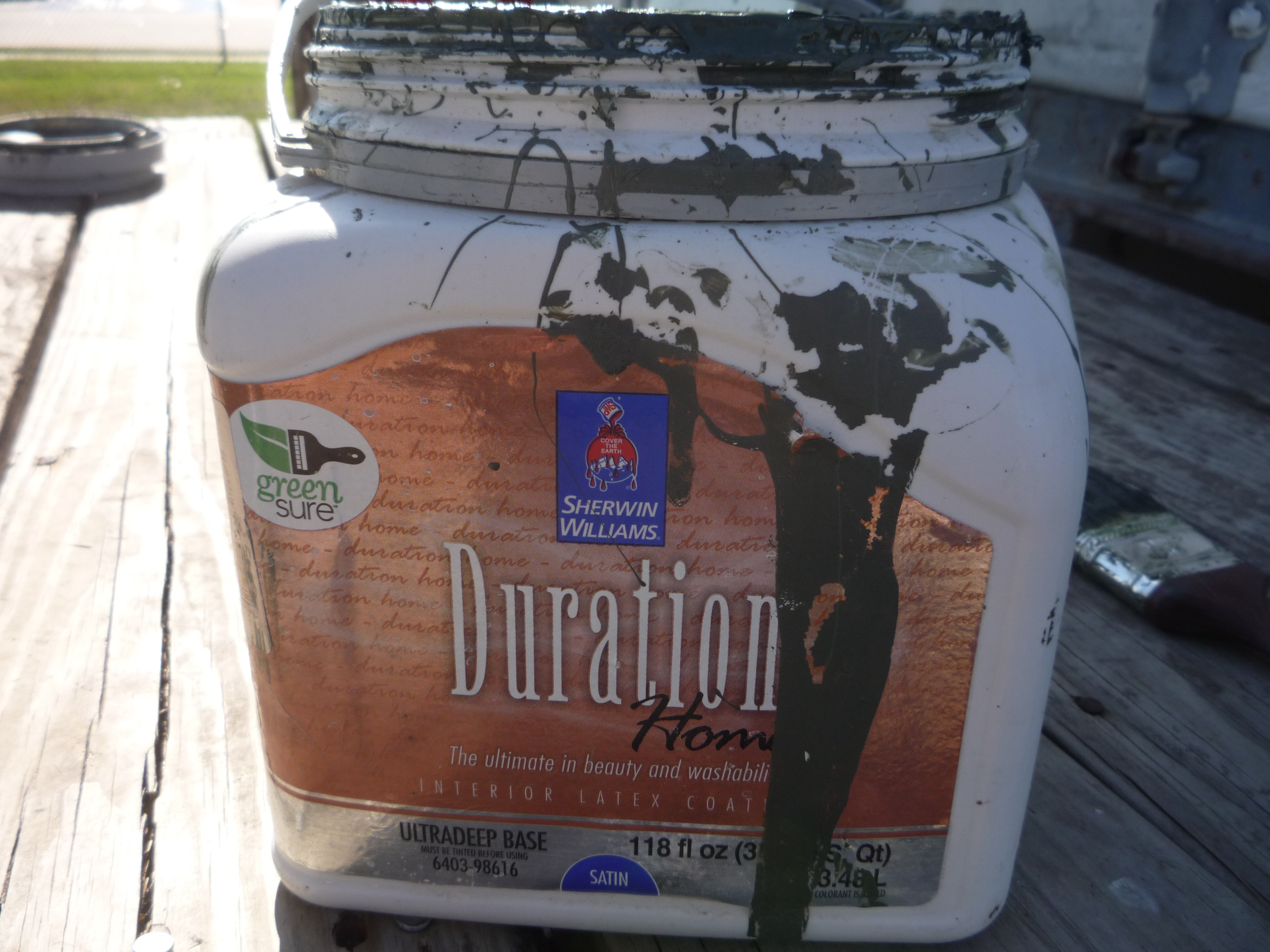
We used some recycled/salvaged latex paint for our finish. It’s this stuff (Sherman-Williams Duration):

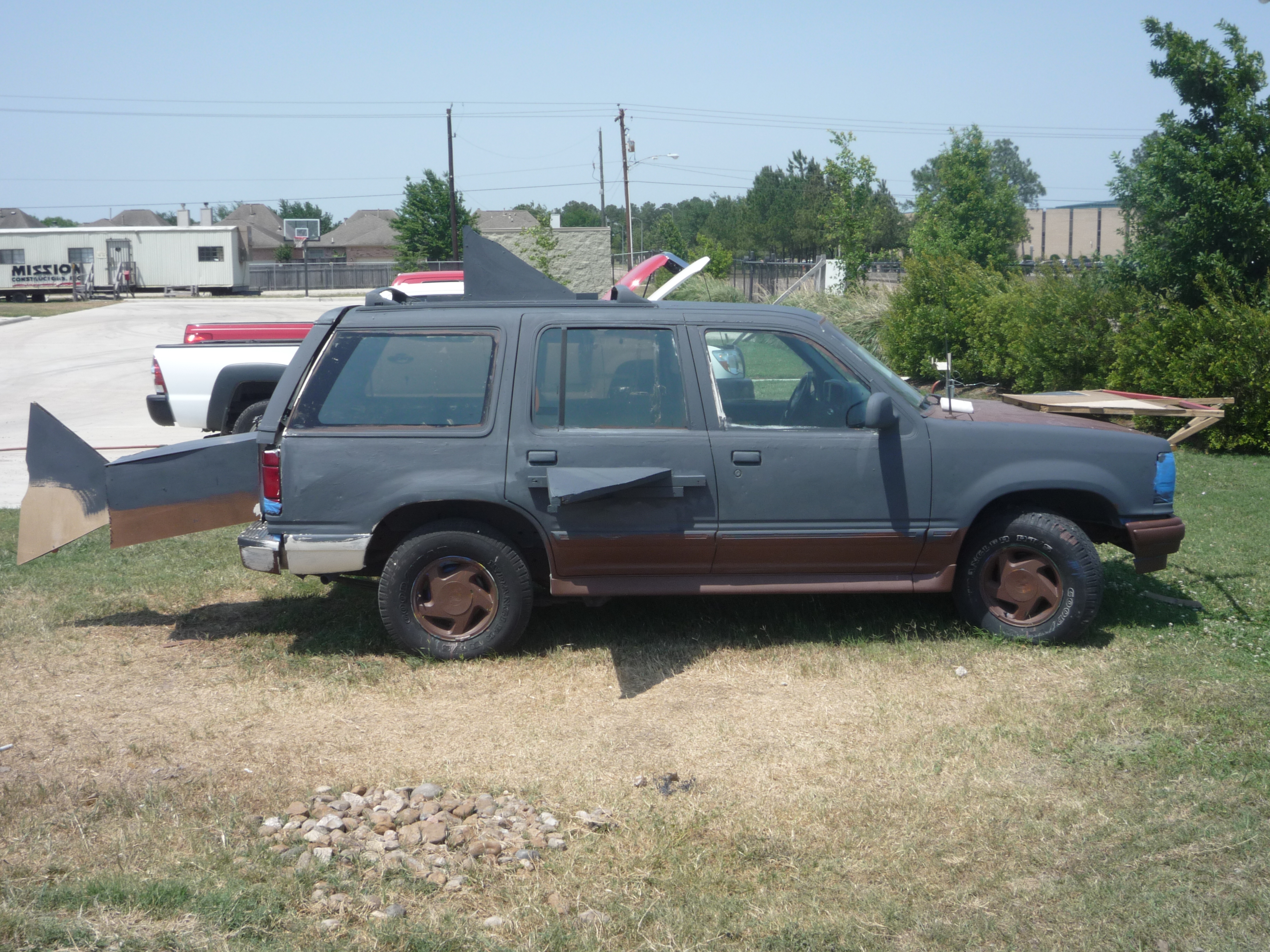
This Week In the Shop, 80% of our students left for an overnight camp. I stayed back and worked with a small group of seniors building senior gifts. One of those senior gifts happens to be an Art Car, which you can follow along on the Art Car 2011 page. This week’s pictures:
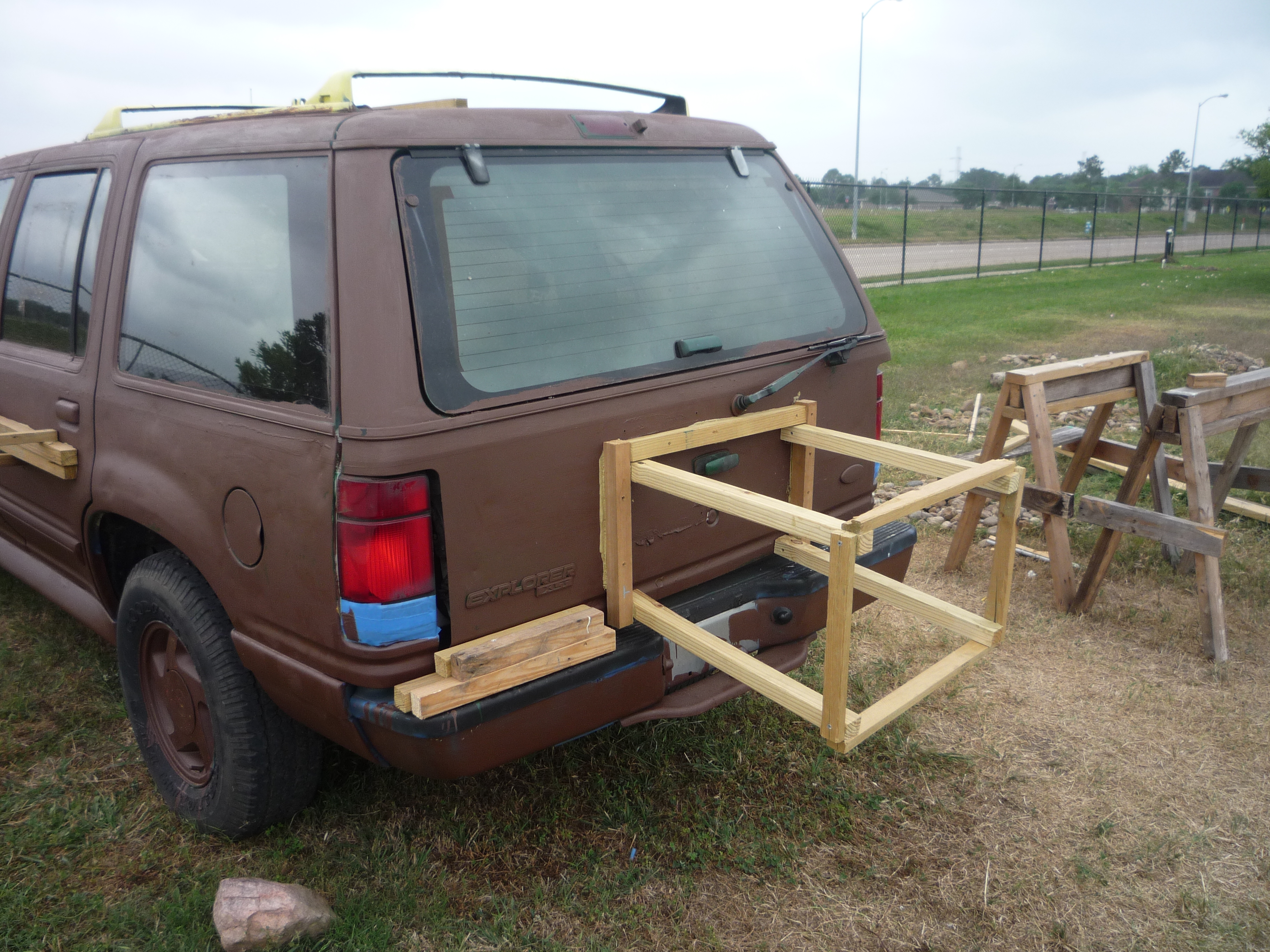 And then:
 Thursday we finished the tail:
 We skinned most of the car by lunch on Fri:
 And slapped some steel-gray paint on it:
Kevin Kelly, editor of Wired magizine, runs an interesting blog on Cool Tools. He recently held a contest looking for tools which are carried everyday. This year, I’ve been refining my tool belt to carry the tools that make my job run.
So let’s start, shall we? From right to left: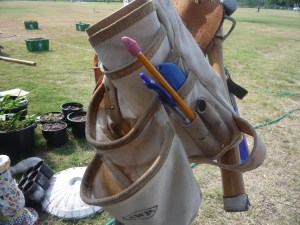
Canvas Tool Pouch: It’s light, rugged and cheap. An obvious catchall, I often put the small tools of the day in the various pockets. A few tools reside permenently inside its pockets – #2 Phillips drivers, a hex wrench which tightens down the miter box, Moleskine notebook, digital camera, hand-held radio which I seldom use and some other odds and ends.
Retractable Box Cutter & Pen & Pencil – Marking cuts and cuttin’ strings. And shaving pencil tips. Pens to mark grades, pencils to mark lumber.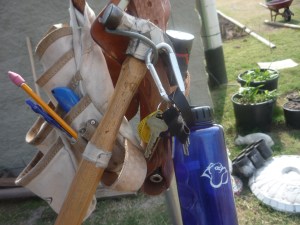 16oz Claw Hammer – I’m particular about my hammers. I like wooden handles. I wrap athletic tape on the handle to promote proper hand placement when it’s loaned out to students. I wrap the top to cut down on the jingle-jangle as I walk the halls. I sanded the handle to kill the oily feeling my hand gets after swinging it on a deck project. 16oz is about the biggest my smallest kids can handle without hurting themselves. I have a similar 20oz framing hammer, but I rarely have cause to use it, much less carry it.
Keys & Water Bottle: Keys to get back into school. Water ’cause it’s hot in Texas. Really hot. Steamy greasy burrito hot .
.
Tape Measure: I can’t say enough good things about the Stanely 25′. Cheap at Wal-Mart, rugged in metal. I use this guy everyday and it’s still ticking. In my home woodshop a 12′ tape is enough, but with the deck making, rose garden digging and such, a 25′ is where it’s at.
Milwaukee 12v Li-On Drill & Impact Drill: OHHHHHH MAN. These two little bad boys make my day. I bought them on sale ($130) . The small size eases the weight on my hips. The small handle means more students handle the tool safely than with a larger drill. The power is plenty. The driver slams 4″ lag screws into the wood without the need for pilot holes. I recharge the batteries about twice a week, even under major use. I love these guys. My students love ’em. I’ll be purchasing a pair for the school as soon as I get a real classroom (this summer!).
I carry these tools everyday & use’m every day. I’m a firm believer that the right tool means the job gets done right – and that principle isn’t limited to physical objects. What tools do you use everyday?
Make it safe & keep the rubber side down.
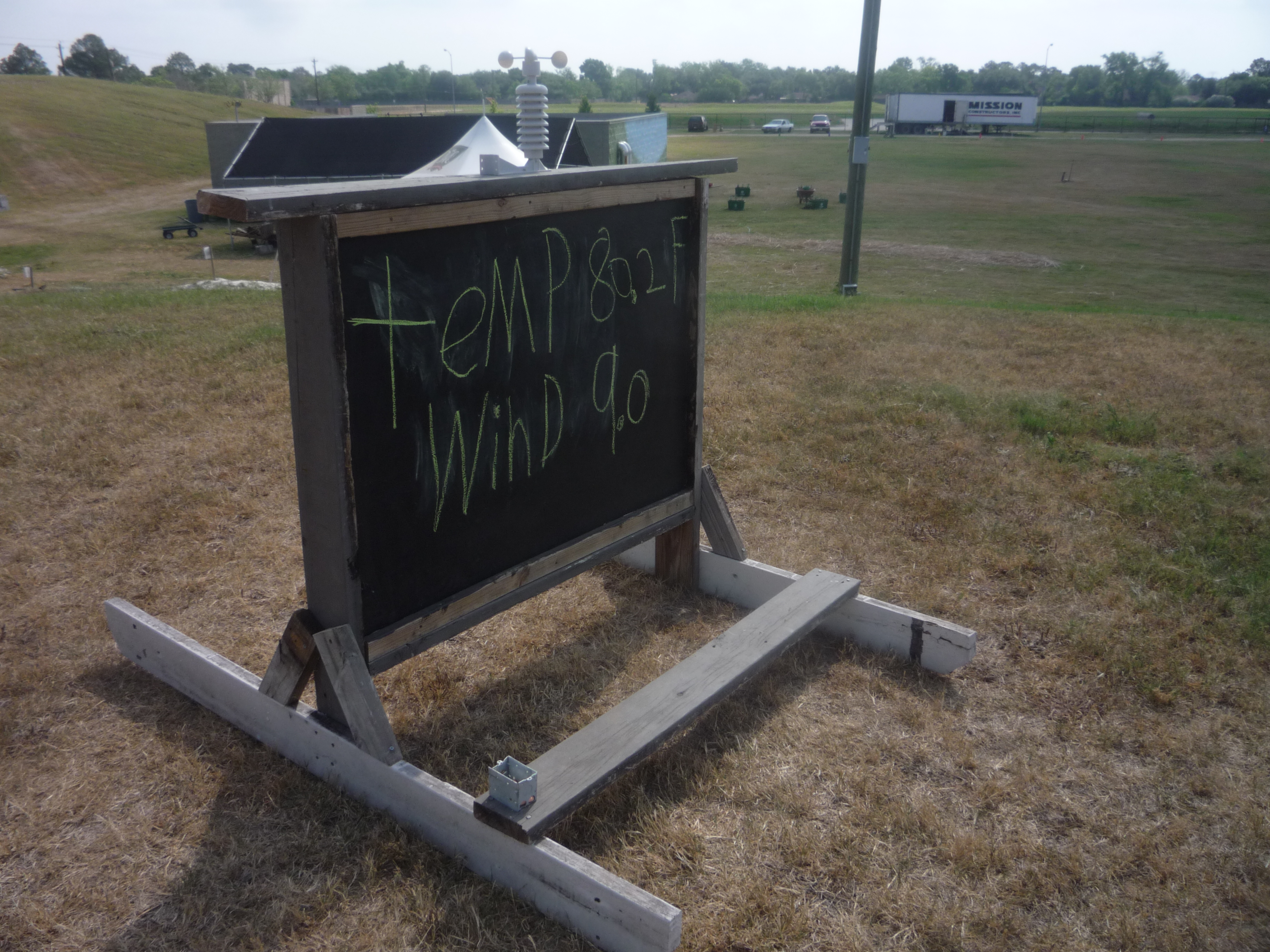
This week, my colleague shanghaied one of my chalkboards for a weather station. While the chalkboard & wind unit may not seem like much,
 The hand-held reader really catches a teacher’s eye.
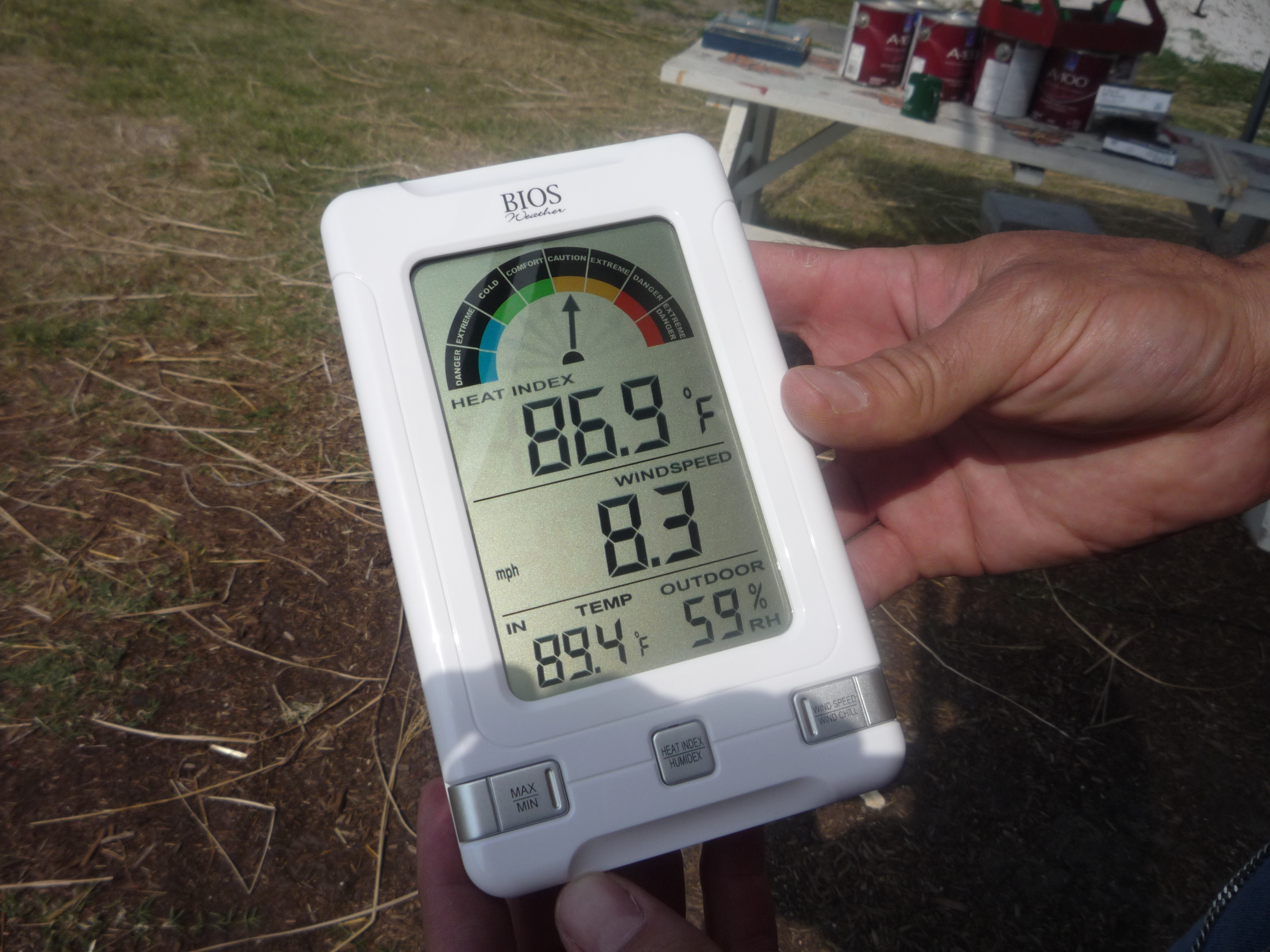 This type of scientific information begs to be utilized in the classroom. Daily, nay, hourly temperatures can be recorded and used to find the mean temp, daily temp, range…mode, slope, points on a graph, equations for the daily rise in the temperature, regression lines, etc. Science classes can study weather patterns, climate change or stasis, the water cycle. A physics classroom can turn wind speed readings into kilowatt-hours. Those figures can be amended into proposals for the installation of a wind turbine.
Wait…that’s my collegue put that device up there.
An English teacher can illuminate the difference between lab reports, short stories and literary analysis. The data gathered in science class, analyzed in Math, interpreted and presented in English, can finally be acted upon in Social Studies. In fact, this little weather station can become the technological center-point of a curriculum which could, theoretically be scaled between schools all over right? A revolution?Continue reading “Weather Stations, Web 2.0 Tools and John Merrow”
When installing finishing brads and nails, I usually chuck the nail into the bit and punch a hole through the lumber. This results in a minimal hole (the length of the nail minus the depth of my drill’s chuck jaws) which prevents most splitting.
I recently “discovered” a secret – the deeper the pilot hole for my seven-year olds (2nd grade) the more successful the hammering. Look at that kid go! One handed, 7 oz claw hammer.
He hammered those nails flush. He could feel the excellence in his small act, see the effect in the larger project, and you can sense his excitement getting to use the hammer.
I only wish had a Archimedes drill in the shop somewhere. Then I wouldn’t be in the picture.
This article from Makezine.com hit my inbox recently. Woodshop, machine shop, handsaws and chisels can all cause injury and at times, death. Constant vigilance and evaluation of our skills is the only way to reduce the our chances, and our students chances, of injury. Take a moment today to evaluate your own practices and routines and maybe talk with a colleague to get a fresh pair of eyes on the situation. Don’t settle.
Make it safe – When you create, create in a way which will keep your toes, fingers, golden locks and good looks intact.
Keep the rubber side down – The last words my father and I say to each other (well, sometimes) before we hit the road before a motorcycle ride. Keep yourself within your “bounds”, meaning working within your current skill limits. Ride below your performance envelope, so when it hits the fan, you have enough in the reserve to ride it out.
Make it safe & keep the rubber side down.
By kindle recently bit the dust and as I reloaded the half-read novels into the new one’s memory, I came acroos a book for business managers. In many business books, I’ve found lots of semi-coherent and applicable advice (and soemtimes incoherant and inexplicable advice) for teachers. For example, in “The Truth About Managing People”, Stephen Robbins exhorts a manager to:
Be Open – I gave a “pop quiz” today. In reality, it was a class assignment turned into homework. I opened with the statement: I’m handing you an assessment. Reason 1) I need a product to show your regular classroom teacher you’ve learned something in this physics lab. Reason 2) I want to know exactly what you’ve learned, so next time I teach this, I know how to change my lesson to help other students. In a group of young men and women who struggle to shift into a “test” mode, I averted meltdowns and kept the room on an even keel.
Be Fair – Fair is not equal in my classroom. At the end of the year with me, I hope they understand why even if they don’t always accept it.
Speak your feelings – Tell your students if you’re cranky. (I usually have to warn a certain student(s) at homeroom at the end of the day…) Because students do not realize that you exist outside their sight. They really don’t. You exist to serve them (I try to remember that attitude when I get frustrated at the job. I’m doing this for them.)
Tell the truth – Quote of my week: As I rummage around a bin at the ReUse store, a student asks, “Mr. Patrick, are you searching for caulk?” “Yes, yes I am.”
Show consistency – I drink coffee like a fish…actually, I drink it like a teacher who believes he has to be as physically able with the students as much as his body allows and therefore takes PEDs. I’m work on being consistent. If a student complains about a little thing, like working outside in the heat, I bring up larger issues (hey, that’s cool. Let’s take a drink break then. Now, when you’re my age, how will you approach your boss and say, “this is enough!” without getting fired?). I will probably lose my cowboy hat somewhere on campus and more than likely it will be in someones way. I’m consistent.
Fulfill your promises – Easy to say, hard to do. A classroom management guru once said that the simple act of asking students to walk into class, place their stuff away, sit down and bring a pencil and paper into their hands, ready to learn means asking students to listen to you five times. Multiply that by the twenty-odd students in your class (I hear it may get larger in California), and you make one hundred requests for discipline in less than a minute of classroom time. Why does a student follow directives rather than goof-off? Because a teacher promises to be the most important thing in the world right now. It’s a hard promise to fulfill some days.
Maintain confidences – Students will test limits. They will try to throw you off your game. Or, as one student said to me today “hey, if we keep asking questions, he’ll burst and we can steal his stuff!” (I was eating lunch at time, trying to avoid the need to converse with the leaders of the school club I facilitate.) They don’t do it because they “don’t like you” or “you’re mean” or “they are bad kids” or “their parents never taught them anything”. They do it because they haven’t yet mastered the skills necessary for co-operative work, or play or living. For my students, sometimes just living next to other humans is hard.
All good advice for a teacher, right? Because students are just little people, or if they are in high school, normal-sized people with shorter-sized (though sometimes very scary and deep) life experiences to draw on. My house might have depreciated the current Wall-Street led economic recession, but I appreciate the chance to reflect on some Wall-Street led management lessons.
In the Masterclass, I had the oppurtunity to bring out my rasps. What a successful technique for my students to make matched part! I usually have to show a technique two or three times before a student picks it up – but this was pretty intuitive. I’m defnetely reworking the tool list: should I add Nicholson or Auriou?


 WSC Designs