Put up an instructable (finally). You can find it here.
Meaning to get to this one. It’s a bracket for the EZpass on my bike. When I remove the tag itself, gives the bike a cafe-racer look. Pretty sweet.

Maker Projects & Education
Put up an instructable (finally). You can find it here.
Meaning to get to this one. It’s a bracket for the EZpass on my bike. When I remove the tag itself, gives the bike a cafe-racer look. Pretty sweet.
I’m in the middle of a relaxing and surprisingly productive Christmas break and before I show my son’s second XMas gift, I’d like to share my last field trip of the year.
I went to visit this guy, with two fellow teachers and ten kids. Dan Phillips is a self-taught house builder, plumber & electrician. He creates houses from recycled material – wine bottles and corks, beer caps, off-cuts from lumber yards and other building waste.
He also is blessed with a mind that weaves the long-ago and still relevant philosophies of Nietzsche and Plato into a stellar critique of today’s building industry. In his opinion, the level of waste found in commercial and residential construction can be traced to a obsession with imaginary perfection at the consumer level. Any example: mirrors. In the shipping (and making, I assume) of mirrors for homes, some get cracked. Those mirrors are tossed into the landfill. Now, had the builder just cracked the rest of the mirrors, a pattern would emerge – and patterns are reproducible, patterns create order and order, in the end, is what society wishes from a home. With his ability to store and re-use and purpose the waste, the mirrors get saved.
Dan Phillips has been building homes for a long time – in Huntsville, he has built about fifteen homes. He also takes commissioned art work (and his homes are habitable art pieces) around the area. Houston’s Discovery Green apparently has a gazebo made of cracked mirrors on it. Critiquing Dan’s work, I enjoyed the design aesthetics (we saw/worked in the Bone House) and the accessibility of his crew’s work. I didn’t ever get the impression his art was something brought down by some power above, but born of sweat, bone and creativity. I filed away a few designs for future copyright infringement, er, homages. I hope you check out his site, especially the flickr pictures. They don’t do his work (or his team, he has a crew of three or so) justice. Many thanks to him for sharing his time, work space and thoughts with us.
I just finished my son(s, I’m expecting another next month) Christmas gift: an outdoor playhouse.
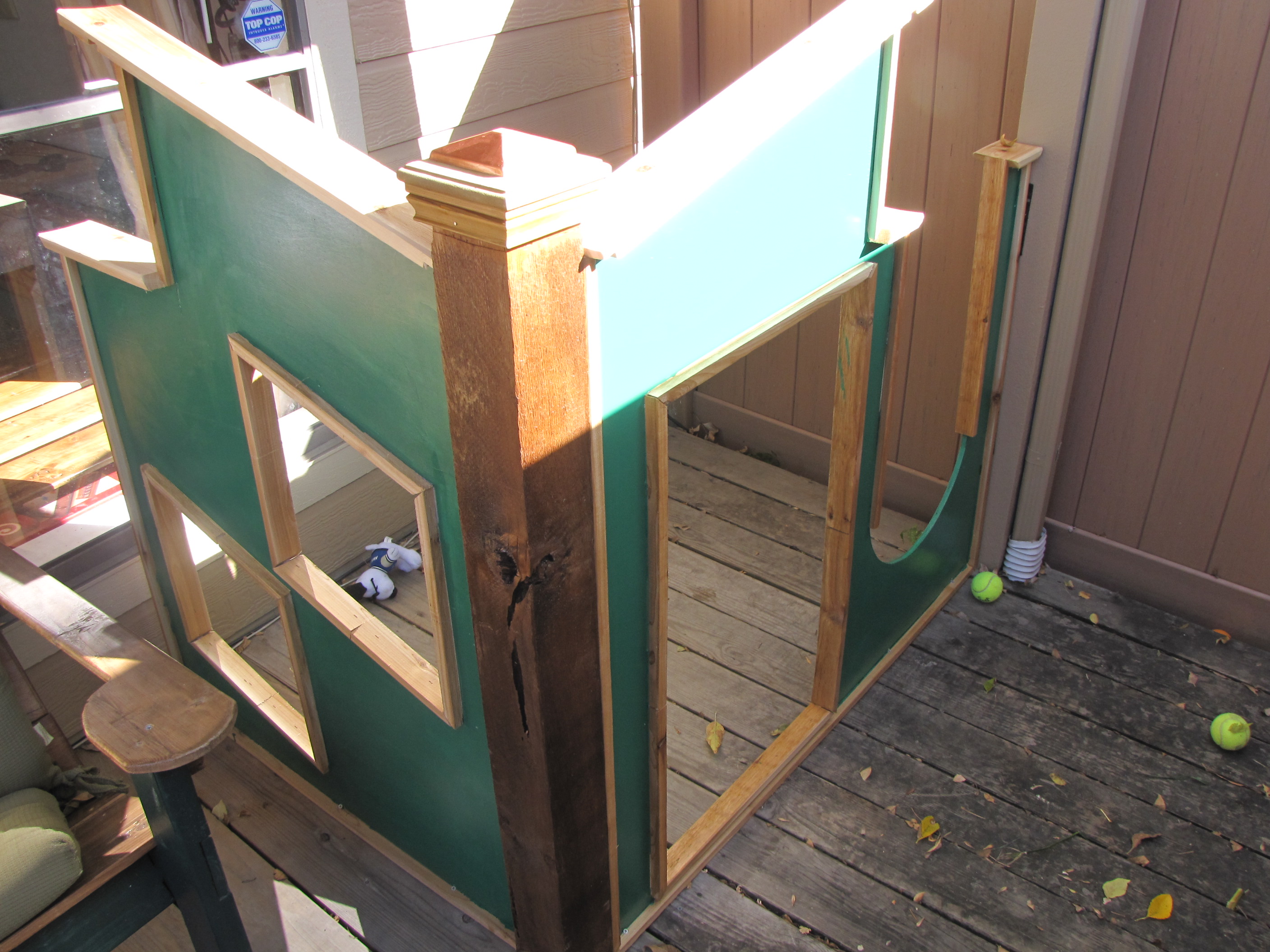
I used a router on table to create a half inch wide dado for the cedar edging. A cedar post with a deck cap from Lowes provides the stability.
This project had some interesting design challenges. First, I couldn’t build something permanent, as I’m a renter, not owner. Second, I had very limited indoor and outdoor space for this project. Designing in planes, using plywood, seemed to solve the space issue. Industrial velcro attaches the sides to the townhouse itself and provides good stability. The cedar edging protects the plywood. Paint and poly are reused from other projects.
Cost: 140ish, Time: 9 build hrs.
Approval: Priceless.

Installing the playhouse this morning, I thought back to a conversation I had on Friday with a co-worker about children and play. I facilitate the “Warhammer 40K Club”. Unlike many other club sponsors, I am an avid player of the game/hobby of tabletop miniature wargaming. I have been since I was a very young man and my students provide a wonderful outlet. My co-worker dropped in to see and observe, eventually striking up a conversation regarding the differing levels of “play”.
One student, he pointed out, was engaged in “parallel play” – he didn’t participate in the actual game, but played with the figures and made noises to match. In fact, his maturity level wouldn’t allow him to match the complexity around him. It reminds me of my son, who loves to copy my actions, putting on work gloves I leave around, grabbing cellphones and pretending to talk, or here, looking through the window. He interacts with me, but he does play with me – he’s on a parallel track. Hence, parallel play.
Another student could truly “play” in a give-and-take fashion, but he focused on the physical interactions: moving models, measuring distances and rolling dice. He needed someone to lead him in the activity. That student played the game with me, a person who understood the rules, concept and his own role in the proceedings.
Another student’s fear of the group (and losing the self) led him to paint the models, while my two oldest students independently engaged themselves with the game. I won’t say they played the game – for them, their maturity allowed them to understand the rules, but struggle with the social contract that gameplay allows – think of the child who knows what fair is and means but still needs practice with sportsmanship. They had an hour to play the game, and argued about a dice roll for forty-five minutes.
I stood at the highest maturity level (hard-fought) . As a grown man, I understood the rules of the game and the various social contracts involved in playing (I actually lost my game too!). To sum up, what I saw was one activity – tabletop wargaming – allowing for the various levels of maturity in my students. The youngest could join in at their comfort level, while the oldest could practice the tougher skills of social interactions. My job for the day wasn’t to teach a particular skill, but to build the playhouse (environment) and allow an exploration (the act of communal play).
A wonderful time and learning conversation.
Two weeks ago, my colleague and I had an interesting revelation. While installing a basketball hoop, we had extra cement. I had a shovel-ready stimulus bill waiting for him. It looked something like this:

Which looks exactly like it is (brilliant statement there). It’s a empty tire (the rims lost to another project) with a wood bottom/plug. The metal thing in the middle is some sort of salvaged structural bracket which can hold a two inch pole of PVC or galvanized piping. Two eyebolts/lag bolts can be cranked onto the pole in order to secure it to the base. Being 3/8″ hex heads on those bolts, my students can practice using a ratchet.
My colleague began the concrete pour:
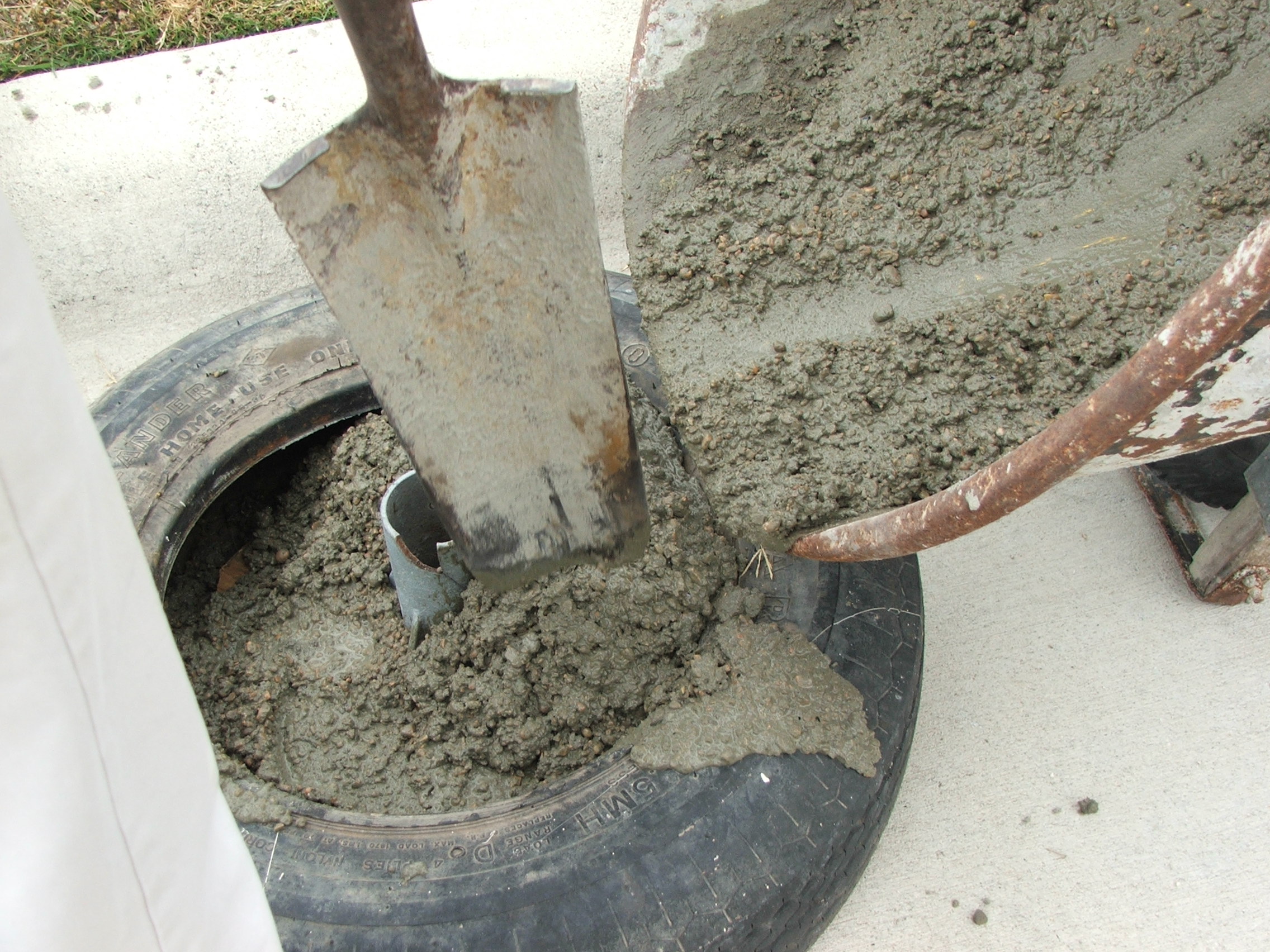
And bam – instant nostalgia to a simpler time.

Refracting back, this project allowed for an exploration of two things: gross motor skills and chemical changes. Motor-wise, shoveling well is an art form. Trust me. More on that later.
Chemically, concrete is a great example of a chemical change (forget whether it’s endo or exothermic, though in the moment you can tell) – I usually work in observation and some hypothesis making conversation in the beginning of a project like this and have a student summarize at the end. Observation skills have a place in my classroom, especially with the younger/inexperienced learners. Often, the see an action (water into concrete) but fail to observe the actual thought behind the action (measuring just enough or pouring slowly from a hose). Quick satisfying projects like this can really accentuate the necessity for strong observation skills to a student.
I’d give the time, start to finish (now, I had made all parts during previous projects) about an hour.
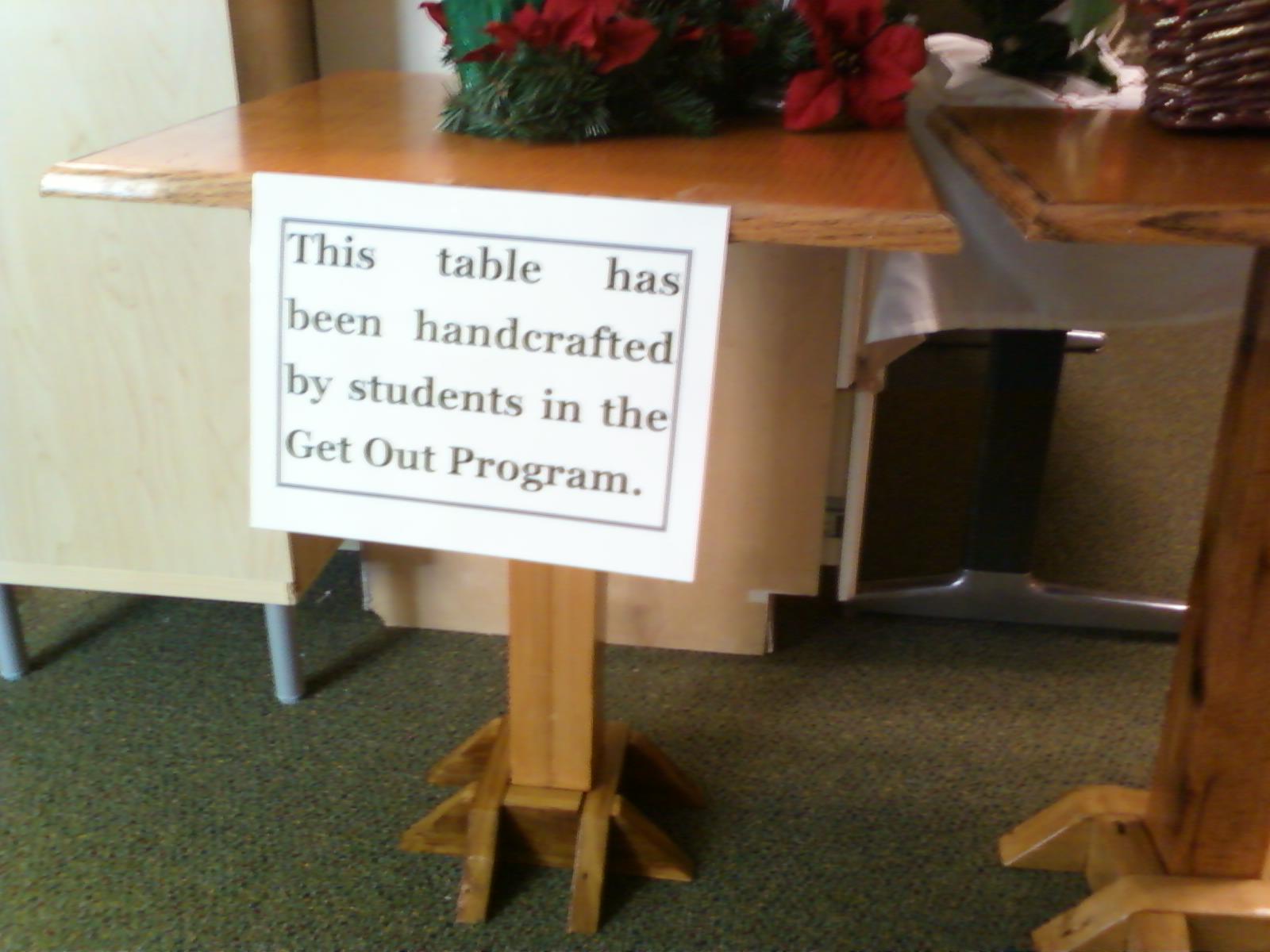
This fall, I became a full-time woodshop-esque teacher in a private school for students with neurological differences. It’s been a wild ride. My first order of business has been to outfit and carve out a woodshop on the campus. As we don’t have much access to electricity, I’ve been concentrating on hand tool mastery and supplementing projects with my personal shop tools. We also have made a commitment to use recycled materials when possible. Every piece on these tables is recycled: the bases and top supports are pallet lumber, the center posts are salvaged studs or oak used by oil riggers, and the tops are wainscoting from local office buildings and reused moldings.
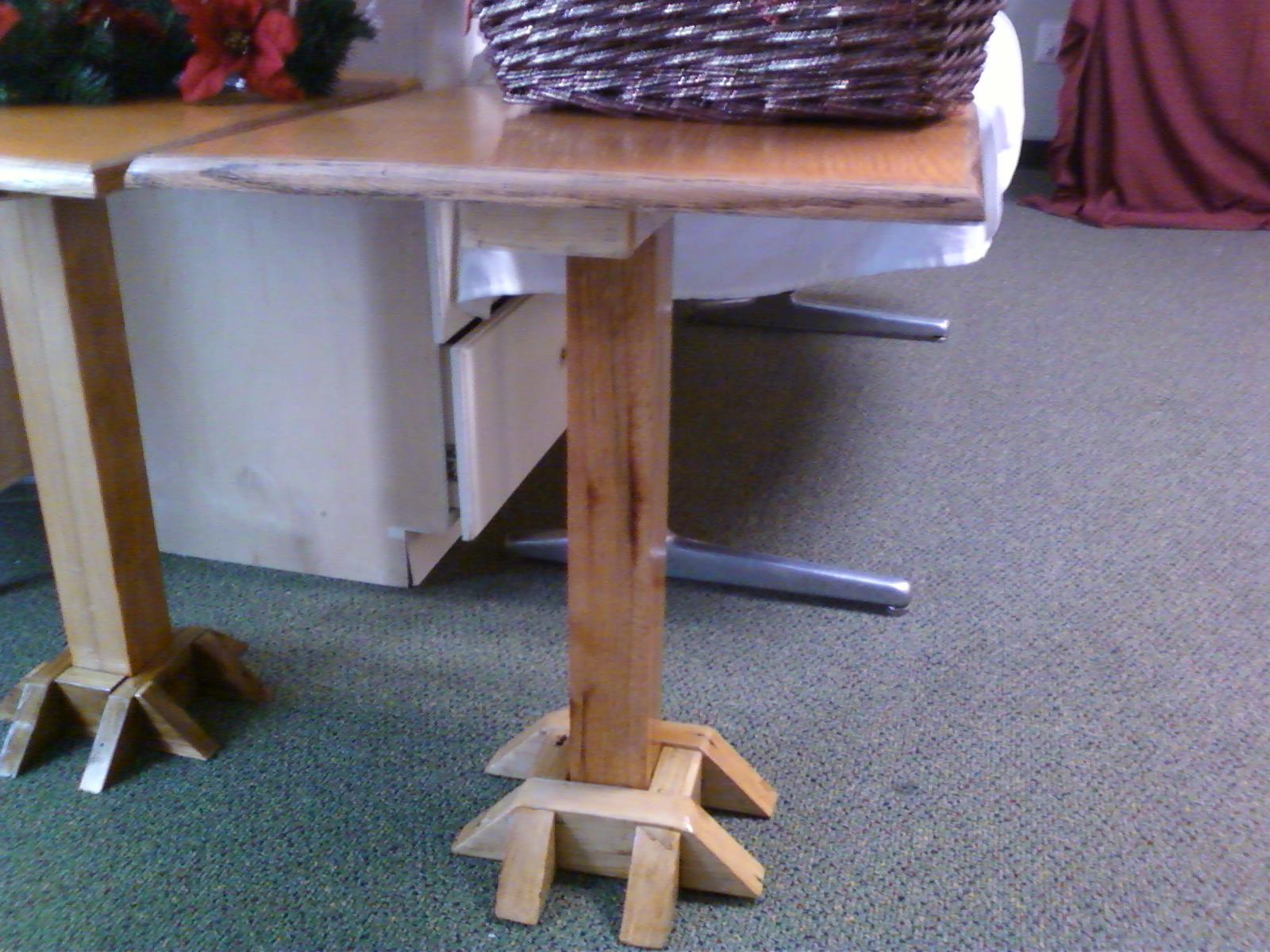
These two end tables are the result of three weeks worth of work by 3 different groups of young men. Often, we would work for an hour or so, take pictures and notes and then send that information to the English dept for the young men to write up a how-to article. At the end of the project, both pieces sold for $75 – enough that we have a shopping trip for a new power drill & bit set, Japanese hand saws and who knows what else. I’m extremely proud of my kids – I think they did great work.
Howdy –
I’m a mid-twenties, early-career, woodshop-esque teacher in an environmental science program in a very progressive therapeutic private school for students with neurological differences. My job involves a little of everything: lesson planning, curriculum building, community outreach, technology literacy (hence this blog), gardening, erecting permanent structures on campus, wearing a tool belt, generally being awesome and so on.
I’m a Texan by way of Virginia (like the original hero in the original western, The Virginian by Owen Wister) with die-hard Boston/Maine family connections and a love of the Pats and BoSox. I graduated from Virginia Tech in ’05 with a degree in English, on the Creative Writing track and have turned what is essentially a hobby into my career. Currently, I’m enrolled at Leslie University in Cambridge, Mass for a Master’s in Ed. degree. Check off the wife and two young children box, and yes, I’m living my dream everyday. I am, and have been, extremely blessed.
I intend this blog to try and answer a question: What Makes A Successful Teacher? I hope I have something to teach or show you,but you probably have more to teach me. Just like my kids.
— Mr. Patrick.

 WSC Designs